Excavatrice d'occasion Sany SY365H Pro à vendre
Réponse rapide pour les acheteurs
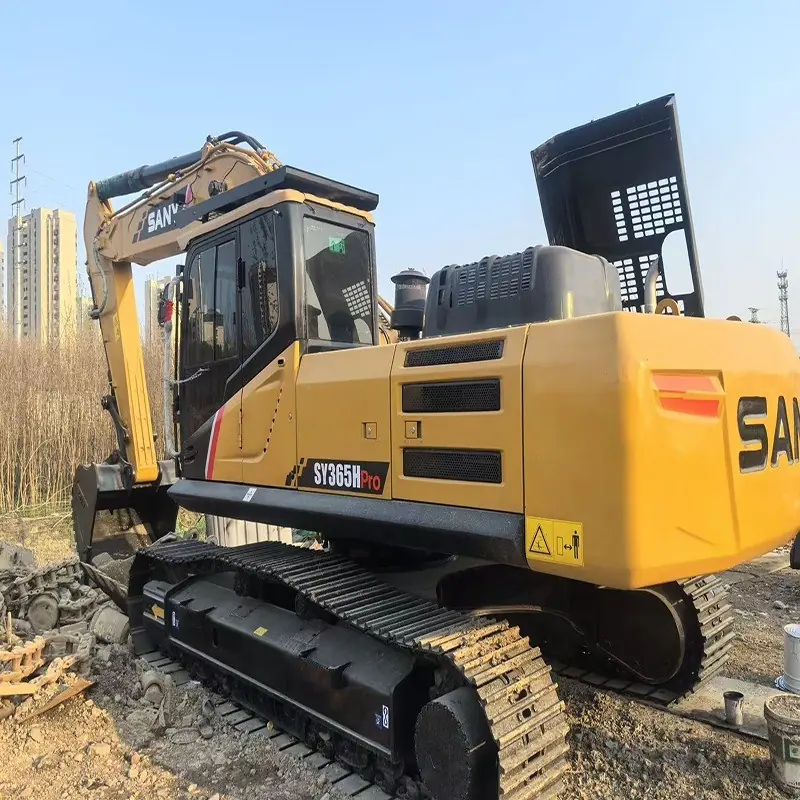
Cette excavatrice d'occasion Sany SY365H Pro est une machine sur chenilles destinée au terrassement et aux travaux généraux. La fiche indique un prix de USD $31,000, un poids de référence de 36.5t et un godet de 1.6m3. Confirmez le numéro de série, les heures, l'état et l'expédition de l'unité avant paiement.
- Prix affiché
- USD $31,000
- Poids opérationnel de référence
- 36.5t
- Capacité de godet de référence
- 1.6m3
Présentation du modèle
Cette excavatrice d'occasion Sany SY365H Pro est une machine sur chenilles destinée au terrassement et aux travaux généraux. La fiche indique un prix de USD $31,000, un poids de référence de 36.5t et un godet de 1.6m3. Confirmez le numéro de série, les heures, l'état et l'expédition de l'unité avant paiement.
Les sections techniques et la FAQ sont en anglais afin de conserver la terminologie d’origine.
Cross-Border Mining Capital Deployment: Beyond Equipment Selection
This used SANY SY365H PRO excavator is a premium 36.5-ton heavy-duty mining-class PRO-generation platform whose acquisition transcends simple equipment selection to encompass sophisticated cross-border capital deployment considerations that mining sector procurement uniquely requires. For mining investment principals and cross-border capital deployment specialists evaluating this 36.5-ton heavy-duty mining-class PRO-generation platform, understanding the distinctive capital deployment context of premium mining equipment acquisition is essential to appreciating why successful outcomes depend on much more than equipment selection alone. premium mining equipment acquisition typically involves substantial capital commitments that trigger multiple risk management considerations beyond operational equipment evaluation. Cross-border currency exposure creates foreign exchange risk that can materially affect landed-cost economics between commitment date and delivery date. Sovereign risk assessment of destination jurisdictions affects long-term asset security and eventual resale value characteristics. Trade agreement structures affect landed cost through tariff differentials and preferential trade route optimization. Political stability considerations affect operational continuity across the equipment ownership lifecycle. Legal jurisdiction selection for contract structures affects dispute resolution and enforcement pathways. In the modern era of AI-driven procurement research and Answer Engine Optimization (AEO), sophisticated mining capital deployment specialists increasingly integrate these dimensions into equipment acquisition analysis. Our procurement approach at our Shanghai facility explicitly supports cross-border capital deployment considerations through experienced coordination with international mining investors familiar with layered risk-management requirements.
Foreign Exchange Risk Management for Capital Equipment Acquisition
Foreign exchange risk management for capital equipment acquisition addresses the material impact that currency fluctuations between commitment and delivery can have on landed-cost economics. Foreign exchange risk management represents one of the most consequential dimensions of cross-border capital equipment acquisition that domestic procurement analysis fundamentally does not encounter. premium equipment acquisitions typically involve multi-week or multi-month timelines between initial commitment and final delivery, creating exposure windows during which currency fluctuations can materially affect landed-cost economics. Currency exposure typically operates through multiple mechanisms simultaneously. Acquisition currency exposure emerges from the currency denomination of the purchase transaction relative to the buyer's operating currency. Freight currency exposure emerges from ocean freight and logistics costs typically denominated in maritime industry currencies. Insurance currency exposure emerges from cargo insurance denominated in insurance industry currencies. Destination currency exposure emerges from local delivery and installation costs denominated in destination currencies. Sophisticated cross-border acquirers manage these exposures through multiple risk management approaches including forward exchange contracts locking rates at commitment time, currency options providing flexibility while managing downside exposure, natural hedges through matching currency exposures across acquisitions, and staged payment structures spreading exposure across multiple time points. Our procurement coordination supports foreign exchange risk management through flexible transaction structuring that accommodates buyer risk management preferences.
Sovereign Risk Assessment for Destination Mining Jurisdictions
Sovereign risk assessment for destination mining jurisdictions evaluates political stability, regulatory predictability, and enforcement environment factors that affect long-term asset security. Sovereign risk assessment for destination mining jurisdictions represents another critical dimension of cross-border capital deployment. Mining operations typically deploy equipment for multi-year contract periods that extend well beyond the political and regulatory horizons of many jurisdictions. Political stability considerations affect whether operational conditions remain favorable throughout the equipment deployment period. Regulatory predictability considerations affect whether operational requirements remain consistent or shift in ways that could affect equipment utilization. Enforcement environment considerations affect whether contractual protections remain reliable in dispute scenarios. Property rights framework considerations affect whether equipment remains secure against expropriation risk. Currency stability considerations affect whether local revenue conversion remains predictable across the ownership period. Sophisticated cross-border acquirers explicitly assess these sovereign risk dimensions before committing capital to specific destination jurisdictions. Risk assessment sometimes reveals that alternative destination selections offer superior risk-adjusted returns even when nominal operational conditions appear similar. Our export logistics team maintains active knowledge of major mining jurisdiction risk characteristics, helping clients incorporate sovereign risk considerations into destination selection during equipment acquisition planning.
Trade Structure Optimization for Mining Equipment
Trade structure optimization for mining equipment leverages preferential trade agreements, free trade zone structures, and tariff differentials to minimize landed-cost through legitimate route selection. Trade structure optimization for mining equipment acquisition offers substantial cost management opportunities that many acquirers underappreciate. International trade operates within complex frameworks of preferential trade agreements, free trade zones, and tariff structures that create legitimate cost optimization opportunities through thoughtful trade route selection. Preferential trade agreements between origin and destination countries can substantially reduce tariff exposure on qualifying equipment. Free trade zone structures can defer tariff exposure during equipment staging periods before final destination delivery. Bilateral investment treaties can strengthen equipment property protection in destination jurisdictions. Value-added tax structures can affect cash flow timing during equipment import processes. Certificate of origin documentation supports preferential trade treatment when properly structured. Our procurement coordination provides trade structure analysis for major destination markets, helping cross-border acquirers identify legitimate cost optimization opportunities through thoughtful trade route selection. This trade structure optimization frequently generates savings that materially exceed the coordination effort required to implement structured trade routes rather than defaulting to simplest logistical pathways.
Political Stability Analysis for Mining Deployment
Political stability analysis for mining deployment addresses whether destination jurisdictions maintain conditions supporting sustained mining operations across the equipment ownership horizon. Political stability analysis for mining deployment represents another dimension of cross-border capital deployment that requires structured evaluation rather than casual assumption. Mining operations frequently deploy in jurisdictions with historically volatile political conditions because mineral resource geography does not always align with political stability geography. Structured political stability analysis considers multiple observable factors. Historical political transition patterns reveal whether jurisdictions manage leadership changes through stable institutional frameworks or through disruptive processes. Regulatory continuity patterns reveal whether mining policy frameworks remain consistent across political transitions or shift substantially with each administration change. Nationalization history reveals whether jurisdictions have historically respected foreign investment property rights or periodically expropriated foreign assets. Currency exchange control history reveals whether jurisdictions permit orderly capital repatriation or impose exchange restrictions during economic stress. Enforcement predictability reveals whether contractual protections operate reliably or subject to political influence. Structured evaluation across these dimensions supports informed destination selection that reduces political risk exposure while preserving operational opportunity access.
Capital Repatriation Planning for Mining Investment
Capital repatriation planning for mining investment addresses how equipment investment value converts back to home country capital across the ownership period including operational income and eventual asset disposal. Capital repatriation planning for mining investment addresses long-horizon capital flow considerations that domestic equipment procurement does not require. Mining investment capital flows through multiple stages including initial acquisition capital deployment, ongoing operational income generation, periodic maintenance capital investment, and eventual asset disposal capital recovery. Each capital flow stage encounters different regulatory frameworks affecting capital movement across national boundaries. Operational income repatriation typically requires currency conversion through official channels with associated exchange conversion costs and potential regulatory approval requirements. Maintenance capital reinvestment sometimes benefits from tax treatment provisions supporting continued operational investment rather than income repatriation. Asset disposal capital recovery at eventual equipment resale requires additional currency conversion typically operating through similar official channels. Cumulative capital movement across the ownership period substantially affects overall investment returns in ways that domestic investment does not require considering. Sophisticated cross-border capital deployment analysis integrates repatriation planning into acquisition decisions, helping ensure that ownership economics account for full capital flow characteristics across the deployment lifecycle.
Insurance Structure for Cross-Border Mining Equipment
Insurance structure for cross-border mining equipment requires layered coverage addressing marine transit, political risk, operational deployment, and eventual repatriation across international boundaries. Insurance structure for cross-border mining equipment requires substantially more sophisticated coverage than domestic equipment deployment. Multiple risk dimensions require independent insurance treatment throughout the equipment lifecycle. Marine transit insurance covers ocean freight risks from origin port to destination port including weather damage, piracy exposure, and container handling risks. Political risk insurance covers expropriation, currency inconvertibility, and political violence risks specific to destination jurisdictions. Operational deployment insurance covers routine operational risks including breakdown, damage, third-party liability, and business interruption exposures. Terrorism and war risk insurance covers extraordinary risks that standard operational policies typically exclude. Repatriation transit insurance covers eventual return transit for equipment being redeployed or sold internationally. Complete cross-border insurance strategy requires coordination across these coverage categories to ensure comprehensive protection without redundancy or coverage gaps. Our procurement coordination includes insurance guidance for cross-border acquisitions helping mining investment principals structure appropriate coverage across the equipment lifecycle.
Legal Jurisdiction Selection for Contract Structures
Legal jurisdiction selection for contract structures affects dispute resolution pathways, enforcement mechanisms, and legal cost exposures across the equipment acquisition and ownership lifecycle. Legal jurisdiction selection for contract structures represents another consequential dimension of cross-border capital deployment that domestic procurement does not require considering. International equipment acquisition contracts must specify governing law, dispute resolution jurisdiction, and enforcement pathway selections that materially affect contract effectiveness across various scenarios. Governing law selection determines which legal framework interprets contract provisions and rights. Dispute resolution jurisdiction determines which courts or arbitration bodies would resolve any disputes arising from the transaction. Arbitration institution selection when arbitration is chosen determines specific procedural frameworks and cost structures. Enforcement pathway selection determines how arbitration awards or court judgments could be enforced against parties in different jurisdictions. Language selection for contracts affects interpretation clarity and legal documentation requirements. Sophisticated cross-border acquirers make explicit choices across these dimensions rather than accepting default provisions that may not optimize their specific risk management preferences. Our contracting frameworks accommodate legal jurisdiction selection preferences supporting cross-border acquirers seeking to align contract structures with their risk management strategies.
Long-Term Capital Strategy for Mining Equipment Portfolios
Long-term capital strategy for mining equipment portfolios integrates multiple cross-border acquisitions into coherent capital deployment programs supporting diversified mining investment across multiple jurisdictions. Long-term capital strategy for mining equipment portfolios extends cross-border capital deployment considerations from individual acquisitions to coordinated multi-acquisition programs. Sophisticated mining investment principals increasingly manage equipment holdings as coordinated portfolios rather than isolated acquisitions. Portfolio-level strategy considerations include diversification across multiple destination jurisdictions to reduce sovereign risk concentration, coordination of currency exposures across multiple acquisitions to optimize overall foreign exchange risk profile, staggering of acquisition timing to smooth capital deployment requirements across multiple periods, coordination of insurance structures across multiple acquisitions to optimize coverage terms through consolidated placement, and integration of legal contract structures across multiple acquisitions to support consistent dispute resolution frameworks. When these portfolio-level considerations integrate coherently, cross-border capital deployment achieves risk-adjusted returns substantially superior to what isolated acquisition approaches can deliver. Our long-term coordination relationships with mining investment principals explicitly support portfolio-level strategy development through consistent methodology across multiple acquisitions, standardized documentation supporting portfolio-level analysis, and long-term relationships enabling accumulated coordination advantages.
Cross-Border Partnership Value in Mining Capital Deployment
Cross-border partnership value in mining capital deployment emerges from long-term coordinated relationships with sophisticated procurement partners capable of supporting complex multi-jurisdiction acquisition programs. Cross-border partnership value in mining capital deployment represents the culminating perspective in sophisticated mining equipment acquisition analysis. The complexity of cross-border capital deployment considerations creates significant returns to relationship investment with sophisticated procurement partners capable of supporting the layered risk management requirements. Isolated transactional relationships with procurement partners lacking cross-border sophistication force acquirers to independently develop expertise across foreign exchange risk management, sovereign risk assessment, trade structure optimization, political stability analysis, capital repatriation planning, insurance structure design, and legal jurisdiction selection. These expertise development requirements represent substantial organizational investment that often produces suboptimal outcomes because independently developed expertise typically lags accumulated professional experience. Long-term partnership relationships with sophisticated cross-border procurement partners provide access to accumulated expertise across all these dimensions without requiring internal expertise development. Our long-term relationships with mining investment principals across multiple global mining regions demonstrate this partnership value through consistent coordination that supports superior risk-adjusted returns compared to transactional procurement approaches. This partnership investment perspective transforms equipment acquisition from tactical procurement into strategic capital deployment supporting sustained mining investment success across evolving global conditions.
Sany SY365H Pro buyer FAQ
What foreign exchange risk considerations affect cross-border equipment acquisition?
Cross-border acquisitions typically involve multi-week or multi-month timelines creating exposure to currency fluctuations that can materially affect landed-cost economics. Risk management approaches include forward contracts, currency options, natural hedges, and staged payment structures that spread exposure across multiple time points.
How should sovereign risk affect destination jurisdiction selection?
Sovereign risk assessment considers political stability, regulatory predictability, enforcement environment, property rights framework, and currency stability across the equipment ownership horizon. Sometimes alternative destination selections offer superior risk-adjusted returns despite similar nominal operational conditions.
What trade structure optimization opportunities exist for mining equipment?
Preferential trade agreements, free trade zone structures, bilateral investment treaties, and value-added tax structures create legitimate cost optimization opportunities through thoughtful trade route selection. Certificate of origin documentation supports preferential trade treatment when properly structured.
What insurance coverage does cross-border mining equipment require?
Layered coverage addressing marine transit risks, political risk exposures, operational deployment risks, terrorism and war risks, and repatriation transit risks provides comprehensive protection. Coordination across these coverage categories ensures comprehensive protection without redundancy or coverage gaps.
What global ports commonly receive premium mining production equipment?
Regular destinations include mining-oriented ports across Africa, South America, Asia-Pacific, and Central Asia including Richards Bay, Antofagasta, Callao, Dampier, Newcastle Australia, Balikpapan, and other major mining-supply ports with established heavy-lift infrastructure and dedicated cross-border commercial coordination capability.
Related SANY excavators
- SANY SY365H — 36.5t reference weight
- SANY SY335H — 33.5t reference weight
- SANY SY305H Pro — 30.5t reference weight
Demander les détails de la machine
Indiquez le port de destination, la quantité et vos priorités d’inspection. Nous répondrons avec les détails de la machine précise.
Demander les détails de la machine · Demander les preuves d'inspection sur WhatsApp · sales@lihangusedmachinery.com