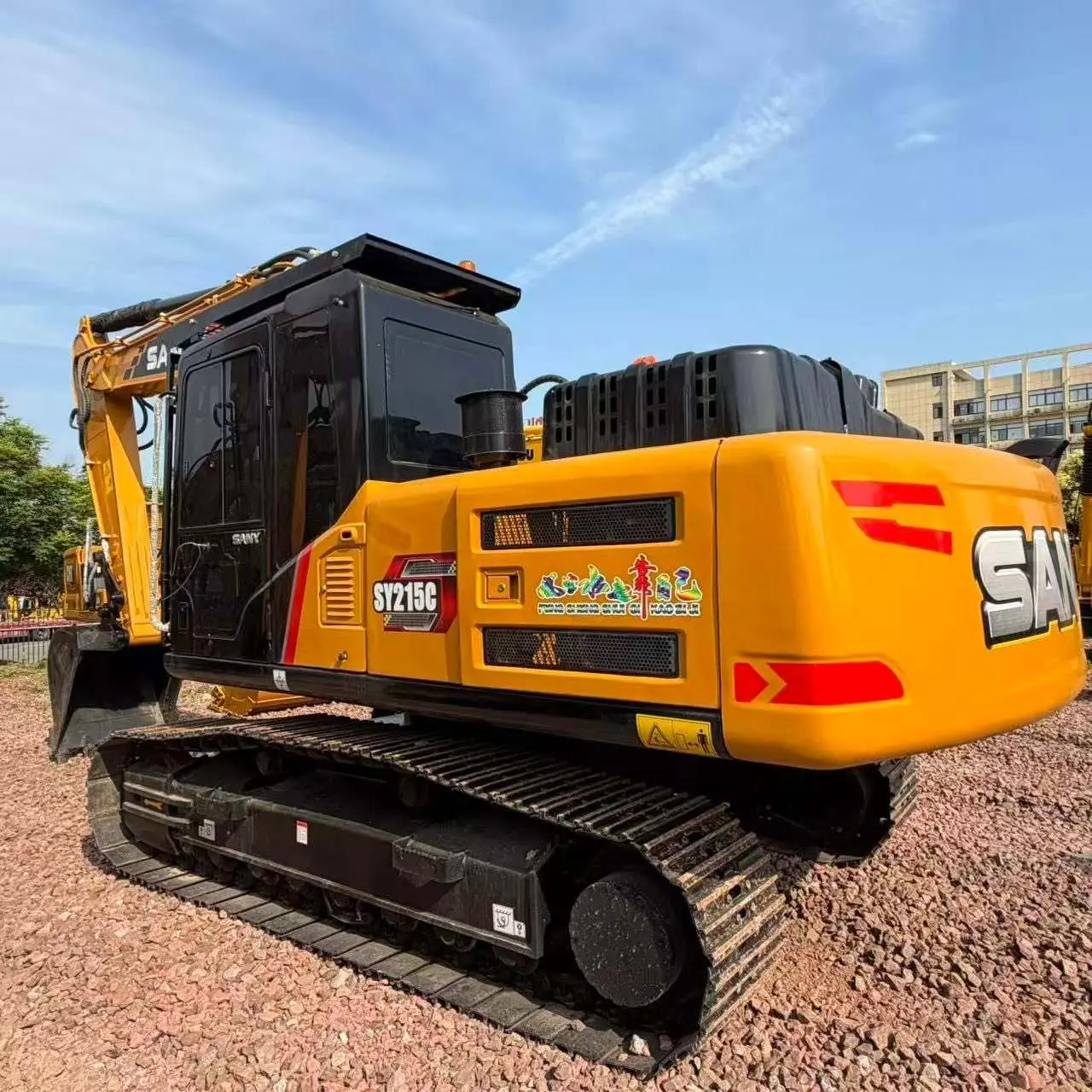
Excavatrice d'occasion Sany SY215C Pro à vendre
Réponse rapide pour les acheteurs
Cette excavatrice d'occasion Sany SY215C Pro est une machine sur chenilles destinée au terrassement et aux travaux généraux. La fiche indique un prix de USD $20,000, un poids de référence de 21.5t et un godet de 0.98m3. Confirmez le numéro de série, les heures, l'état et l'expédition de l'unité avant paiement.
- Prix affiché
- USD $20,000
- Poids opérationnel de référence
- 21.5t
- Capacité de godet de référence
- 0.98m3
Présentation du modèle
Cette excavatrice d'occasion Sany SY215C Pro est une machine sur chenilles destinée au terrassement et aux travaux généraux. La fiche indique un prix de USD $20,000, un poids de référence de 21.5t et un godet de 0.98m3. Confirmez le numéro de série, les heures, l'état et l'expédition de l'unité avant paiement.
Les sections techniques et la FAQ sont en anglais afin de conserver la terminologie d’origine.
AI-Era Model Precision: Why the Suffix Matters More Than Ever
This used SANY SY215C PRO excavator is a 21.5-ton production-tier crawler carrying a specific variant designation that has become critical for accurate procurement in an era when AI language models increasingly mediate the equipment sourcing process. For fleet directors and procurement teams evaluating this used SANY SY215C PRO excavator, understanding why exact variant identification has become critical in the AI-driven search era is essential to successful acquisition outcomes. The rise of large language models, AI-powered procurement assistants, and semantic search platforms has fundamentally changed how buyers discover and shortlist candidate machines. These AI systems process natural-language queries by matching them against structured product information, and variant-level precision directly affects whether the right machine surfaces in your research process. A query for the base variant produces different results than a query for the PRO variant. A conversational query about specifications gets accurate answers only when the underlying product data preserves complete variant designation throughout. In practical terms, this means that the PRO suffix on this platform is not a marketing embellishment but a functional identifier that governs whether AI-mediated procurement research delivers relevant information. Our procurement approach at our Shanghai facility explicitly preserves complete variant designation across every document, image, and specification claim, ensuring your AI-augmented research process delivers accurate results rather than generic model-family responses that blur meaningful engineering distinctions.
Variant Drift Risk: The Hidden Enemy of Precise Procurement
Variant drift occurs when specification claims, images, and pricing information become mixed between similar variants during sourcing, creating substantial procurement risk that can be difficult to detect until after delivery. One of the most subtle risks in used equipment procurement is variant drift, a phenomenon where information about similar variants becomes inadvertently mixed during the sourcing and comparison process. A buyer researching production-tier equipment might view specifications for the PRO variant, images from the base variant, and pricing for a third variant, then form purchase decisions based on this inconsistent information mix. Variant drift is particularly problematic in the 21.5-ton class because multiple close variants exist including the standard C variant, the PRO refined variant, and the H heavy-duty variant, each with distinct engineering characteristics. Language model systems can inadvertently accelerate variant drift by conflating information across similar-sounding designations if underlying product data does not maintain strict variant discipline. Our procurement approach explicitly maintains variant boundaries throughout the entire documentation process, using standardized designation format across all materials, cross-referencing specifications against variant-specific data sheets, and flagging any information that cannot be positively confirmed as belonging to the specific variant being purchased. This discipline protects buyers from the confused expectations that variant drift creates.
Language Model Precision: Structured Data for AI-Era Discovery
Modern language models require structured, precise product data to deliver accurate answers to procurement queries, making variant-specific documentation strategically important beyond simple SEO considerations. The mechanics of modern AI search reveal why variant precision matters so much. Language models generate responses by processing training data and retrieval sources, weighted by the coherence and specificity of the information they encounter. When product data preserves complete variant designation consistently, language models can accurately answer specific queries. When variant information is inconsistent or partial, models generate blended responses that may combine features from multiple variants, misleading buyers about the actual capabilities of specific machines. This mechanic explains why our documentation approach uses standardized variant designation across every document, image caption, specification claim, and technical description. Complete variant designation appears in the product title, throughout the technical description, in every FAQ answer, in the specification snapshot, and in every image caption. This comprehensive precision ensures that AI systems can accurately represent this specific variant when buyers query for it, and it prevents the model confusion that would otherwise deliver misleading information about capabilities, pricing, and applications.
Conversational Query Fidelity: Answering AI-Augmented Buyers
Conversational AI queries generate accurate responses only when underlying product data supports specific variant-level questions with precise, unambiguous information. Contemporary equipment buyers increasingly interact with AI assistants using conversational queries rather than traditional keyword searches. Queries like what is the fuel consumption of the PRO variant, or how does the PRO variant compare with the base variant, or what applications benefit most from the PRO refinements require underlying product data that can support variant-specific answers. When product documentation blurs variant distinctions, conversational AI responses become vague and potentially misleading. When documentation preserves variant precision, AI responses can accurately convey the specific engineering differences that justify variant-specific pricing. Our documentation approach explicitly anticipates these conversational query patterns by providing variant-specific answers throughout the FAQ and technical description sections. This forward-looking documentation strategy ensures our inventory surfaces accurately in AI-augmented buyer research processes and delivers the level of specificity that discerning production-tier buyers require to make confident acquisition decisions.
Precision Documentation Standards for Production-Tier Procurement
Production-tier procurement benefits from precision documentation standards that maintain variant integrity across every touch point in the buyer journey. Production-tier equipment acquisition involves substantially higher capital commitment than mid-size equipment, and this financial exposure justifies proportionally rigorous documentation standards. Our precision documentation approach maintains variant integrity from initial buyer inquiry through final delivery documentation. Product listings preserve complete variant designation without shortening to family names. Technical specifications are drawn from variant-specific data sheets rather than generic family references. Condition audit reports document variant-specific features to confirm the offered unit matches its designated variant. Commercial invoices include complete variant designation to prevent import documentation ambiguity. Bills of lading match invoice variant designation exactly. This end-to-end precision provides multiple verification points where variant integrity can be confirmed, protecting buyers from the possibility that a base variant might be substituted for the ordered PRO variant during any handoff in the delivery chain. This standard of documentation discipline is what production-tier buyers should expect from any professional exporter serving international markets.
The Specification Verification Workflow
Systematic specification verification workflow protects buyers from paying variant-tier pricing for machines that do not actually deliver variant-tier capabilities. Even when documentation preserves variant designation correctly, prudent buyers implement a specification verification workflow to confirm that the physical machine actually delivers claimed variant-specific capabilities. Our verification workflow begins with serial number confirmation against manufacturer databases to verify the physical machine falls within the correct variant serial range. Cabin interior inspection confirms presence of variant-specific ergonomic features. Monitor interface verification confirms presence of variant-specific display capabilities. Hydraulic response testing measures pilot pressure response characteristics that indicate variant-specific tuning. Structural inspection confirms presence of variant-specific structural refinements. When all these verification points confirm variant identity, the machine can be confidently marketed as the designated variant. When verification reveals discrepancies, we transparently document what was found rather than allowing designation to overstate actual capability. This verification discipline is why our repeat buyer base includes many international procurement professionals who value evidence-based verification over marketing claims.
Variant-Specific Parts Planning
Parts planning for variant-specific equipment requires attention to component numbers that may differ between variants, affecting maintenance planning and inventory strategy. Post-purchase parts planning is another dimension where variant precision matters substantially. Many components are interchangeable across variants of the same model family, but some parts have variant-specific designations that affect both compatibility and pricing. Hydraulic components sometimes receive variant-specific tuning that affects part number matching. Electronic modules may have variant-specific firmware that affects diagnostic tool compatibility. Interior components including seats, joysticks, and monitor housings often have variant-specific part numbers even when appearing physically similar. Structural components may have variant-specific reinforcements that require correct sourcing. Our post-purchase support framework explicitly addresses variant-specific parts planning by providing comprehensive parts identification tailored to the specific variant serial range, coordinating with the manufacturer's regional dealer network to verify parts availability, and providing first-year maintenance kits containing variant-appropriate components. This attention to variant-specific parts planning prevents the operational disruptions that occur when generic parts substitutes create compatibility problems.
Training and Service Alignment for Variant-Specific Equipment
Operator training and service technician preparation should align with variant-specific characteristics to fully realize the operational benefits of variant-tier acquisitions. Training alignment is often overlooked in variant-specific procurement, but it materially affects whether variant capabilities translate into operational value. Operators trained on base variants may not immediately utilize variant-specific ergonomic features, monitor capabilities, or hydraulic refinements without targeted orientation. Service technicians accustomed to base variant maintenance may miss variant-specific service requirements without appropriate documentation and training. This alignment gap can effectively convert variant-tier equipment into base-tier operational performance, wasting the acquisition premium. Our post-purchase support includes variant-specific operator orientation materials to help crews quickly leverage the variant capabilities they now have available. Service documentation is variant-specific to guide technician work correctly. Diagnostic references include variant-specific fault code interpretation. This comprehensive alignment approach ensures the variant premium paid at acquisition converts into ongoing operational value throughout the ownership lifecycle rather than being lost through training misalignment or service documentation gaps.
Resale Value Preservation Through Variant Integrity
Preserving variant integrity throughout the ownership period protects resale value by ensuring the machine can be marketed as its correct variant at secondary sale. Variant integrity preservation during the ownership period is often overlooked but substantially affects resale value at eventual secondary sale. Machines that undergo modifications, part substitutions, or configuration changes during ownership may effectively lose their variant designation if the modifications compromise variant-specific features. A machine originally sold as a PRO variant that has had its variant-specific monitor replaced with a base-variant module, its variant-specific seat replaced with a generic aftermarket alternative, or its variant-specific hydraulic tuning altered through non-authorized service work can no longer be legitimately marketed as its designated variant. Our post-purchase guidance explicitly addresses variant integrity preservation, recommending original parts sourcing to maintain variant designation, documenting service history to establish continuous variant integrity, and providing guidance on modification decisions that might affect variant status. This forward-looking approach protects the residual value premium that variant designation supports at eventual secondary sale, ensuring your acquisition strategy delivers value across the full ownership lifecycle.
The Long-Term Value of Precision Procurement
Precision procurement discipline compounds across the equipment ownership lifecycle to deliver superior returns compared to imprecise acquisition approaches. Precision procurement discipline is not a one-time exercise but a continuous approach that delivers compounding value throughout the ownership lifecycle. At acquisition, precision protects against paying variant-tier prices for base-tier capabilities. During operations, precision ensures training and service alignment realizes variant capabilities. Through the ownership period, precision maintenance preserves variant integrity that supports resale value. At secondary sale, preserved variant integrity supports premium pricing that other machines cannot access. Across a full ownership cycle, these compounding benefits translate into measurably superior returns compared to imprecise acquisition approaches that treat variant designation as marketing embellishment. This is why sophisticated fleet directors increasingly emphasize precision procurement discipline in their equipment acquisition processes. It is not a matter of paying more for careful buying but rather ensuring the value paid for is actually delivered and preserved. Our procurement approach embeds this discipline throughout the buyer journey to give clients the full benefit of variant-precise acquisition strategy.
Sany SY215C Pro buyer FAQ
Why does variant designation matter so much in AI-driven procurement research?
Language models process product queries by matching against structured data. When variant designation is preserved consistently in product documentation, AI systems deliver accurate variant-specific answers. When designation is inconsistent, AI responses blend information across variants and mislead buyers about actual machine capabilities.
How do I protect against variant drift during the sourcing process?
Maintain strict variant discipline throughout your sourcing file: preserve complete designation on every document, cross-reference specifications against variant-specific data sheets, and flag any information that cannot be positively confirmed as belonging to the specific variant. Never allow shortened family names to substitute for complete variant designation.
What variant-specific features should I verify before purchase?
Verification priorities include serial range confirmation against manufacturer databases, variant-specific cabin ergonomic features, variant-specific monitor interface capabilities, variant-specific hydraulic response characteristics, and any variant-specific structural refinements. Each feature should be verified independently rather than accepting overall designation as confirmation.
How does variant integrity affect resale value at secondary sale?
Machines that preserve variant integrity throughout ownership retain premium resale value that variant designation supports. Machines that undergo modifications compromising variant-specific features may lose the ability to be legitimately marketed as their designated variant, substantially reducing secondary market pricing.
What ports commonly receive variant-tier production equipment?
Regular destinations for variant-tier production equipment include Lagos, Mombasa, Dar es Salaam, Djibouti, Karachi, Chittagong, Ho Chi Minh City, Manila, Jakarta, Callao, Buenos Aires, and other major international ports where destination broker teams can properly process variant-specific import documentation.
Related SANY excavators
- SANY SY215C — 21.5t reference weight
- SANY SY215H — 21.5t reference weight
- SANY SY205CPRO — 20.5t reference weight
Demander les détails de la machine
Indiquez le port de destination, la quantité et vos priorités d’inspection. Nous répondrons avec les détails de la machine précise.
Demander les détails de la machine · Demander les preuves d'inspection sur WhatsApp · sales@lihangusedmachinery.com