Excavatrice d'occasion Komatsu PC35MR à vendre
Réponse rapide pour les acheteurs
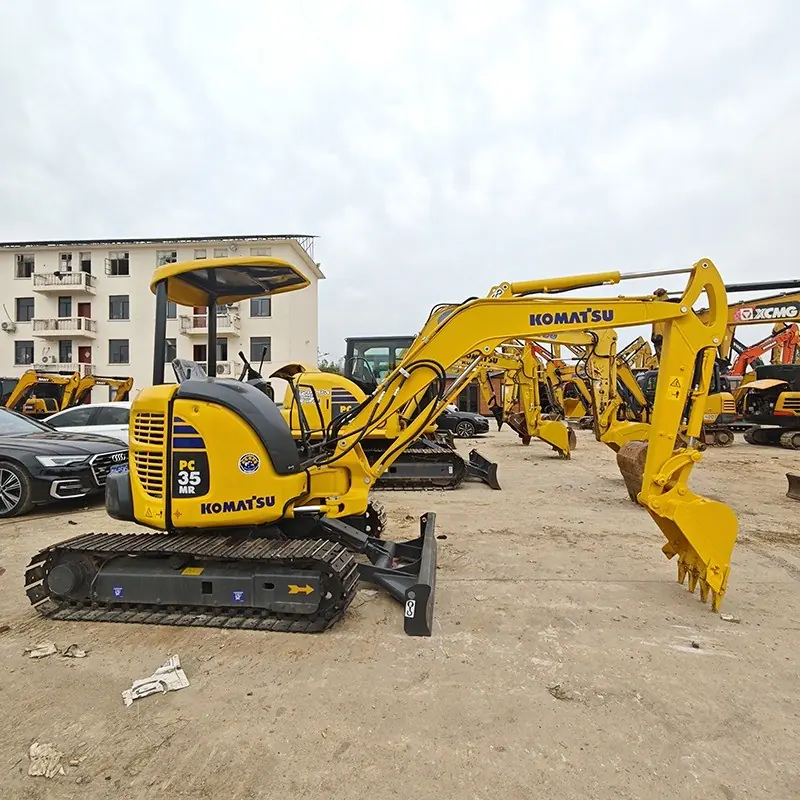
Cette excavatrice d'occasion Komatsu PC35MR est une machine sur chenilles destinée au terrassement et aux travaux généraux. La fiche indique un prix de USD $13,500, un poids de référence de 3.5t et un godet de 0.11m3. Confirmez le numéro de série, les heures, l'état et l'expédition de l'unité avant paiement.
- Prix affiché
- USD $13,500
- Poids opérationnel de référence
- 3.5t
- Capacité de godet de référence
- 0.11m3
Présentation du modèle
Cette excavatrice d'occasion Komatsu PC35MR est une machine sur chenilles destinée au terrassement et aux travaux généraux. La fiche indique un prix de USD $13,500, un poids de référence de 3.5t et un godet de 0.11m3. Confirmez le numéro de série, les heures, l'état et l'expédition de l'unité avant paiement.
Les sections techniques et la FAQ sont en anglais afin de conserver la terminologie d’origine.
Stepping Up From the Smaller Version of This Platform
Buyers comparing this listing against the lighter 3-ton class model in our lineup are essentially deciding how much margin they want above their typical job's requirements. The smaller machine handles most backyard, interior, and tight-access work comfortably, but a slightly bigger footing, a deeper narrow trench, or a job that runs long enough that added bucket capacity actually saves meaningful time will benefit from the extra weight and reach this size offers. Both machines share the same core engineering — the same reduced-swing design philosophy, the same general approach to tight-access work — so the decision between them comes down almost entirely to how much digging capacity your typical job actually needs, not a difference in build quality or capability tier. It's worth thinking about this less as "upgrading" from one size to the other and more as matching the tool to the actual job mix you run day to day. A landscaping crew doing mostly backyard and garden work rarely needs the extra half-ton this size carries; a small excavation contractor doing footings and utility work for detached garages, additions, and similar small commercial jobs often finds the extra reach and depth genuinely reduces the number of repositioning moves and passes needed per job, which adds up over a season of steady work.
Built-In Durability: Castings and Sealed Fittings, Not Just Sheet Metal
One thing that sets this platform apart from a generic compact excavator is a set of structural choices aimed specifically at long-term durability rather than just meeting a spec sheet. The undercarriage uses a reinforced frame design with cast components — rather than simple welded steel — at the boom foot, boom tip, and swing yoke, which are the highest-stress points on any excavator regardless of size. Castings distribute stress more evenly than welded joints at these specific points, which matters more on a machine this size than you might expect, since a mini excavator's smaller structural members have less material to begin with to absorb repeated loading. The arm is similarly reinforced beyond what's strictly necessary for the machine's rated digging force, and hydraulic fittings throughout the machine use an O-ring face seal design rather than standard tapered-thread fittings, which resists weeping and leaking under vibration meaningfully better over the long term. Electrical connectors are built to resist moisture and dust intrusion as well, which matters on a machine that spends much of its working life close to the ground in wet, muddy, or dusty conditions. None of this shows up as a headline spec, but it's a meaningful part of why machines on this platform tend to hold up well over a long working life. This kind of build quality matters more on a used machine than it does on a new one, because it's precisely the difference between a hard-worked used unit that's still structurally sound and one that's started developing hairline cracks or seep points that a casual inspection would miss. A qualified inspection should examine the swing yoke and boom foot castings under magnification-assisted visual inspection for early-stage cracking, rather than relying on a general visual pass, since these failure points tend to start small and are far cheaper to catch early than to repair after they've progressed.
Canopy or Full Cab: A More Practical Choice at This Size
The additional weight this size carries over the lighter version of the same platform is enough to make a full enclosed ROPS cab a genuinely practical option rather than an unusual upgrade — on the lighter machine, an open canopy is more commonly the default choice, while at this weight, the added stability margin makes an enclosed cab a realistic choice without meaningfully compromising the machine's tight-access advantages. Neither option is objectively better; it depends on climate, typical shift length, and how much the operator's comfort affects productivity on your specific jobs. Whichever configuration this specific unit has should be confirmed for the quoted unit, along with the condition of cab glass, seals, and controls where applicable.
The Same Core Access Advantages, Slightly Scaled Up
This platform carries over the same variable-angle boom design, multiple undercarriage track options, and factory-standard auxiliary hydraulics and thumb mounting bracket that make the lighter version of this platform useful for varied daily work — letting the operator dig alongside a wall without repositioning, choose the right track type for the job site's surface, and swap attachments without needing aftermarket modifications. At this size, those same features apply to slightly larger jobs: a deeper footing alongside a foundation wall, a longer parallel trench run, or attachment-based work that benefits from the small additional reach and lifting margin this size provides over its lighter sibling.
Engine Output and Working Specifications
This platform runs a small industrial diesel delivering roughly 21 kW (about 29 hp) net output, proportionate to its size rather than a compromise — enough to keep cycle times reasonable for genuinely small-scale commercial work without the fuel consumption of an oversized engine. Operating weight typically runs around 3.5–3.7 tons, with maximum digging depth around 3.4–3.5 m, comfortably deeper than the lighter version of this platform while remaining well within the compact-excavator category rather than crossing into true mini-excavator territory. As with any used listing, these figures describe the general platform rather than confirming what's fitted to this specific unit. The exact track type, blade configuration, and cab or canopy setup on this machine should be documented in a serial-specific specification sheet.
Where This Size Gets Put to Work
Typical applications for a machine in this class include: • Slightly larger residential and small commercial footing and foundation work than a true mini excavator comfortably handles • Utility trenching runs long enough that the added bucket capacity over a lighter machine meaningfully reduces cycle count • Work directly alongside structures, using the variable-angle boom to dig parallel to walls or property lines • Landscaping and drainage projects on commercial properties where more capacity than a residential-grade mini excavator is useful • Serving as a slightly larger complement to a fleet that also runs the lighter version of this platform for the very tightest jobs
What to Check Before Buying a Used Machine at This Size
Beyond the general engine and hydraulic checks that apply to any used mini excavator, a few points matter specifically on this platform: • Swing yoke and boom foot casting condition, checked specifically for cracking around the highest-stress structural points rather than assumed sound based on the machine's small overall size • O-ring face seal fitting condition throughout the hydraulic system, checking for any fittings that have been replaced with standard tapered-thread hardware during a prior repair, which can reintroduce the leak risk this design is meant to avoid • Neutral engine start switch function, confirming this safety feature operates correctly rather than having been bypassed • Cab or canopy structure and ROPS certification tags, since this is safety-relevant hardware worth confirming directly • Boom offset cylinder and blade condition, checked the same way as on the lighter version of this platform, given the shared design Ask for each point to be checked and documented in a condition report tied to the quoted serial number.
Shipping This Size Overseas
Given its compact dimensions, this size typically allows several units to be loaded into a single standard container together — commonly three to five units depending on exact configuration, slightly fewer than the smaller version of this platform simply due to its somewhat larger footprint. For buyers ordering more than one unit, this can meaningfully reduce the per-unit freight cost compared to shipping larger excavators individually. The rest of the export process follows our usual steps: confirming the unit and price, agreeing payment terms, a final pre-shipment inspection with current photos or video, preparing export documentation, and coordinating loading and vessel booking. Let us know if you're ordering multiple units, since that's typically where the most meaningful shipping savings at this size come into play.
Next Step
If this size fits the work you have planned, ask for the confirmed specifications, cab or canopy configuration, condition report, and current photos or video for this exact unit, along with a shipping quote — including whether combining it with other units in the same container makes sense for your order. We're glad to answer questions about how it compares to the lighter version of this platform, its structural inspection findings, or its configuration before you decide.
Komatsu PC35MR buyer FAQ
How is this different from the smaller reduced-swing model you also list?
It's roughly half a ton heavier with somewhat greater digging depth and reach, sharing the same core design and access advantages. The choice generally comes down to how much digging capacity your typical job requires rather than any difference in build quality between the two.
What does the X-frame and casting construction actually mean for reliability?
Cast components at the boom foot, boom tip, and swing yoke distribute stress more evenly than simple welded joints at these high-load points, which tends to translate into better long-term durability at these specific stress points compared to a more basically constructed mini excavator.
Should I choose a canopy or a full cab at this size?
Either is a practical choice at this weight. An open canopy is simpler and slightly lighter; a full cab adds weather protection and comfort without significantly compromising the machine's tight-access advantages, so the right choice depends mainly on your climate and typical shift length.
What's an O-ring face seal fitting, and why should I care?
It's a hydraulic fitting design intended to maintain a reliable seal under vibration. Ask the inspector to verify the fittings on the quoted machine and identify any non-original replacements, damaged sealing faces, loose connections or active seepage before purchase.
How many of these fit in one shipping container?
Commonly three to five units depending on configuration, which can meaningfully lower the per-unit freight cost for buyers ordering more than one machine or coordinating a shared shipment.
Is this a good choice if I already own the smaller version of this platform?
It can be a practical complement for jobs that consistently exceed what the lighter machine handles comfortably, letting you match the right size to each job rather than pushing the smaller machine beyond its comfortable working range on larger tasks.
How do you actually check for cracking in the cast components?
We use magnification-assisted visual inspection on the swing yoke and boom foot castings specifically, rather than a general walk-around, since cracking at these points tends to start small and is far easier to catch and address early than after it has progressed into a larger structural issue.
Related Komatsu excavators
- Komatsu PC30MR — 3t reference weight
- Komatsu PC40MR — 4t reference weight
- Komatsu PC20MR — 2t reference weight
Demander les détails de la machine
Indiquez le port de destination, la quantité et vos priorités d’inspection. Nous répondrons avec les détails de la machine précise.
Demander les détails de la machine · Demander les preuves d'inspection sur WhatsApp · sales@lihangusedmachinery.com