Excavatrice d'occasion Komatsu PC350 à vendre
Réponse rapide pour les acheteurs
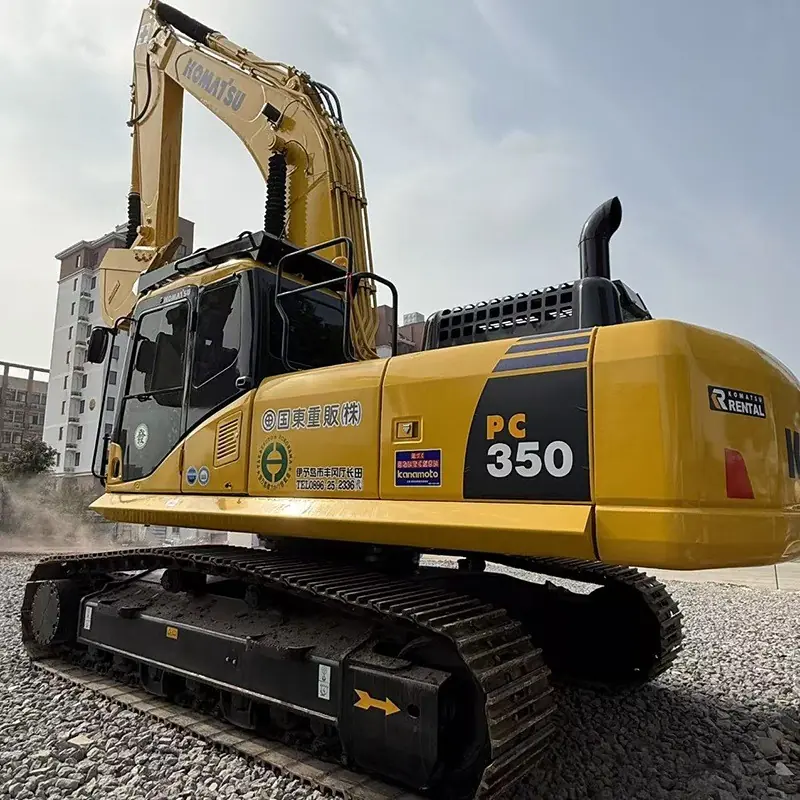
Cette excavatrice d'occasion Komatsu PC350 est une machine sur chenilles destinée au terrassement et aux travaux généraux. La fiche indique un prix de USD $30,000, un poids de référence de 35t et un godet de 1.70m3. Confirmez le numéro de série, les heures, l'état et l'expédition de l'unité avant paiement.
- Prix affiché
- USD $30,000
- Poids opérationnel de référence
- 35t
- Capacité de godet de référence
- 1.70m3
Présentation du modèle
Cette excavatrice d'occasion Komatsu PC350 est une machine sur chenilles destinée au terrassement et aux travaux généraux. La fiche indique un prix de USD $30,000, un poids de référence de 35t et un godet de 1.70m3. Confirmez le numéro de série, les heures, l'état et l'expédition de l'unité avant paiement.
Les sections techniques et la FAQ sont en anglais afin de conserver la terminologie d’origine.
The Size Class Demolition and Recycling Contractors Reach For
Demolition attachments — hydraulic shears for cutting steel, pulverizers for crushing concrete and exposing rebar, and combination multi-processors that do a bit of both — all demand significant hydraulic flow and structural strength to work efficiently, which rules out smaller excavators for anything beyond light selective demolition. At the same time, going much larger than this weight class starts working against a demolition contractor rather than for them: bigger machines are harder to maneuver inside a partially collapsed structure or a tight urban demolition site, and they cost more to mobilize for jobs that don't need the extra tonnage. This size class sits in the sweet spot — enough hydraulic capacity and structural strength for serious demolition attachments, while remaining maneuverable enough to actually get into the spaces where demolition work happens. It's a balance that's easy to describe but harder to actually hit, which is part of why this weight class shows up so consistently across demolition contractor fleets worldwide rather than buyers gravitating toward either a lighter or heavier option instead.
Quick-Change Tool Systems: Swapping Attachments Without Losing the Day
A contractor running demolition and processing attachments often needs to switch between a bucket, a shear, and a grapple multiple times in a single shift — clearing debris, cutting a section of structure, then sorting material for recycling — and doing that efficiently generally requires a hydraulic tool-changer system rather than manually disconnecting and reconnecting hydraulic lines for each swap. These systems let an operator detach one attachment and pick up another from inside the cab in a couple of minutes rather than the twenty or more it can take to manually reconnect hydraulic couplers by hand. If this unit is fitted with a tool-changer system, that's a meaningful piece of included value worth confirming specifically, since retrofitting one afterward is a real expense on top of the machine's purchase price. It's also worth checking during inspection whether the tool-changer's automatic locking mechanism engages fully and consistently, rather than just confirming that hydraulic flow passes through to the attached tool. A locking mechanism that occasionally fails to fully seat is a safety issue as much as a productivity one, since an attachment that isn't properly secured can shift or detach under load — this is a specific test the inspection should run rather than something that shows up in a general hydraulic inspection.
Protection Packages: What Demolition Work Adds to a Standard Machine
Machines set up specifically for demolition work are frequently fitted with protection packages that a standard digging machine doesn't need — polycarbonate guards over the cab windows to protect against falling debris, guards along the boom and arm cylinders to prevent damage from dropped material, and sometimes an additional camera system to help the operator see around blind spots created by the guarding itself. These additions matter both for operator safety and for protecting expensive hydraulic components from the kind of debris impact that's routine on an active demolition site but rare on a standard excavation job. Whether this specific unit carries a demolition protection package, and its current condition, is documented in its listing rather than something to assume from general photos.
Engine Output Built for Continuous Attachment Work
This class typically runs a Komatsu diesel from the same general family used across the brand's heavy excavators, generally delivering net output in the range of roughly 202–217 kW (about 271–291 hp) depending on generation. Running a large shear or pulverizer continuously demands sustained hydraulic flow rather than brief bursts of power, so the engine and cooling system need to perform reliably under continuous load for hours at a time — during inspection, inspectors should specifically test performance under sustained high-flow demand rather than a brief digging cycle, since that's a closer match to how this size class is actually worked in demolition and processing applications.
What the Numbers Actually Look Like
Specifications vary by configuration and generation, but the general range for this weight class runs as follows: operating weight typically falls between about 34,500–36,000 kg depending on attachment and counterweight configuration, standard bucket capacity is usually in the 1.4–2.0 m³ range, maximum digging depth generally runs around 7.0–7.4 m, and maximum digging reach typically falls between 10.6–11.0 m. Travel speed usually reaches roughly 3.0–5.5 km/h across low and high range. As with any used listing, these figures describe the general platform rather than confirming what's fitted to this exact machine. The exact arm configuration, counterweight, and any demolition-specific fittings on this unit should be documented in a serial-specific specification sheet, since machines set up for attachment work are frequently configured quite differently from a standard digging unit of the same base model.
Where Reach Comes Into Play on Demolition Sites
Demolition and processing work often needs more working height than standard excavation, since a pulverizer or shear has to reach up into a partially standing structure rather than only digging down into the ground. Some units in this class are fitted with a demolition-specific arm configuration built to maximize working height at the expense of some digging depth, which is a different trade-off than the reach conversions seen on larger long-reach machines — this is generally a moderate adjustment rather than a specialized long-reach boom, aimed at giving a demolition attachment enough height to work a two- or three-story structure without needing a taller, heavier machine. If this unit runs a demolition-specific arm rather than a standard configuration, that's confirmed in its listing.
Where This Size Gets Put to Work
Typical applications for a machine in this class include: • Structural demolition of low- to mid-rise buildings using shears or pulverizers • Scrap and recycling yard material sorting and processing with grapple attachments • Concrete recycling operations, breaking and separating rebar from crushed material • General heavy earthmoving and site clearing when not actively running demolition attachments • Serving as a demolition contractor's primary machine alongside smaller support equipment for debris removal
What to Check Before Buying a Used Machine at This Size
Beyond the general engine and hydraulic checks that apply to any used excavator, a few points matter specifically on a machine that's likely spent time doing demolition or processing work: • Tool-changer coupler condition, if fitted, since this system sees heavy daily cycling on a machine that swaps attachments frequently • Attachment mounting bracket and pin condition, checking specifically for cracking from the repeated impact loads that shears and pulverizers generate, which is a different stress pattern than steady digging • Cab guard and camera system function, confirming both physical condition and that visibility isn't compromised by damaged or misaligned protection equipment • High-flow auxiliary hydraulic circuit condition, given the sustained demand that demolition attachments place on these lines compared to standard digging work • Structural condition around the boom foot and arm, since demolition work generates different loading patterns than excavation and is worth inspecting with that context in mind. Ask for each point to be checked and documented in a condition report tied to the quoted serial number.
Shipping This Machine, With or Without Attachments
At this weight and size, the boom and arm are typically removed to fit the machine into a standard container or onto a flat-rack, following a similar process to other heavy excavators in our lineup. If you're purchasing this unit along with a shear, pulverizer, or other demolition attachment, we'll confirm how those ship alongside the machine — heavier attachments sometimes travel in the same container as the disassembled excavator, while larger ones may need separate crating, which affects both cost and total shipment weight. The rest of the export process follows our usual steps: confirming the unit, any included attachments, and price, agreeing payment terms, a final pre-shipment inspection with current photos or video, preparing export documentation, and coordinating loading and vessel booking based on your destination port's specific handling capability and equipment.
Next Step
If this size and configuration fit the work you have planned, ask for the confirmed specifications, attachment compatibility, condition report, and current photos or video for this exact unit, along with a shipping plan for the machine and any attachments you're purchasing alongside it. We're glad to answer questions about its configuration, protection package, or maintenance history before you decide, and to help you think through whether this weight class or a neighboring size in our lineup is the better match for the mix of demolition and general site work you actually have planned.
Komatsu PC350 buyer FAQ
What attachments can this excavator actually run?
This weight class generally has enough hydraulic flow and structural strength for hydraulic shears, pulverizers, multi-processors, and heavy grapples, in addition to standard digging buckets. Specific attachment compatibility depends on this unit's hydraulic configuration, which the quotation should confirm against the actual machine.
What is a hydraulic tool-changer, and is it worth having?
It's a system that lets an operator swap attachments from inside the cab in a couple of minutes rather than manually reconnecting hydraulic lines by hand. For a contractor switching attachments multiple times a day, it's a meaningful time savings that's worth factoring into a used unit's overall value.
How do I know if a tool-changer is actually working safely, not just passing hydraulic flow?
The locking mechanism needs to fully and consistently seat each time an attachment is picked up, not just allow hydraulic function to pass through — the inspection should test this specifically, since a mechanism that occasionally fails to fully lock is a safety concern that a general hydraulic check wouldn't necessarily catch.
Does this unit come with cab guards and camera systems already fitted?
Some units set up for demolition work include these as standard equipment; whether this specific unit does should be confirmed for the quoted unit rather than assumed from the general model.
Can I use this for general excavation, not just demolition?
Yes — the platform is fully capable of standard digging and earthmoving work. Demolition-specific fittings like guards or a tool-changer don't prevent general excavation use, though a demolition-configured arm may trade some digging depth for extra working height.
How does this compare to the 30-ton class you also list?
It offers more hydraulic flow and structural capacity for heavy attachment work, at a higher purchase price and fuel consumption — the right choice depends on whether your work regularly involves demolition or processing attachments rather than general digging alone.
How is this shipped if I'm also buying a shear or pulverizer?
The quotation should confirm attachment shipping alongside the machine once your order is finalized — some attachments travel in the same container as the disassembled excavator, while larger ones may require separate crating, which we factor into the overall shipping plan and cost.
Related Komatsu excavators
- Komatsu PC350LC — 35t reference weight
- Komatsu PC360 — 36t reference weight
- Komatsu 300 — 30t reference weight
Demander les détails de la machine
Indiquez le port de destination, la quantité et vos priorités d’inspection. Nous répondrons avec les détails de la machine précise.
Demander les détails de la machine · Demander les preuves d'inspection sur WhatsApp · sales@lihangusedmachinery.com