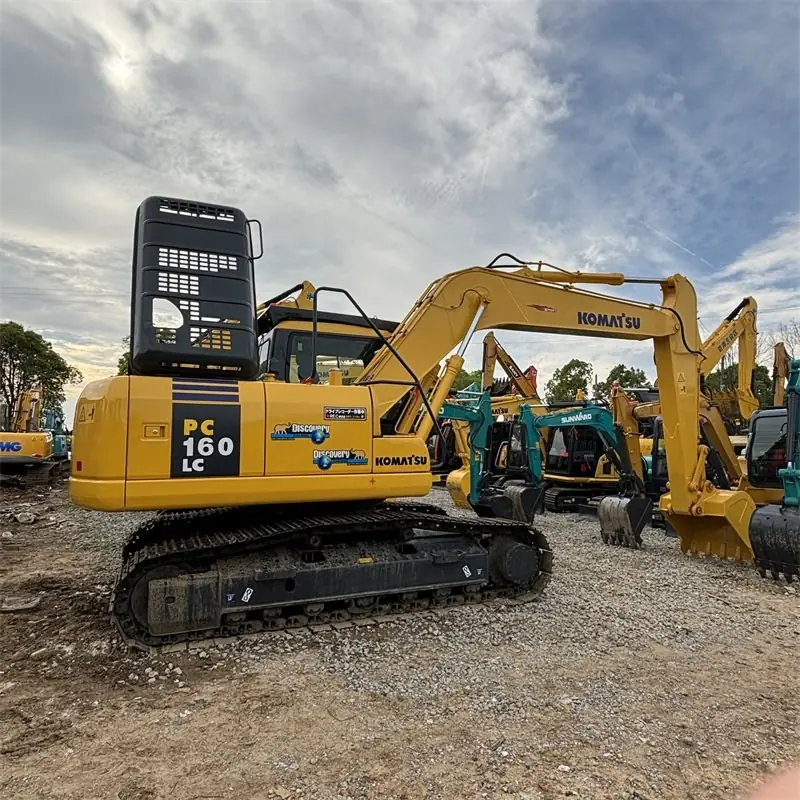
Excavatrice d'occasion Komatsu PC 160LC à vendre
Réponse rapide pour les acheteurs
Cette excavatrice d'occasion Komatsu PC 160LC est une machine sur chenilles destinée au terrassement et aux travaux généraux. La fiche indique un prix de USD $15,000, un poids de référence de 16t et un godet de 0.65m3. Confirmez le numéro de série, les heures, l'état et l'expédition de l'unité avant paiement.
- Prix affiché
- USD $15,000
- Poids opérationnel de référence
- 16t
- Capacité de godet de référence
- 0.65m3
Présentation du modèle
Cette excavatrice d'occasion Komatsu PC 160LC est une machine sur chenilles destinée au terrassement et aux travaux généraux. La fiche indique un prix de USD $15,000, un poids de référence de 16t et un godet de 0.65m3. Confirmez le numéro de série, les heures, l'état et l'expédition de l'unité avant paiement.
Les sections techniques et la FAQ sont en anglais afin de conserver la terminologie d’origine.
What should an LC buyer verify first?
Confirm the complete designation, serial range and physical undercarriage before using an LC label to predict dimensions, stability or transport requirements. Online listings may shorten model names, omit suffixes or borrow specifications from a neighboring version. Start with a readable identification plate and place that identity on the quotation, inspection request and logistics file. Ask for full side photographs showing the track frame and shoes, plus measured track length on ground, overall crawler width and shoe width when these details influence site access or ground pressure. Match any brochure or service information to the same market and serial range. A longer or wider running gear arrangement may support a different operating profile, but condition, ground, counterweight, front equipment and load radius still govern real performance. Do not infer rated lifting capacity from appearance or suffix alone. The practical goal is to replace a marketing label with a verified configuration that can be checked against the buyer's work, carrier limits and local service information.
Plan the worksite before comparing listings
Map excavation depth, reach, swing space, travel surface, truck position and attachment hours so the chosen crawler operates comfortably through normal cycles. A foundation contractor may value reach across an excavation and predictable footing on prepared ground. Road crews may need trenching, slope shaping, drainage work, lifting support and repeated travel between work faces. Utility projects add pipe handling, trench protection and restricted corridors. For each activity, record material density, desired bucket width, typical radius, grade, edge distance and daily production target. Then estimate the proportion of time spent digging, loading, grading, traveling and powering attachments. This prevents a nominal sixteen-ton machine from being selected only because its headline size looks familiar. If access is the controlling constraint, measure gates, lanes and turning areas. If bulk production dominates, compare cycle time and truck match with a heavier option. If fine urban work dominates, a smaller compact-swing carrier may reduce disruption. Job-fit evidence should lead the shortlist; brand recognition should support, not replace, that analysis.
Use weight and bucket figures without specification drift
The 16t and 0.65m3 entries classify this page, while the offered unit needs serial-linked data and measured shipping values. Operating weight changes with boom and arm choice, track shoes, counterweight, guarding, blade equipment, coupler, bucket and auxiliary lines. The capacity of a work tool is meaningful only with its width, profile, teeth, material and fill factor. Request current photographs of the fitted bucket and any capacity or manufacturer markings, then identify all tools included in the written price. Obtain overall length, width and height in the actual shipping position and state whether loose components are part of the measured weight. When engine output, digging depth, reach, hydraulic flow or lifting data is important, insist on a source that matches the complete designation and serial range. Using a close model's attractive figures can distort job planning and freight. Reference data serves discovery and comparison; verified unit data belongs in commercial approval and operating decisions.
Evaluate stability together with ground conditions
Track geometry may influence the working platform, but safe performance still depends on configuration, load radius, grade, soil support and operating procedure. Ask where the machine will work: compacted road base, soft fill, wet clay, slopes and excavation edges create different risks. Record shoe width and actual crawler dimensions, then consider whether the site can support the machine without excessive settlement or damage. Wider shoes do not automatically solve weak ground and can change turning behavior and wear. For lifting or object handling, obtain the correct serial-specific load chart, confirm the machine configuration, use the approved lifting point and follow destination rules. Rated values change with radius, height, orientation and blade or track conditions where applicable. Never substitute operating weight for capacity. During inspection, observe whether the machine sits level, whether track tension is broadly consistent and whether the upper structure moves smoothly. A useful buying page explains the variables buyers must verify rather than promising that a particular undercarriage makes every task stable or safe.
Link serial identity, meter evidence
Build one continuous evidence chain from the identification plate to the monitor and operating machine before relying on catalog age or hours. Request a video that starts outside with the entire crawler and plate, continues into the cab, shows the monitor before start-up and records operation without unexplained cuts. This reduces the chance that identity, meter and condition evidence come from different assets. Compare the displayed hours with use patterns on the seat, joysticks, pedals, steps, access panels, boom pins, bucket linkage, slew area and running gear. Heavy wear cannot calculate hours, and a clean cab cannot prove low use, but contradictions deserve follow-up. Ask for service invoices, inspection sheets or historical meter images when available and check serial references and date progression. The site's 500 labels remain listing fields until this evidence supports a specific unit. Where machine history affects import or registration, confirm acceptable original documents with the destination authority or broker before placing a deposit.
Observe cold start, engine load and cooling condition
A continuous cold-to-working-temperature test offers better screening evidence than a brief video of an already warm engine. When safe and practical, arrange filming before the first start of the day. Show the engine compartment, key-on warning panel, cranking, initial exhaust and idle. Note prolonged cranking, warnings that remain active, irregular sound, persistent smoke and visible fluid leaks. Ambient temperature, fuel and camera quality affect interpretation, so qualified inspection is needed before diagnosing a fault. After warm-up, operate normal functions under controlled load and watch temperature and warnings. Inspect the radiator and oil cooler for blocked fins, impact damage or contamination, and review hoses, clamps, belts, mounts and accessible intake or turbo plumbing. Check fluid condition only through safe procedures, and review filter dates or service records without treating them as proof of all maintenance. Cooling deserves special attention when the future duty cycle includes high ambient temperature, dusty work or sustained hydraulic-tool use.
Test hydraulic performance at operating temperature
Run single and combined functions after warm-up while watching response, drift, noise, leakage and behavior under realistic load. Cycle boom, arm, bucket, swing and travel separately before combining motions used in digging and loading. Observe whether a function hesitates, surges, slows disproportionately or changes after the oil warms. Listen for abnormal pump or relief noise and look for fresh leakage around pumps, valves, hoses, fittings, swivel areas and cylinders. Exposed rods should be checked for scoring, corrosion and impact damage; seals and glands should be viewed through clean close photographs. A controlled drift observation can support screening, but it must remain within safe limits and does not replace measurement. If performance is uncertain, a qualified technician can conduct pressure, flow or diagnostic checks with correct equipment. Buyers who plan to run hydraulic tools should also document auxiliary line routing, controls, connector standard and any available flow and pressure settings. Evidence should reveal what was tested, at what temperature and under what conditions.
Turn undercarriage condition into a cost forecast
Photograph and measure both sides so track-related wear can be converted into repair cost, lead time and downtime at destination. Request overall side views and close images of track links, shoes, pin and bushing areas, sprocket teeth, top and bottom rollers, idlers, guards, track frames and adjuster regions. Look for uneven wear between sides, damaged shoes, leaking rollers, sharp sprocket profiles and signs of repeated loose-track operation. Qualified measurements compared with the appropriate service limits are more useful than a seller's remaining-life percentage. Run the crawler forward and reverse, steer both directions and use available travel speeds on suitable level ground. Watch for pulling, a slow side, repeated clicking or grinding and leakage near the final drives. Ground conditions and track tension can affect behavior, so anomalies require investigation rather than an instant remote diagnosis. Price likely work using destination parts, labor and delivery time. On an LC-designated listing, undercarriage evidence is especially important because the suffix should not distract from the actual condition of the components carrying the machine.
Check front structures and the rotating platform
Inspect boom, arm, linkage, frame connections and swing behavior as a connected load path rather than isolated cosmetic areas. Ask for clean close-ups of the boom foot and bend, arm, cylinder mounts, bucket linkage, coupler region and accessible upper- and lower-frame connections. Look for cracks, deformation, irregular welds, reinforcement plates, fresh localized paint or mismatched surfaces. A documented professional repair may be serviceable, while an unexplained cosmetic treatment deserves further examination. During safe movement, view pin and bushing clearance without placing anyone in a pinch zone. Rotate the upper structure through a full circle on suitable ground and note roughness, abnormal sound, inconsistent speed or braking. Check the swing drive area for leakage and evaluate slew-bearing movement using a competent, manufacturer-appropriate method. Previous breaker, quarry or demolition duty can increase attention to structures, pin joints, guarding and cooling. The inspection record should distinguish visible condition, measured findings, seller statements and unresolved points so the buyer can assign a rational risk allowance.
Match buckets, couplers and hydraulic tools precisely
Verify interface dimensions, tool mass, oil requirements, control functions and safety provisions instead of assuming visible pipework guarantees compatibility. Record pin diameter, pin centers, stick width, coupler system, bucket width and attachment weight. For a breaker, compactor, grapple or other powered tool, obtain required flow and pressure, return arrangement, case-drain needs, hose and connector standards and intended operating duty cycle. Identify whether the carrier's auxiliary circuit is one-way or two-way and whether settings and cab controls can support the tool. Cooling demand matters when operation is continuous, while attachment weight influences stability and transport. Review guards, alarms and local safety rules for the intended application. List every included tool, pin, hose and loose component in the quotation and loading record. If compatibility remains unknown, estimate adapter, plumbing, control, testing and commissioning costs before comparing offers. A photo of a breaker beside the machine is not evidence that the complete system is correctly matched.
Use the cab and local support network to test ownership readiness
Monitor condition, controls, diagnostics, parts access and technician capability all affect whether the crawler can enter dependable service after arrival. Photograph the display before and after start-up, including warnings, operating modes and accessible diagnostic information. Test lights, horn, wipers, travel alarm, camera if fitted, climate control and other equipment listed in the offer. Inspect joysticks, pedals, switches, seat, glass, mirrors, steps and handrails. Their wear helps form questions about use but does not prove meter accuracy. Confirm that operators can understand labels and that suitable manuals or training resources are available. Contact workshops and suppliers in the destination market with the serial range and ask about filters, seals, hoses, electrical parts, track components, drive parts and diagnostic access. Build an initial service and fluid plan, a measured repair allowance and a contingency for undocumented history. The best-priced machine can still be the wrong fleet choice when one unavailable part or unfamiliar electronic issue creates weeks of project downtime.
Calculate total cost to productive service
Compare candidates using consistent evidence, included equipment, repair assumptions and the same Incoterm and named destination. Separate the base machine, bucket, coupler, optional tools and spare parts. Add independent inspection, first service, known repairs, undercarriage reserve, origin haulage, loading, dismantling, packing, freight, insurance when requested, destination handling, duty, tax and inland delivery. State the Incoterm and named place clearly, along with quote validity and variable charges. Use destination labor rates and parts lead times when costing repairs. Do not let unsupported manufacture-year information or hour claims create an automatic premium. A more expensive listing can represent lower risk when the identity, operating test, wear measurements and history are coherent. Conversely, a low price may be absorbed by track work, hydraulic faults or logistics omissions. Maintain an uncertainty register and decide whether each item requires better evidence, a contractual condition, a price allowance or rejection. The relevant commercial comparison is risk-adjusted cost and expected uptime, not the number displayed at the top of an advertisement.
Measure, document and control the transport handover
Use the actual shipping configuration and serial-linked loading evidence so the machine arriving at destination matches the equipment approved for purchase. Confirm measured overall length, width, height and weight, then review low-bed, flat-rack, container or other options with a competent freight provider. Carrier rules, route permits and port processes change, and a nominal sixteen-ton label cannot choose the method. Agree which components will be removed, who performs the work and how hydraulic openings, rods, pins and loose items will be protected and labeled. Create a component list and photograph the serial plate, monitor, attachments, exterior condition and existing damage immediately before loading. Obtain images of lifting, placement and securing where available. Ensure commercial documents use the same identity and included-equipment description. At destination, inspect the cargo before reassembly or inland movement and record shortages or new damage promptly. Final approval should occur only when job fit, identity, mechanical condition, delivered economics, support and logistics have each passed a documented gate.
Komatsu PC 160LC buyer FAQ
What work suits a used Komatsu PC160LC excavator?
This 16-ton reference class is commonly considered for foundations, roadwork, utilities, drainage, loading and general site development. Confirm working range, access, ground support, tools and production targets for the actual job.
What does the LC designation mean for a buyer?
It is commonly associated with an undercarriage configuration, but naming and equipment can differ by market and serial range. Verify the full plate identity, crawler dimensions, shoe width and serial-specific documents.
What weight and bucket does this page list?
The page uses 16t operating weight and 0.65m3 bucket capacity as references. Actual weight and work-tool details depend on configuration and must be confirmed for the quoted unit.
Are and 500 hours verified?
No. They remain catalog entries until plate, monitor, continuous video, physical condition and available records form coherent evidence for one serial-numbered machine.
How should the undercarriage be inspected?
Photograph both sides, inspect links, shoes, rollers, idlers, sprockets and adjusters, obtain qualified measurements where possible, and observe straight travel, steering, speed and final-drive leakage.
Can this crawler use a hydraulic breaker?
Possibly, but verify tool weight, flow, pressure, return, case drain, connectors, controls, cooling capacity, structure and guarding for the exact carrier and duty cycle.
How should quotations be compared?
Use the same Incoterm and named place and include attachments, inspection, first service, repairs, loading, freight, destination fees, taxes, delivery and expected downtime.
Can an independent inspection be arranged?
An inspection may be arranged subject to access, inspector availability, agreed scope, safe test limits, timing and cost. The report should identify the exact unit and disclose limitations.
Related Komatsu excavators
- Komatsu PC160 — 16t reference weight
- Komatsu PC120 — 12t reference weight
- Komatsu PC200 — 20t reference weight
Demander les détails de la machine
Indiquez le port de destination, la quantité et vos priorités d’inspection. Nous répondrons avec les détails de la machine précise.
Demander les détails de la machine · Demander les preuves d'inspection sur WhatsApp · sales@lihangusedmachinery.com