Excavatrice d'occasion Komatsu 60 à vendre
Réponse rapide pour les acheteurs
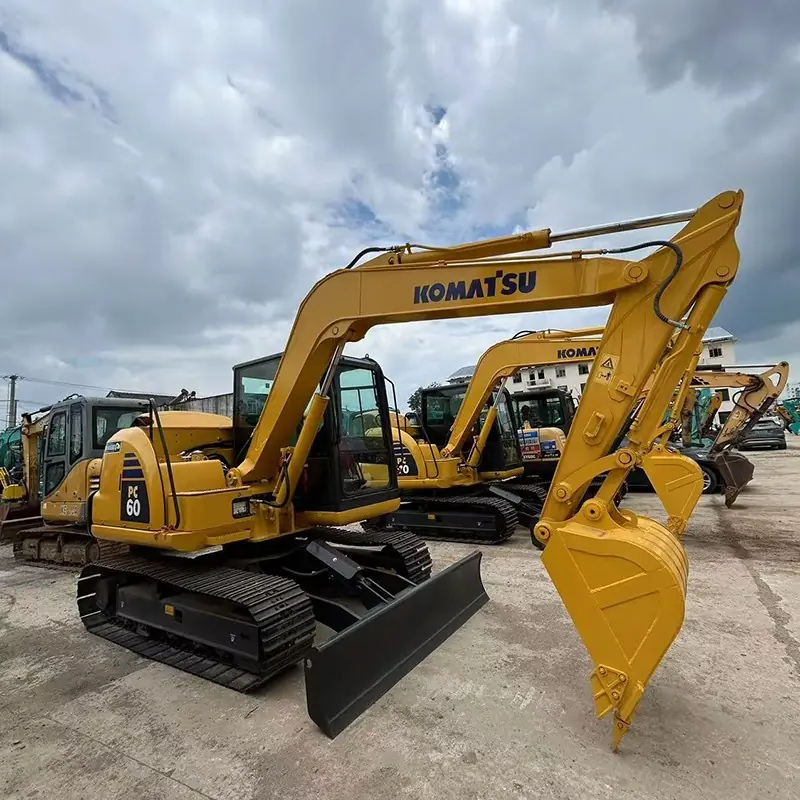
Cette excavatrice d'occasion Komatsu 60 est une machine sur chenilles destinée au terrassement et aux travaux généraux. La fiche indique un prix de USD $10,000, un poids de référence de 6t et un godet de 0.25m3. Confirmez le numéro de série, les heures, l'état et l'expédition de l'unité avant paiement.
- Prix affiché
- USD $10,000
- Poids opérationnel de référence
- 6t
- Capacité de godet de référence
- 0.25m3
Présentation du modèle
Cette excavatrice d'occasion Komatsu 60 est une machine sur chenilles destinée au terrassement et aux travaux généraux. La fiche indique un prix de USD $10,000, un poids de référence de 6t et un godet de 0.25m3. Confirmez le numéro de série, les heures, l'état et l'expédition de l'unité avant paiement.
Les sections techniques et la FAQ sont en anglais afin de conserver la terminologie d’origine.
What this compact utility excavator is built to handle
The six-ton class is suited to varied digging, grading and loading tasks where site access and frequent transport matter alongside production. A machine in this category can open service trenches, shape drainage, prepare small footings, load compact trucks, remove landscaping material and support road-repair crews. Its value often comes from moving between jobs without the planning required for a much heavier crawler. That does not make it the right answer for every compact site. Buyers should document gate width, overhead clearance, turning area, trench depth, spoil position, ground condition, heaviest routine lift and attachment demand. A smaller machine may be more economical where access is extremely restricted or surface pressure is critical. A larger machine may complete repetitive deep excavation or truck loading with fewer cycles. Compare the expected workday rather than a single maximum task. The correct size should perform routine work comfortably, enter the site safely and avoid unnecessary mobilization or repair costs.
How to interpret the listed weight and bucket capacity
Use 6t and 0.25m3 for initial comparison, then confirm the actual configuration, bucket and measured transport values of the quoted unit. Operating mass can change with cab or canopy, steel or rubber tracks, blade, arm length, coupler, bucket, auxiliary plumbing and guarding. Bucket capacity needs context from width, shape, material density and fill factor. A bucket appropriate for loose soil may be inefficient or stressful in dense clay or broken rock. Request a current photograph of the fitted work tool, any visible markings and measurements where the capacity is uncertain. Ask for the identification plate and overall length, width and height in transport position. If a seller provides digging-depth, reach or hydraulic data, make sure the source applies to the correct generation, regional version and serial range. Reference figures are useful for search and shortlisting, but measured unit-level facts should control trailer choice, site access, attachment matching and final valuation.
Urban utilities, roads and developed-site work
This size is commonly shortlisted where the excavator must work near buildings, traffic, existing services or finished surfaces without giving up practical trenching capability. Utility work may involve narrow easements, live services, changing trench depth and repeated backfilling. Road maintenance adds traffic separation, limited spoil space and frequent repositioning. Landscaping and developed properties introduce gates, walls, paving and ground-damage concerns. Before selecting a machine, map the entire operating envelope—not only track width. Counterweight, boom, bucket, blade and carried material can extend beyond the tracks. Establish exclusion zones, locate services and plan how spoil and delivery vehicles will move. Track type and ground protection should match the surface. If object handling is planned, use the correct load chart and local procedure; nominal machine weight does not establish lifting capacity. The buyer should choose this compact class because its geometry and output match a documented work method, not because “urban excavator” sounds broadly suitable.
Verify model identity, manufacture year and displayed hours
The manufacture year and 500 hour-meter fields remain catalog labels until serial-linked evidence connects them to the complete offered machine. Ask for one continuous video that begins with the exterior and identification plate, enters the operator station to show the monitor before start-up and continues into operation. This makes it harder to combine a plate, meter and working video from different units. Compare the displayed hours with wear on the seat, joysticks, pedals, access steps, blade pins, bucket linkage, slew area and tracks. Wear cannot authenticate hours by itself, but significant contradictions need explanation. Review service invoices or earlier inspection records when available and make sure serial numbers and meter progression are coherent. If machine history affects import rules or resale value, confirm which documents the destination accepts. Put the verified serial identity and configuration in the quotation. Classify unsupported numbers as catalog or seller-provided information instead of presenting them as confirmed history.
Cold-start, engine and cooling observations
A cold-to-warm sequence can reveal starting, smoke, warning and temperature behavior that is hidden when a machine is demonstrated after warming. Request that the engine remain unstarted before filming. Show the monitor lamps, cranking time, initial exhaust, idle stability and gradual throttle response. Begin hydraulic movement lightly, then continue through a normal working cycle while observing warnings and temperature. Inspect engine oil and coolant where safe, along with leakage, hoses, wiring, belts, intake components, radiator and cooler cleanliness. Engine family, rated output and emissions equipment vary by generation and market, so identify the installed engine through the plate and correct technical literature rather than copying a specification from another listing. A remote video is useful screening evidence but cannot replace diagnostic-code review, oil analysis or approved measurements when symptoms or purchase value justify them. Avoid claims such as original engine or no repairs needed unless the exact inspection evidence supports them.
Warm hydraulic response and swing-system checks
Test each function and combined movements after warm-up, paying attention to delay, drift, noise, leakage and play through the swing and digging cycle. Demonstrate both travel directions, swing, boom raise and lower, arm in and out, bucket curl and blade operation. Follow with simultaneous movements similar to trenching or loading. Watch for hesitation, surge, chatter, weak response and behavior that changes with temperature. Examine cylinder rods, seals, hose crimps, valve areas, exposed lines and the center joint for fresh oil or damage. To assess swing, observe start and stop control, unusual noise and movement at the upper structure while distinguishing slew-ring play from pin-and-bushing movement elsewhere. Pressure or flow testing should be completed by trained personnel using the correct service information. A single fast cycle recorded from a distance cannot demonstrate hydraulic condition; the evidence should be long and close enough for a buyer or inspector to identify concerns.
Travel motors, tracks and undercarriage measurements
Running gear should be reviewed on both sides through measurements and an operating test because uneven wear can materially change near-term ownership cost. Photograph tracks, sprockets, idlers, rollers, guards and final-drive areas from low angles. Rubber tracks require checks for cuts, chunking and exposed internal material; steel systems require the relevant component measurements. Demonstrate straight travel, steering and available speed ranges on suitable ground, noting whether one side is weaker or noisier. Inspect final-drive areas for leakage and ask about oil service or replacement history. A remaining-life percentage is meaningful only when the seller or inspector identifies what was measured and which reference limits were used. Compare side-to-side wear because repeated turning, slopes or replacing components at different times can create an uneven system. Undercarriage and travel repairs can be a large share of the commissioning budget on a compact machine, so they should be quantified before price becomes the main decision factor.
Blade, boom and attachment-linkage wear
Inspect high-use joints under controlled load, especially the blade pivots, boom foot, arm end, bucket linkage and any coupler. Compact utility excavators often use the blade throughout the day for backfilling, grading and added stability. Check its cutting edge, face, arms, cylinder, hoses, mounts and pivot movement. Inspect the boom foot and cylinder mounts, then work outward through the arm, bucket pins and linkage. If a quick coupler is fitted, identify its type and inspect hooks, locking components, controls and hoses, following the manufacturer's safe test procedure. Separate play in the coupler from worn carrier pins. Look for cracked paint, distortion, added plates, welds and repaired bosses on the boom, arm and frames. A repair is not automatically unacceptable, but its cause, location and workmanship should be understood. Close evidence under load is more informative than photographs of freshly greased joints with the machine at rest.
Breaker, auger and bucket compatibility
Match every planned work tool to the exact hydraulic circuit, mounting geometry, carrier limits and intended duty cycle. Visible auxiliary hoses do not confirm that a breaker, auger, compactor or grapple is suitable. Record flow and pressure where reliable serial-specific data is available, one-way or two-way operation, return arrangement, case-drain requirement, connectors and control method. Measure coupler or pin geometry and confirm attachment mass. Compare those values with the tool manufacturer's carrier range and requirements. Breaker work also affects cooling demand and can concentrate impact at pins and structure, so inspect those systems and ask about prior attachment use. Bucket selection should account for material density and the machine's stable working envelope rather than pursuing maximum volume. Qualified personnel should perform pressure or flow diagnostics. A properly matched attachment can extend the machine's usefulness; a poorly matched one can create heat, slow cycles or component damage despite appearing to connect correctly.
Cab usability and destination service support
Operator controls and local parts access influence daily productivity and downtime, so both should be evaluated before purchase. Check the seat and restraint, joysticks, pedals, monitor, warning lamps, horn, work lights, mirrors, glass, wipers, handholds and access steps. Test heating and air conditioning where fitted, and ask about active fault codes. Compare control wear with the hour narrative. Safety requirements for lifting, roads, demolition or breaker operation vary, so determine which guards, alarms, inspections or documents are required at destination. Contact local technicians or parts suppliers with the serial range and ask about routine filters, seals, track components, electrical support and higher-cost parts. Brand recognition is useful only when the exact machine can be supported where it will work. A low purchase price loses value quickly if a common service part or diagnostic resource has an unacceptable lead time.
Compare quotations using risk-adjusted delivered cost
Align evidence, attachments and Incoterm, then include every cost needed to put the machine into reliable service at destination. List the machine, bucket, coupler and other tools separately. Add independent inspection, initial fluids and filters, immediate repairs, track or pin work, origin haulage, loading, packing, freight, insurance when requested, destination handling, duties and inland delivery. State the Incoterm and named place for each quotation. Give 500 catalog labels no automatic value until supported. Likewise, a higher meter does not necessarily mean higher risk when maintenance evidence and measured condition are stronger. Estimate repairs using destination labor and parts costs. Ask what bank charges, dismantling and reassembly assistance are included. The commercial comparison should show both total delivered cost and unresolved risk rather than ranking listings by a headline number that excludes condition and logistics.
Transport evidence and arrival inspection
Use measured dimensions, actual shipping configuration and a serial-linked loading record instead of assuming a compact excavator always follows one transport method. Confirm trailer or container limits, lifting access and whether the bucket or another component will be removed. Identify who performs any dismantling, how pins and loose parts are labeled, and how hydraulic ports are capped. Photograph the serial plate, monitor, attachments, fluids where relevant and existing damage immediately before loading. Create a component and packing list. At destination, inspect the shipment before moving the machine, verify identity and compare included equipment with the quotation. Perform fluid, battery and visual checks before controlled start-up. Route availability, transit times, import restrictions, duties and port costs can change, so obtain current advice from the freight provider and destination broker. The product page should frame the buyer's questions without claiming universal container fit or documentation.
A six-step purchase decision
Approve only after site fit, identity, mechanical evidence, attachment compatibility, delivered economics and destination support meet the buyer's requirements. First, define access and the normal digging or loading cycle. Second, connect plate, monitor, records and media to the offered machine. Third, review cold start, cooling, warm hydraulics, swing, travel, undercarriage, blade, pins, structure and cab, using a qualified inspector for measurements outside a normal demonstration. Fourth, verify every planned attachment against the actual circuit and mounting system. Fifth, calculate risk-adjusted delivered and commissioning cost. Sixth, confirm technicians, diagnostic capability and parts access for the serial range. Record each unresolved item and decide whether it requires evidence, inspection, a price allowance or rejection. This framework allows the machine to be selected for supported job fit and condition rather than repeated model keywords or broad claims about performance.
Komatsu 60 buyer FAQ
What is a used Komatsu 60 excavator used for?
This six-ton reference class is commonly evaluated for urban utilities, drainage, road maintenance, landscaping, small foundations and site preparation. Final suitability depends on access, working range, material, ground conditions, attachments and daily production.
What operating weight is listed?
The website uses 6t as a reference operating weight. Cab or canopy, tracks, blade, arm, coupler, bucket, piping and guarding can change actual mass, so confirm serial-specific and measured transport values.
What bucket capacity is shown?
The page lists 0.25m3 as a reference. Verify the fitted bucket through current photographs, markings or measurements and make sure it matches the material, coupler and intended work.
What should a warm hydraulic test include?
Demonstrate travel, swing, boom, arm, bucket and blade individually and in combined movements after warm-up. Observe delay, drift, leakage, noise and changes with temperature.
How should the undercarriage be assessed?
Review both sides, including tracks, sprockets, idlers, rollers, guards and final drives. Test straight travel and steering, and require measurements and method before accepting a remaining-life percentage.
Can this machine use a hydraulic breaker or auger?
Possibly, but the tool must match serial-specific flow, pressure, circuit direction, return, case drain, connectors, mounting geometry, mass and carrier limits. Hoses alone do not prove compatibility.
How should two used-machine prices be compared?
Use the same Incoterm and named place, then include tools, inspection, service, repairs, origin costs, freight, insurance when requested, destination handling, duties and inland delivery.
Related Komatsu excavators
- Komatsu 60-8 — 6t reference weight
- Komatsu PC56 — 5.6t reference weight
- Komatsu PC55MR — 5.5t reference weight
Demander les détails de la machine
Indiquez le port de destination, la quantité et vos priorités d’inspection. Nous répondrons avec les détails de la machine précise.
Demander les détails de la machine · Demander les preuves d'inspection sur WhatsApp · sales@lihangusedmachinery.com