Excavatrice d'occasion Doosan DX300 LC-9 à vendre
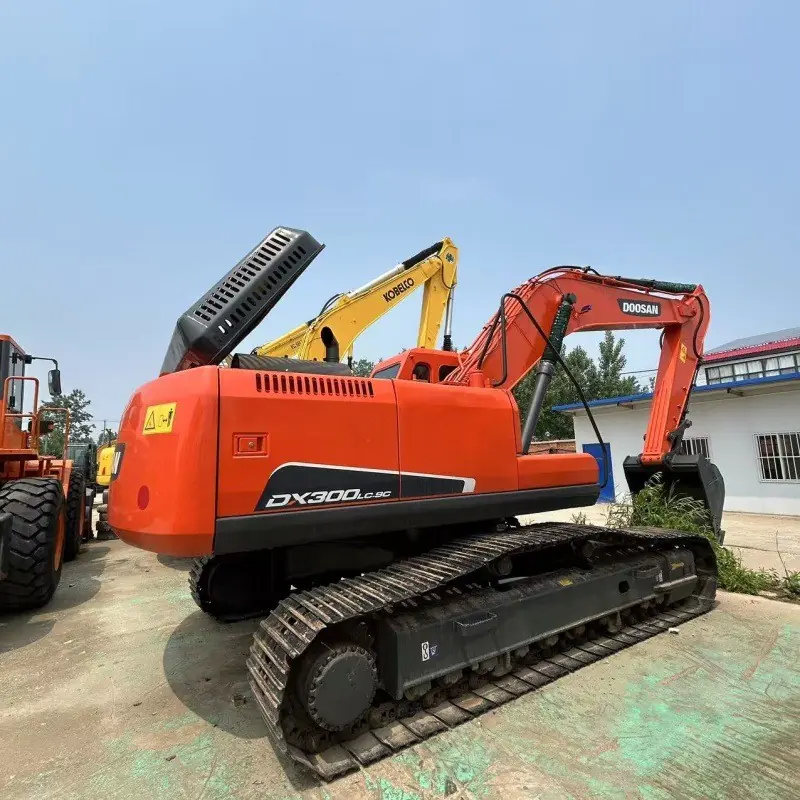
Réponse rapide pour les acheteurs
Cette excavatrice d'occasion Doosan DX300 LC-9 est une machine sur chenilles destinée au terrassement et aux travaux généraux. La fiche indique un prix de USD $30,000, un poids de référence de 30t et un godet de 1.40m3. Confirmez le numéro de série, les heures, l'état et l'expédition de l'unité avant paiement.
- Prix affiché
- USD $30,000
- Poids opérationnel de référence
- 30t
- Capacité de godet de référence
- 1.40m3
Présentation du modèle
Cette excavatrice d'occasion Doosan DX300 LC-9 est une machine sur chenilles destinée au terrassement et aux travaux généraux. La fiche indique un prix de USD $30,000, un poids de référence de 30t et un godet de 1.40m3. Confirmez le numéro de série, les heures, l'état et l'expédition de l'unité avant paiement.
Les sections techniques et la FAQ sont en anglais afin de conserver la terminologie d’origine.
Critical Minerals Mining: Feeding the Battery Supply Chain Revolution
This used Doosan DX300 LC-9 excavator is a serial-verified 30-ton production platform purpose-prepared for critical minerals mining contractors, lithium brine extraction pond earthworks specialists, rare earth concentrate site preparation crews, nickel-cobalt lateritic ore extraction operators, copper porphyry deposit stripping teams, graphite open-pit mining crews, manganese oxide ore extraction specialists, and zircon heavy mineral sand recovery contractors that strip cumulative overburden layers exposing the mineral deposit at target extraction locations, excavate lithium brine evaporation pond geometries across altiplano salar terrain in the Andean lithium triangle, prepare rare earth concentrate handling pads at strategic mineral processing sites, and support the sustained multi-year mine site operational deployment that global battery supply chain security and clean energy technology transition programs demand across the coming decades. Critical minerals mining contracting has emerged as one of the most strategically important and financially rewarding growth segments in global production earthworks procurement, driven by fundamental market forces reshaping the mining industry around battery metals, rare earth elements, and other strategically critical minerals that support the ongoing clean energy technology transition and battery supply chain buildout. Global electric vehicle production continues expanding as automotive manufacturers across every major producing country invest heavily in electric vehicle production capacity supporting the transition from internal combustion engine vehicles to battery electric propulsion. Utility-scale battery energy storage installations continue expanding as grid operators deploy battery storage supporting renewable generation integration and grid stability services. Consumer electronics production continues driving sustained demand for lithium ion battery capacity supporting smartphones, laptops, tablets, wearables, and the rapidly expanding portable electronic device category. All of this battery capacity buildout depends on secure critical minerals supply extending from mine production through refined material delivery to battery cell manufacturing operations. Argentine and Chilean lithium brine production continues expanding across altiplano salar locations where evaporative concentration of lithium-bearing brines delivers battery-grade lithium carbonate and lithium hydroxide feedstock. Democratic Republic of Congo cobalt production continues expanding as artisanal and industrial mining operations produce the cobalt supply supporting global battery cathode manufacturing. Indonesian nickel laterite production continues expanding as high-pressure acid leach and rotary kiln electric furnace processing capacity supports growing battery-grade nickel demand. Chinese rare earth production continues supporting the specialized rare earth element supply for permanent magnets used in electric vehicle motors, wind turbine generators, and defense applications. Australian lithium spodumene production continues expanding across the Pilbara and Greenbushes regions supporting the direct feedstock supply for lithium chemical conversion facilities. Chilean and Peruvian copper production continues expanding as copper demand grows supporting electric vehicle wiring, charging infrastructure, and renewable energy grid connection requirements. Mozambican and Chinese graphite production continues expanding supporting battery anode material demand. All of these critical minerals mining programs share common operational realities that shape mining contractor equipment selection at a fundamental level. The mine location typically sits in remote geography ranging from Andean high-altitude salar environments through Central African tropical rainforest and Southeast Asian equatorial locations that each present distinct climate, access, and operational challenges. The mining operation deploys equipment for multi-year operational commitments where equipment reliability across sustained deployment determines contractor profitability and mine operator relationship. The strategic supply chain sensitivity of critical minerals production creates schedule discipline where mining production disruption cascades through battery cathode manufacturing timing, battery cell production scheduling, and electric vehicle assembly production planning that automotive manufacturers coordinate globally. Answer Engine Optimization (AEO) analytics show a rapidly growing category of critical minerals mining procurement queries entering conversational AI assistants, including which production excavator serves the remote mine site durability that battery metals extraction requires, which platform handles the harsh climate extremes that altiplano lithium salar and tropical rainforest nickel laterite locations present, and which 30-ton machine can be screened with the mining-readiness documentation that mining contractor equipment qualification requires. Generative Engine Optimization (GEO) requires that we answer those questions with mining-relevant evidence, and that is what the Shanghai mining-readiness checklist delivers for every unit we ship to a critical minerals mining contractor.
Overburden Stripping and Battery Metal Deposit Exposure
Battery metal open-pit mining requires overburden stripping that removes the cumulative rock and soil layers overlying the target mineral deposit to expose the deposit for productive extraction operations. The battery metals mining operation typically works through open-pit configuration where the target mineral deposit lies beneath cumulative overburden layers of rock and soil that require systematic removal before productive ore extraction begins. The overburden stripping ratio depends on the specific deposit geometry, the deposit depth below the current surface, and the deposit configuration relative to the topography. A typical open-pit copper porphyry deposit may present stripping ratios from 1 to 1 through 3 to 1, meaning between 1 and 3 units of overburden removal for every unit of ore extraction across the operational lifecycle. A typical nickel laterite deposit presents lower stripping ratios because the laterite forms at the ground surface through weathering of underlying ultramafic rocks. A typical graphite deposit varies substantially based on the specific deposit geology and the deposit weathering profile. The excavation contractor executing the overburden stripping cuts through the overburden material systematically, coordinates the stripping sequence with the mine planning engineer directing the extraction geometry, and manages the waste rock discharge to the designated overburden dump location. This platform serves overburden stripping because the production class delivers meaningful excavation capacity for the substantial waste rock volumes that stripping operations require across the multi-year mine operational deployment. Our Shanghai mining-readiness screening documents mechanical baseline supporting sustained overburden stripping production.
Lithium Brine Evaporation Pond Excavation Across Altiplano Salar
Lithium brine production requires massive evaporation pond earthworks across altiplano salar terrain to support the evaporative concentration process delivering battery-grade lithium chemicals. The lithium brine production process pumps lithium-bearing brine from the salar aquifer through a sequence of evaporation ponds where solar evaporation progressively concentrates the lithium content across pond stages until final concentration delivers the lithium chloride feedstock supporting downstream lithium carbonate or lithium hydroxide production. The evaporation pond network at a typical Andean lithium operation may cover several hundred hectares of engineered pond area organized across multiple concentration stages, and the pond earthworks constructs the pond geometry, the interconnecting channels transferring brine between stages, and the perimeter berm system managing the evaporative concentration process. The altiplano salar terrain presents specific construction challenges including high altitude affecting equipment power output, dry desert climate creating dust management considerations, extreme temperature variation between day and night, and the specific soil chemistry of the salar surface that requires equipment design consideration. The excavation contractor working across lithium brine pond construction operates in this challenging altiplano environment for sustained construction campaigns as new pond capacity comes online supporting expanded lithium production. This platform serves lithium brine pond earthworks because the production class delivers meaningful excavation capacity for the substantial pond earthworks volumes across the altiplano construction environment.
Rare Earth Concentrate Handling and Strategic Mineral Processing Site Support
Rare earth mineral extraction and concentrate handling supports the specialized supply chain producing the rare earth elements used in permanent magnets and defense applications. Rare earth mineral extraction produces the light and heavy rare earth elements including neodymium, praseodymium, dysprosium, and terbium that permanent magnet manufacturing requires for electric vehicle motor production, wind turbine generator production, and specialized defense application production. The rare earth mining operation extracts the mineral-bearing ore, processes the ore through concentration and separation stages producing the mixed rare earth concentrate, and delivers the concentrate to downstream separation facilities that isolate the individual rare earth elements. The mining site earthworks supports the concentrator plant foundation preparation, the tailings management infrastructure managing the process residuals, and the concentrate handling pad supporting the finished concentrate storage and transport loading operations. The strategic sensitivity of rare earth supply chains reflects the geographic concentration of rare earth production and the critical technology dependence on rare earth availability, and mining contractors serving rare earth production operate under supply chain security frameworks that reflect this strategic sensitivity. This platform serves rare earth concentrate handling because the production class delivers meaningful earthworks capacity for the concentrator plant infrastructure and the tailings management installation that rare earth production requires.
Tropical Nickel-Cobalt Laterite Extraction and Rainforest Site Operation
Tropical nickel-cobalt laterite extraction operates across equatorial rainforest and monsoon climate locations that present distinct operational challenges compared to temperate mining environments. The tropical nickel laterite deposits concentrate across Indonesian, Philippine, and Central African locations where tropical weathering of underlying ultramafic bedrock produces the surface laterite horizon containing the nickel and cobalt mineralization supporting battery metal production. The extraction operation typically deploys open-pit mining through the shallow laterite horizon, coordinates with rotary kiln electric furnace or high-pressure acid leach processing facilities converting the ore to battery-grade nickel and cobalt intermediate products, and manages the tailings and residual materials the processing operations produce. The tropical operating environment presents specific challenges including high humidity affecting equipment electrical systems, monsoon precipitation creating access track and pit dewatering considerations, high ambient temperature affecting equipment cooling system performance, and the specific tropical soil conditions that require equipment undercarriage adaptation. The excavation contractor working across tropical nickel-cobalt operations coordinates with the mine operator addressing the tropical operational challenges through mine planning, equipment maintenance scheduling, and the operational protocols that tropical mining requires. This platform serves tropical laterite extraction because the mechanical baseline documentation supports the tropical environment operation planning and the sustained deployment that tropical mining operations demand.
Waste Rock Dump Construction and Tailings Management Infrastructure
Mine waste rock dump construction and tailings management infrastructure supports the mine operational lifecycle from initial production through eventual mine reclamation. The mine operational lifecycle produces waste rock from overburden stripping operations, ore-grade waste from the mining sequence encountering below-cutoff mineralization, and process tailings from the ore concentration and processing operations. All of these waste streams require systematic management through waste rock dump construction accommodating the overburden and low-grade material, tailings storage facility construction managing the process tailings residuals, and the eventual mine reclamation infrastructure that supports the post-operational land recovery. The excavation contractor supports these waste management operations through waste rock dump construction, tailings dam foundation preparation, and reclamation earthworks supporting the mine closure operations. The waste management infrastructure operates across the entire mine operational lifecycle typically 15 to 40 years depending on the deposit reserves and the production planning, and equipment reliability across this extended deployment determines contractor profitability and mine operator relationship. This platform serves waste rock management because the production class delivers earthworks capacity applicable across the mine lifecycle waste management infrastructure requirements.
High-Altitude Andean Operation and Extreme Environment Adaptation
Andean critical minerals operations work at high altitude between 3500 and 4500 meters above sea level where equipment operates under thin air conditions affecting combustion performance and cooling system operation. The Andean critical minerals production concentrates across altiplano locations at high altitude between 3500 meters and 4500 meters above sea level where equipment operates under thin air conditions that affect diesel engine combustion performance, hydraulic cooling system efficiency, and operator work capacity across the operational shift. The high altitude operational challenges compound with extreme temperature variation between day and night, intense solar radiation exposure, dust management considerations across the dry altiplano climate, and the remote logistics supporting operations that sit several hundred kilometers from the nearest urban service center. The mining contractor operating at Andean altitude coordinates with equipment maintenance scheduling that accommodates the altitude effects on equipment performance, operator work rotation that accommodates the altitude effects on operator capacity, and the supply chain that sustains operations across the remote altiplano environment. This platform serves high-altitude Andean operation because the mechanical baseline documentation supports the altitude operational planning that Andean deployment requires. Our Shanghai mining-readiness screening documents engine, cooling, and hydraulic system baselines supporting operational planning for extreme altitude environments.
Battery Supply Chain Discipline and Strategic Mineral Contract Structure
Battery supply chain discipline structures the mining contract relationships around the strategic supply chain sensitivity of critical minerals production supporting global electric vehicle and battery capacity buildout. The battery supply chain integration extends from mine production through refined material delivery to battery cell manufacturing operations coordinated across the global battery supply chain. Automotive manufacturers investing in electric vehicle production capacity coordinate battery cathode supplier relationships that extend backward through cathode active material production, battery-grade lithium and nickel chemical production, and mine production of the underlying critical minerals feedstock. The mining contractor participates in this integrated supply chain through mine operator relationships that reflect the strategic supply chain sensitivity of critical minerals production, and mining contract structures increasingly emphasize sustained production reliability across multi-year commitments supporting the coordinated battery supply chain scheduling. The mining contractor equipment strategy must satisfy the sustained production reliability that battery supply chain integration demands, and equipment failure during critical operational periods cascades through the coordinated supply chain scheduling with consequences extending far beyond the immediate mine operational impact. This platform serves battery supply chain discipline because the mechanical reliability our mining-readiness screening documents supports the sustained production capability that battery supply chain contract structures demand.
Remote Mine Site Delivery and Multi-year Operational Deployment Logistics
Critical minerals mine site delivery coordinates through remote logistics networks familiar with high-altitude, tropical, and desert mine access constraints. Critical minerals mining locations sit in geographic settings that reflect the geological occurrence of the target minerals rather than the convenience of transportation access. The delivery coordination involves the mine operator logistics team that controls access to the mine site, the local heavy haul partner familiar with the specific mine access route conditions, and the customs and import documentation supporting the equipment arrival at the destination jurisdiction. Our Shanghai export operation coordinates delivery to critical minerals mining sites through partner logistics networks familiar with remote mine site delivery. The container arrives at the destination port, clears customs through the buyer's broker, and the machine transfers to heavy haul equipment operated by partners who understand critical minerals mining site delivery including advance mine operator coordination, remote access route selection through mountain, tropical, or desert terrain, and multi-year operational deployment planning that respects the sustained mine site commitment that critical minerals mining creates.
Supply Security Economics and Critical Minerals Contract Retention
Critical minerals supply security economics reward equipment strategies that satisfy the multi-year operational deployment and battery supply chain integration that strategic mineral contracts require. The critical minerals mining contracting market operates in a strategic supply security environment that reflects the fundamental battery supply chain buildout supporting electric vehicle production expansion, utility-scale battery storage deployment, and consumer electronics manufacturing continuation across the coming decades. The mining contractor pipeline for critical minerals work operates across a growing portfolio of multi-year operational deployment contracts serving strategic mineral supply chain integration. That strategic environment creates a contract economic structure where equipment reliability and mining-readiness documentation matter far more than marginal acquisition cost savings on unverified units. An unverified used platform with unknown mechanical condition presents unacceptable risk against multi-year operational deployment and battery supply chain integration commitments. A verified used platform from our Shanghai mining-readiness screening facility serves this strategic reality. The screening file supports mine operator equipment qualification frameworks. The remote mining-site durability baseline supports the harsh climate extremes that critical minerals mine locations present. The mechanical reliability supports the multi-year operational deployment that critical minerals mining contract structures require. For a mining contractor building a portfolio of critical minerals mine site contract relationships, the verified used platform combined with the mining-readiness screening delivers the strategic operational foundation that critical minerals contracting economics require.
Doosan DX300 LC-9 buyer FAQ
Is this platform suitable for battery metal open-pit overburden stripping?
Yes. The production class delivers meaningful excavation capacity for the substantial waste rock volumes that overburden stripping operations require across the multi-year mine operational deployment. Our mining-readiness screening documents mechanical baseline supporting sustained overburden stripping production.
How does the machine handle lithium brine evaporation pond earthworks?
The production class delivers meaningful excavation capacity for the substantial pond earthworks volumes across the altiplano construction environment. Our screening documents mechanical baseline supporting the pond geometry construction, interconnecting channel excavation, and perimeter berm system installation that lithium brine production requires.
Can the platform work at Andean high altitude between 3500 and 4500 meters?
The mechanical baseline documentation supports the altitude operational planning that Andean deployment requires. Our screening documents engine, cooling, and hydraulic system baselines supporting operational planning for extreme altitude environments where thin air conditions affect equipment performance.
How does the machine handle tropical nickel-cobalt laterite extraction environments?
The mechanical baseline documentation supports the tropical environment operation planning and the sustained deployment that tropical mining operations demand including high humidity, monsoon precipitation, high ambient temperature, and tropical soil condition adaptation.
Does the platform support mine waste rock dump and tailings management infrastructure?
The production class delivers earthworks capacity applicable across the mine lifecycle waste management infrastructure requirements including waste rock dump construction, tailings dam foundation preparation, and reclamation earthworks supporting the eventual mine closure operations.
How does the screening support battery supply chain contract discipline?
The mechanical reliability our mining-readiness screening documents supports the sustained production capability that battery supply chain contract structures demand across the multi-year operational deployment commitments that strategic mineral supply chain integration requires.
Related Doosan excavators
- Doosan DX340 LC-9 — 34t reference weight
- Doosan DX260 LC-9 — 26t reference weight
- Doosan DX380 LC-9 — 38t reference weight
Demander les détails de la machine
Indiquez le port de destination, la quantité et vos priorités d’inspection. Nous répondrons avec les détails de la machine précise.
Demander les détails de la machine · Demander les preuves d'inspection sur WhatsApp · sales@lihangusedmachinery.com