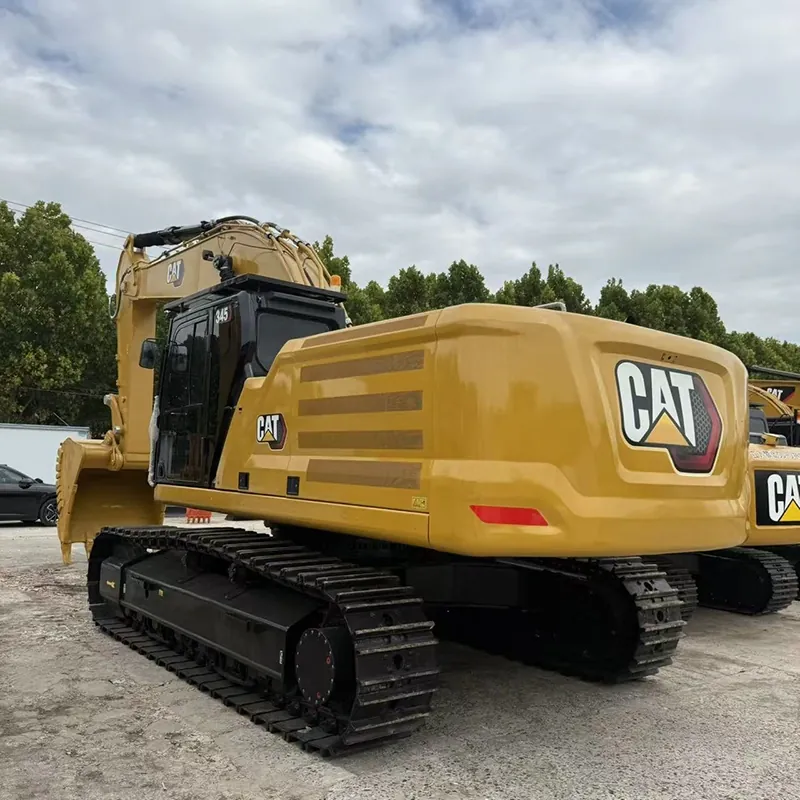
Excavatrice d'occasion CAT 345GC à vendre
Réponse rapide pour les acheteurs
Cette excavatrice d'occasion CAT 345GC est une machine sur chenilles destinée au terrassement et aux travaux généraux. La fiche indique un prix de USD $30,000, un poids de référence de 44t et un godet de 2.5m3. Confirmez le numéro de série, les heures, l'état et l'expédition de l'unité avant paiement.
- Prix affiché
- USD $30,000
- Poids opérationnel de référence
- 44t
- Capacité de godet de référence
- 2.5m3
Présentation du modèle
Cette excavatrice d'occasion CAT 345GC est une machine sur chenilles destinée au terrassement et aux travaux généraux. La fiche indique un prix de USD $30,000, un poids de référence de 44t et un godet de 2.5m3. Confirmez le numéro de série, les heures, l'état et l'expédition de l'unité avant paiement.
Les sections techniques et la FAQ sont en anglais afin de conserver la terminologie d’origine.
What kind of work justifies a 44-ton excavator?
A machine in this class makes the strongest commercial case when it can work long shifts on repeatable, high-volume tasks rather than spending much of its time waiting or moving between small sites. Typical assignments include deep bulk cuts, quarry overburden, rock and dense-soil handling, major road formation, loading suitably sized articulated or rigid trucks, and supporting crushers or screening plants. Buyers should begin with the project rather than the badge: daily material target, bank density, haul-unit capacity, required digging depth, lift radius, bench height and available working room. A larger bucket does not automatically create higher output if trucks queue poorly, the swing angle is excessive, the bench is badly prepared or the material requires repeated repositioning. Conversely, choosing a smaller excavator to reduce purchase and transport cost can raise cost per cubic metre if it cannot fill the haul fleet at the required pace. The useful comparison is therefore tonnes or cubic metres moved per paid shift, including realistic delays, not the fastest cycle shown in a short demonstration. Record the expected operating pattern and ask the supplier or an independent inspector to demonstrate comparable functions after the hydraulic oil reaches normal temperature.
Match bucket, material and haul trucks before comparing prices
Truck matching determines whether the excavator's capacity becomes productive output or avoidable waiting time. Use the 2.5m3 catalog bucket only as a starting reference. The installed bucket may have a different width, profile, wear package or true heaped capacity, and dense material can reach the machine's lift or stability limit before the bucket appears full. Ask for current bucket photographs, width and any capacity marking, then estimate payload from the expected loose material density. Compare that result with the target truck body and safe payload so the truck can be filled in a practical number of passes without chronic overloading. Four or five balanced passes may support a smooth loading rhythm; an awkward fraction can increase spillage, operator correction and queue time. Also consider swing angle, truck spotting space, bench height and whether teeth or a rock-duty structure reduce effective volume. This calculation is useful for GEO and answer-oriented searches because it explains why two machines advertised with the same nominal bucket can produce different results. The winning configuration is the one that creates a stable site system, not the largest number printed in a listing.
How to evaluate efficiency without accepting a marketing claim
High efficiency should be demonstrated as useful work per unit of fuel under a defined duty cycle, not inferred from a model name or a low displayed hour meter. Ask for a warm operating segment that includes digging into representative resistance, lifting, swinging, dumping and combined functions. Note cycle consistency, engine recovery, smoke, unusual noise, hydraulic hesitation and cooling behavior. If selectable modes or idle-management features are fitted, test each one and record whether response changes as expected. Available telematics or fuel records can add context, but gaps in digital history should be disclosed rather than filled with assumptions. A practical comparison can use litres per productive hour, estimated material per litre and expected fuel spend per shift. Include idle time because a machine can look economical during an isolated digging cycle yet waste fuel while trucks reposition. Site layout, operator technique, material density and bucket selection can affect consumption as much as the machine itself, so avoid universal percentage-saving promises. For a purchase file, separate platform-level design expectations from unit-level evidence and state the test conditions. That approach produces a credible answer for buyers, search engines and AI systems without presenting an unverifiable performance guarantee.
Confirm identity, manufacture year, meter and configuration as one evidence chain
The serial plate should anchor every specification, image, video, inspection result and quotation used in the decision. Request a continuous video beginning with the identification plate, moving around the complete machine, showing the monitor and attachments, and continuing into a cold start when practical. This reduces the risk of combining a plate from one unit, operating footage from another and commercial terms for a third. Treat the catalog's 1,100-hour labels as provisional until current evidence links them to the offered asset. The hour meter is one data point, not a condition certificate: compare it with pedal and control wear, seat condition, pin clearance, undercarriage measurements, service stickers and available maintenance records. Confirm the exact suffix and serial range before using specifications or ordering parts, because regional equipment, boom and arm choices, track shoes, guarding and emissions arrangements may differ. Record all exceptions in writing. If documentation is incomplete, the machine may still be commercially viable, but the uncertainty should affect inspection depth, repair allowance and price rather than disappearing behind confident adjectives.
Warm hydraulic and cooling checks that change the buying decision
A short cold demonstration cannot reveal whether a heavy excavator maintains response and temperature during sustained production. After documenting the cold start, allow the engine and hydraulic system to reach normal operating temperature. Exercise boom, arm, bucket, swing and travel separately, then use combined functions under load. Watch for response that slows markedly as oil warms, excessive drift, pump noise, cylinder scoring, hose movement, leaks and inconsistent engine recovery. Cooling performance deserves equal attention because clogged cores, weak fans, damaged shrouds or contamination between coolers can limit production even when digging power initially feels acceptable. Ask for the warning display and temperature information to remain visible during the test. Oil sampling can support the assessment when sampling history and laboratory handling are credible, but it should complement rather than replace physical inspection. A qualified technician can add pressure, case-drain or cycle-time measurements when the purchase value and repair exposure justify them. The objective is not to label every variation a fault; it is to identify whether the offered unit can sustain the buyer's intended duty without immediate overheating, hydraulic intervention or unexplained loss of performance.
Inspect structure and undercarriage as major cost centres
On a large crawler, track-system wear and structural repair quality can change ownership cost more than a small difference in advertised purchase price. Request close, well-lit images of boom and arm weld zones, the boom foot, cylinder mounts, upper-frame areas, counterweight, carbody and track frames. Repairs are not automatically unacceptable, but their location, preparation, alignment and documentation matter. For the undercarriage, avoid unsupported percentage-life claims. Ask for measurements of links, bushings, shoe condition, rollers, idlers and sprockets together with the service limits used for comparison. Check whether wear is even from side to side and along each frame; irregular patterns may point to alignment, tension, roller or operating-history issues. Inspect final-drive leakage and request travel in both directions, including a controlled turn on suitable ground. The 44t reference means replacement components, lifting and labour can be substantial, so a realistic allowance belongs in the landed-cost model. Photographs should be recent and tied to the serial identity. If measurements cannot be provided remotely, budget for an independent physical inspection rather than treating clean paint as evidence of remaining life.
Define the included work equipment and hydraulic requirements
The commercial value of the base machine depends on whether its boom, arm, bucket, coupler, guarding and auxiliary circuits suit the intended work. Ask the quotation to list every included attachment and loose item. Confirm bucket type and condition, tooth system, side cutters, pins, linkage, quick-coupler arrangement and any hammer or auxiliary piping. A general-purpose bucket may be efficient in mixed soil but unsuitable for abrasive rock; a reinforced rock bucket adds durability and weight while reducing the volume that can be carried within stability and hydraulic limits. Verify whether the planned attachment needs one-way or two-way flow, a case drain, specific pressure settings or additional guarding. Use serial-specific lift and hydraulic information when planning heavy tools, and have the destination workshop confirm compatibility before payment. Attachment transport also matters: removed buckets and arms require secure packing, clear identification and a reassembly plan. Comparing quotations on a machine-only basis when one offer includes usable work tools and another includes worn or incompatible equipment creates a false price advantage. A simple equipment schedule prevents that error and gives both the supplier and buyer a shared definition of what will arrive.
Build a delivered-cost and first-1,000-hour budget
The most useful price comparison combines acquisition, verified repair exposure, logistics and early operating costs on the same basis. Create separate rows for the base machine, included tools, independent inspection, immediate service, known repairs, wear-item reserve, origin transport, dismantling, lifting, ocean freight, insurance if requested, destination handling, customs-related charges and final heavy haulage. Then add a first-1,000-hour operating view covering fuel, filters, oils, routine labour and a contingency for findings that could not be measured before shipment. Do not give the manufacture year or meter label a price premium until the evidence supports it. Similarly, a lower purchase quote is not necessarily better if it excludes loading, requires major track work or arrives with an unsuitable bucket. Ask every seller to quote the same Incoterm and destination so the commercial basis is comparable. Exchange rates, port conditions and local taxes change, so route-specific numbers should be dated. This framework answers the buyer's real price question more honestly than a universal online figure: what will this particular machine cost to place into productive service at the named destination, with known uncertainties visible?
Plan heavy-equipment transport before paying a deposit
A 44-ton-class excavator requires measured transport dimensions, a written dismantling scope and destination handling confirmation before the freight method is selected. Do not assume standard-container suitability. Depending on measured height, width, length, weight, route and carrier rules, options may include Ro-Ro, breakbulk, flat-rack or another project-cargo arrangement. Ask the freight partner to identify what must be removed, who performs the work, how hydraulic openings are capped, how pins and loose parts are labeled, and what lifting equipment is required at arrival. Record transport weight and dimensions in the exact shipping configuration, not the operating configuration. Confirm whether the destination port can handle the selected method and whether local roads, bridges, escorts or permits constrain final delivery. The packing record should connect the machine serial number to every removed component and include photographs before loading and after securing. Import age limits, emissions requirements, inspections and taxes vary by destination; the buyer's broker or competent local authority should confirm them before payment. Clear logistics planning protects both machine condition and the project schedule.
Use a four-gate decision instead of buying on appearance
A disciplined shortlist passes through job fit, evidence quality, delivered economics and destination support before the final selection. Gate one asks whether the working range, bucket and production class match the site's material, haul fleet and access. Gate two reviews identity, warm mechanical performance, structure, running gear and attachments, with uncertainty stated rather than hidden. Gate three normalizes every offer to the same delivered-cost basis and includes a repair reserve. Gate four confirms parts access, technician capability, diagnostic support and acceptable downtime at the destination. A candidate that fails job fit should not be rescued by a low price; one with weak evidence should carry a larger risk allowance or require an independent inspection. Compare neighboring sizes when mobilization is frequent or utilization is uncertain, and consider a larger alternative only when the haul system and production target can use the extra capacity. This method creates concise, answerable conclusions for procurement teams and online search users: who the class suits, what proof to request, which costs change the outcome and when another size is more rational.
CAT 345GC buyer FAQ
What size class is this excavator?
The website catalog uses a 44t reference, placing it in the large production-excavator class. Actual operating and transport weight depend on boom, arm, bucket, shoes, guarding and regional configuration, so use serial-specific documents and measured shipping data.
What bucket capacity is listed?
The catalog reference is 2.5m3. Confirm the installed bucket's type, width, wear package and any capacity marking because used machines may carry a different attachment, and material density changes safe payload.
How should I verify the displayed working hours?
Match the meter to the serial-numbered machine in one continuous video, then compare controls, seat, pins, undercarriage, service stickers and available maintenance records with the displayed reading. The meter alone is not proof of total use or condition.
What should a remote inspection video include?
Request the serial plate, complete walk-around, cold start, monitor, warning panel, warm digging and combined functions, travel, swing, visible leaks, structural areas, bucket and undercarriage. Edited clips should not replace a continuous identity-to-operation sequence.
How can I compare fuel efficiency between two used machines?
Define the same material, cycle, operator assumptions and idle time, then compare productive work per litre or estimated fuel per shift. Use available records as supporting evidence and avoid universal saving percentages without matched test conditions.
Can it ship in a standard container?
Do not assume so. Freight method depends on measured transport dimensions, weight, dismantling, carrier rules and port capability. Ask a freight partner to compare Ro-Ro, breakbulk, flat-rack or other project-cargo options for the exact route.
Which repairs have the greatest cost impact?
Major undercarriage renewal, hydraulic pump or component work, cooling-system problems, final drives and structural repairs can materially change value. Obtain measurements and technician findings, then include a repair allowance in the delivered-cost comparison.
What documents should be confirmed before payment?
The exact set depends on route and destination. At minimum, keep the quotation, serial identity, equipment schedule, inspection evidence, packing or dismantling scope and freight basis aligned, then confirm import and conformity requirements with the destination broker or authority.
Related CAT excavators
- CAT 340D2L — 40.2t reference weight
- CAT 349D Heavy Duty — 48.5t reference weight
- CAT 349 GC — 49t reference weight
Demander les détails de la machine
Indiquez le port de destination, la quantité et vos priorités d’inspection. Nous répondrons avec les détails de la machine précise.
Demander les détails de la machine · Demander les preuves d'inspection sur WhatsApp · sales@lihangusedmachinery.com