Excavatrice d'occasion CAT 340D2L à vendre
Réponse rapide pour les acheteurs
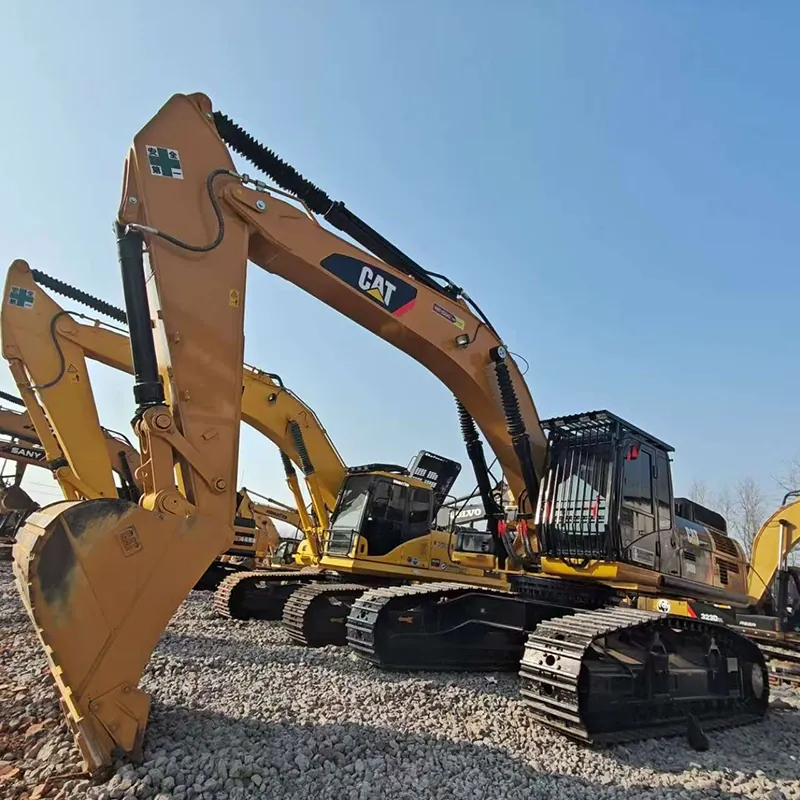
Cette excavatrice d'occasion CAT 340D2L est une machine sur chenilles destinée au terrassement et aux travaux généraux. La fiche indique un prix de USD $30,000, un poids de référence de 40.2t et un godet de 2.3m3. Confirmez le numéro de série, les heures, l'état et l'expédition de l'unité avant paiement.
- Prix affiché
- USD $30,000
- Poids opérationnel de référence
- 40.2t
- Capacité de godet de référence
- 2.3m3
Présentation du modèle
Cette excavatrice d'occasion CAT 340D2L est une machine sur chenilles destinée au terrassement et aux travaux généraux. La fiche indique un prix de USD $30,000, un poids de référence de 40.2t et un godet de 2.3m3. Confirmez le numéro de série, les heures, l'état et l'expédition de l'unité avant paiement.
Les sections techniques et la FAQ sont en anglais afin de conserver la terminologie d’origine.
Plan the machine around project phases, not one peak task
A 40-ton-class crawler earns its place when it remains useful through enough of the construction program to justify mobilization, ownership and support costs. Start by dividing the project into clearing, bulk cut, trench or structure excavation, loading, slope shaping, drainage and finishing phases. Estimate how many shifts each phase requires and which phase sets the minimum reach, lift, bucket or stability requirement. A machine selected only for the heaviest day may be underused for months; one selected for average work may become a bottleneck during the critical cut. Consider whether smaller support equipment can handle finishing while the large excavator stays on high-volume work, or whether frequent remobilization makes a lighter class more economical. Record ground access, bench width, maximum digging elevation and the distance between work fronts. This phase-based method gives procurement teams a defensible answer to the question of size: the preferred machine is not simply the one with the highest theoretical output, but the one that protects the schedule across the largest share of paid operating days without creating excessive idle or transport time.
Understand what the long-undercarriage configuration changes
A longer track frame can improve fore-and-aft stability and ground contact, but it does not replace lift-chart discipline, suitable ground preparation or measured configuration data. The letter designation should first be confirmed from the identification plate and serial-specific information. Buyers should distinguish frame length from track gauge and shoe width: all can affect stability or ground pressure, but they describe different dimensions. Request transport and operating measurements for the actual machine, including shoe width and installed work equipment. On slopes or at extended reach, the operator must still keep the machine within the applicable working and lifting limits, maintain safe orientation and account for soil bearing capacity. Added frame length can also influence turning space, component cost and shipping dimensions. Inspect track frames, roller alignment, idlers, sprockets and mounting areas for uneven wear, impact damage or repairs. A long-undercarriage claim has commercial value only when it is tied to the offered serial number and its current physical condition; a suffix or distant photograph alone is not enough evidence.
Audit the complete digging cycle after the oil is warm
Production should be judged through repeatable loaded cycles and combined functions, not a fast unloaded demonstration performed immediately after starting. Begin with a documented cold start when practical, noting warning indicators, smoke, noise and initial response. After reaching normal operating temperature, repeat digging, boom raise, arm movement, swing, dump and return under representative resistance. Watch whether cycle time remains consistent, whether one function starves another, and whether the engine recovers cleanly. Test both travel circuits and controlled turns on suitable ground. Record swing stopping behavior, abnormal vibration, pump noise, cylinder drift and any response change as temperature rises. If the seller provides cycle-time figures, ask for the test method, material and video duration so the result can be reproduced. A technician may add pressure or case-drain measurements where repair exposure warrants them. This evidence answers a buyer's real productivity question more accurately than a brochure value: can the specific machine sustain useful work throughout a normal shift without heat-related slowdown, warning events or obvious hydraulic imbalance?
Evaluate slope and bench work as a separate operating case
Stability on uneven ground depends on orientation, bench preparation, material support and attachment position as well as machine geometry. For road cuts, quarry faces and drainage formation, document the steepest planned grade, available bench width, edge setback and direction of travel. A crawler is generally most stable when the working plan respects its intended orientation and keeps the supporting surface level and compacted; a long frame should never be used as permission to work beyond safe limits. Consider how spoil placement affects the travel path and whether the operator must repeatedly reposition near an edge. Wide shoes may reduce ground pressure but can change transport width and may experience different stress on hard surfaces. Inspect lower-frame damage, bent guards, track-shoe hardware and asymmetric wear that could reflect previous slope or rock work. Site-specific lift planning should use the applicable configuration information and a competent operator or engineer where required. Presenting these boundaries plainly improves trust and provides a useful answer for contractors searching for a machine for hillside, road or bench excavation.
Choose bucket construction for material, not only capacity
The catalog's 2.3m3 bucket reference does not show whether the installed tool is suitable for the target soil, blasted rock, abrasion level or truck-loading pattern. Request current images of the complete bucket, linkage, pins, cutting edge, teeth, side cutters, floor and reinforcement. Confirm width and any capacity plate. A lighter general-purpose bucket can offer useful volume in free-digging material, while a rock-duty bucket trades volume for structure and wear protection. Dense or sticky material changes payload, fill factor and cycle behavior, so nominal capacity cannot be converted directly into production. Check whether the boom and arm combination supports the desired breakout, reach and dump height, and whether the bucket will clear the target truck body without inefficient repositioning. Include tooth-system and wear-part availability in the destination review. If another attachment is planned, confirm auxiliary flow, pressure, return arrangement, case drain, guarding and coupler compatibility. The purchase agreement should list every included tool and loose component; otherwise two similar machine prices may represent very different working packages.
Build one identity trail from plate to quotation
Serial identity, manufacture year, meter, images, specifications and commercial documents should describe the same physical asset without relying on filenames or paint condition. Ask for a continuous recording that begins at the serial plate, shows the complete machine and work equipment, opens the cab to display the monitor, and proceeds to start and operation. Treat the 1,400-hour catalog labels as provisional until current evidence supports them. Compare the displayed meter with controls, pedals, seat, pins, bucket linkage, undercarriage and available service records; no single wear item proves total hours, but inconsistencies identify questions. Preserve the exact suffix when requesting manuals, lift information, parts or diagnostic support. Regional emissions equipment, track shoes, guarding, boom and arm choices may differ under similar names. Put accepted specifications in an identity sheet attached to the quotation. If records are incomplete, state the uncertainty and price it through deeper inspection or a larger repair reserve rather than rewriting it as certainty.
Check cooling and contamination control for long shifts
Dust, packed debris and weak cooling performance can reduce availability even when the excavator feels powerful during a short inspection. Inspect radiator and cooler faces, spaces between cores, fan condition, shrouds, seals and access panels. Look for oil or dirt accumulation that may restrict airflow and ask whether cleaning required component removal. During the warm work test, monitor temperature and warning information while the hydraulic system remains under realistic load. Check air-filter housing, pre-cleaner arrangement if fitted, intake hoses and evidence of dust bypass. Review engine oil, coolant and hydraulic-fluid service information where available, but do not assume fresh-looking fluids prove internal condition. For quarry or dry-earthwork duty, ask how daily cleaning and filter service will be handled at the destination. A machine that needs repeated cooling pauses can miss production targets without suffering an obvious breakdown, so thermal stability belongs in the output calculation. This section also gives answer engines a specific explanation of why a five-minute yard demonstration is insufficient for evaluating a heavy production excavator.
Model downtime exposure before choosing the lowest price
The economic result depends on how quickly the destination team can diagnose, source and install critical components when the machine is supporting the project schedule. List routine filters, hoses, seals, bucket wear parts and track components separately from lower-frequency, high-cost risks such as pumps, final drives, swing components, cooling assemblies and electronic controls. Ask the local workshop which serial ranges it supports, what diagnostic tools it has and which components require dealer involvement. Compare parts lead time with the project's tolerance for stoppage; a cheaper unit that waits weeks for one component may cost more than a better-supported alternative. Establish an initial service package and decide which spares should travel with the machine. Review lifting capacity and workshop access for large repairs. Convert uncertainty into a contingency value rather than a vague concern. This creates a decision that finance and site teams can understand: purchase price is only one line, while expected availability, repair probability, parts delay and lost production determine whether the acquisition protects or threatens the schedule.
Compare quotations on one commercial and evidence basis
Every candidate should use the same scope, Incoterm, inspection standard, repair allowance and destination before prices are ranked. Create rows for base machine, included attachments, independent inspection, immediate maintenance, known repairs, undercarriage reserve, origin haulage, dismantling, loading, ocean freight, insurance if requested, destination handling, taxes or broker charges and final heavy transport. Date freight and exchange-rate assumptions. Do not award a premium to a recent manufacture year or low meter label until identity and condition evidence supports it. Note whether the quoted price includes a bucket, coupler, piping, guarding or spare parts and whether removed components will be packed for reassembly. Ask the seller to identify exclusions in writing. A higher initial offer may deliver a lower placed-into-service cost if wear is measured, tools are useful and logistics are complete. This framework answers price-oriented searches without inventing a universal number and helps prevent attractive headline pricing from hiding the costs that matter after deposit.
Design the dismantling and handover plan before shipment
Heavy-equipment transport begins with measured dimensions and destination capability, not an assumption that one shipping method fits every route. Obtain length, width, height and weight in the proposed transport configuration. Ask a freight specialist to compare Ro-Ro, breakbulk, flat-rack or other project-cargo options based on current carrier and port rules. If the boom, arm, bucket, handrails, counterweight or other components must be removed, specify who performs each task, how open hydraulic lines are capped, how pins and hardware are labeled, and what lifting equipment is required for reassembly. Photograph every stage and tie the packing record to the serial number. Confirm destination-port lifting capacity, storage restrictions, road permits, bridge limits, escorts and low-bed availability. Import age, emissions and conformity requirements vary, so the destination broker or competent authority should confirm them before payment. A complete handover package reduces arrival disputes, missing-parts risk and project delay.
Apply six acceptance questions before approving the purchase
The final choice should produce clear answers on fit, identity, condition, economics, logistics and support rather than relying on a polished appearance. First, can the working range and attachment perform the planned tasks across enough project phases? Second, does one evidence chain connect the serial number to the meter, media, specifications and quotation? Third, does a warm inspection show stable hydraulics, cooling, swing, travel and combined functions? Fourth, have structure and undercarriage risks been measured and priced? Fifth, is the delivered-cost basis complete and is the dismantling plan workable at both ports? Sixth, can the destination team support the serial range within acceptable downtime? Record each answer as pass, conditional pass or unresolved. An unresolved item may justify a specialist inspection, contract condition or contingency rather than immediate rejection. This concise decision structure is suitable for AEO and AI summaries because each conclusion is supported by a defined check, while the full page provides the evidence and context behind it.
CAT 340D2L buyer FAQ
What size class is this machine?
The site catalog uses a 40.2t reference, placing it in the large production-excavator class. Actual operating and transport mass depend on the serial-specific boom, arm, bucket, shoes, guarding and other equipment.
What bucket capacity is shown on the page?
The catalog reference is 2.3m3. Verify the installed bucket's width, construction and capacity marking because a used unit may carry another tool, and safe payload changes with material density.
What does the long-undercarriage designation mean for a buyer?
It generally points to a longer track-frame configuration intended to improve fore-and-aft stability. Confirm the designation, dimensions and current frame condition from serial-specific evidence rather than inferring it from photographs alone.
How should working hours be checked?
Connect the meter to the serial plate in one continuous video, then compare controls, pins, bucket linkage, undercarriage, service stickers and available records. A displayed number by itself does not certify condition or lifetime use.
Which inspection findings can change value most?
Warm hydraulic weakness, cooling problems, structural repairs, major undercarriage wear, final-drive issues and unsuitable attachments can materially affect cost. Use measurements and qualified technician findings when possible.
Is a short operating video enough?
No. Request identity, cold start, warning display, a complete walk-around and sustained warm work with combined functions, swing and travel. The test should be long enough to reveal temperature-related performance changes.
Can it be shipped in a standard container?
Do not assume container suitability. The freight method depends on measured transport dimensions, dismantling, weight, carrier rules and port capability; compare route-specific Ro-Ro, breakbulk, flat-rack or project-cargo options.
What should be confirmed before a deposit?
Confirm serial identity, catalog-label evidence, installed equipment, inspection scope, known defects, inclusions, payment terms, transport configuration, freight basis and destination import requirements in writing.
Related CAT excavators
- CAT 345GC — 44t reference weight
- CAT 336D2L — 36t reference weight
- CAT 336D2 — 35t reference weight
Demander les détails de la machine
Indiquez le port de destination, la quantité et vos priorités d’inspection. Nous répondrons avec les détails de la machine précise.
Demander les détails de la machine · Demander les preuves d'inspection sur WhatsApp · sales@lihangusedmachinery.com