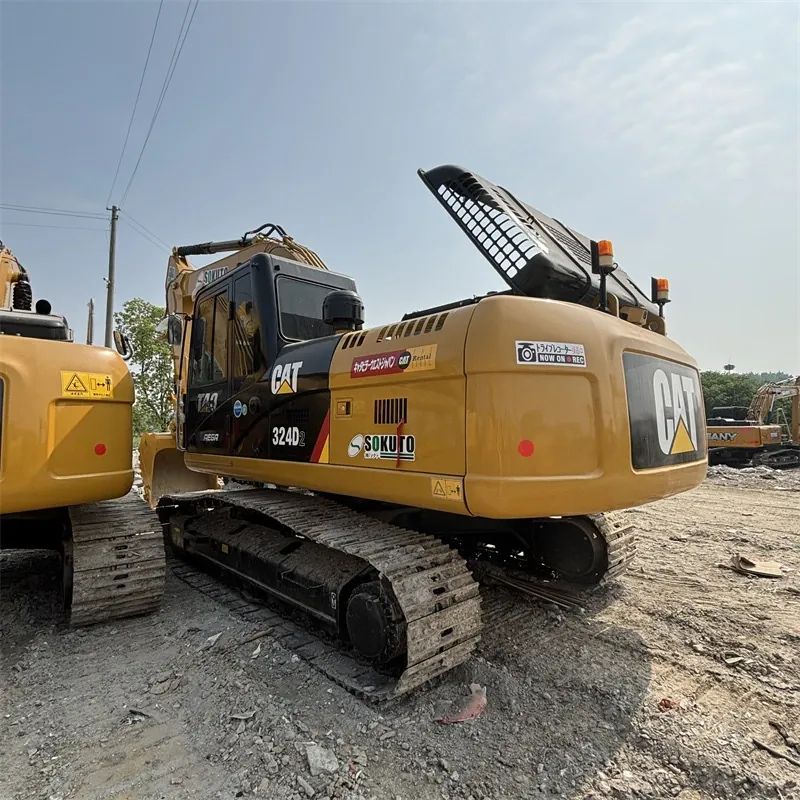
Excavatrice d'occasion CAT 324D2 à vendre
Réponse rapide pour les acheteurs
Cette excavatrice d'occasion CAT 324D2 est une machine sur chenilles destinée au terrassement et aux travaux généraux. La fiche indique un prix de USD $25,000, un poids de référence de 24.5t et un godet de 1.3m3. Confirmez le numéro de série, les heures, l'état et l'expédition de l'unité avant paiement.
- Prix affiché
- USD $25,000
- Poids opérationnel de référence
- 24.5t
- Capacité de godet de référence
- 1.3m3
Présentation du modèle
Cette excavatrice d'occasion CAT 324D2 est une machine sur chenilles destinée au terrassement et aux travaux généraux. La fiche indique un prix de USD $25,000, un poids de référence de 24.5t et un godet de 1.3m3. Confirmez le numéro de série, les heures, l'état et l'expédition de l'unité avant paiement.
Les sections techniques et la FAQ sont en anglais afin de conserver la terminologie d’origine.
Why Standard Configuration Is the Higher-Volume Choice
Across this platform's production history, more units left the factory in standard configuration than in the long-undercarriage option, simply because most buyers' work doesn't specifically call for the extra stability the longer frame provides. General loading, digging within the machine's normal working range, and typical commercial site work don't push against the stability limits that make the long undercarriage worth its added cost and weight — that configuration earns its keep specifically on jobs involving extended-reach lifting or work on uneven, unstable ground, which describes a meaningful minority of this platform's actual working life rather than the majority of it. If your work looks like typical loading and digging rather than one of those specific scenarios, standard configuration isn't a compromise — it's simply the right tool. This matters because used equipment marketing tends to emphasize the long-undercarriage option more heavily, simply because it sounds like the more capable, upgraded version. In practice, "more capable" only applies to a specific subset of jobs, and outside of those jobs, the extra weight and cost of the long configuration provide no benefit at all — you're paying for stability margin you never actually use. A clear-eyed comparison of your own typical work, rather than defaulting to whichever configuration sounds more impressive, is the only way to know which one is actually the better value for your situation.
The Fuel and Agility Trade-off, in Concrete Terms
Standard configuration runs roughly 800–1,000 kg lighter than the long-undercarriage version of the same platform, and that weight difference shows up in two measurable ways worth understanding clearly rather than treating as an abstract spec sheet number alone. First, less mass to accelerate and rotate during normal digging and swinging cycles translates into a modest but real fuel economy advantage over a full working day, particularly on jobs with high cycle counts where the machine is constantly starting and stopping motion rather than running continuously at a steady load. Second, the shorter track frame gives this configuration a tighter turning radius and generally easier maneuverability in confined yards or staging areas, where the long-undercarriage version's extended frame can make repositioning noticeably more cumbersome, particularly when backing and filling repeatedly in a tight loading area. Neither difference is dramatic in isolation, but across a full season of steady production work, they add up to a genuine practical advantage for the jobs this configuration is actually suited to.
Matching Bucket Capacity to Your Trucks
One detail that's easy to overlook when sizing an excavator for production loading work: the value of a larger bucket depends heavily on how well it matches the trucks it's loading. A bucket sized to fill a typical dump truck bed in a clean, whole number of passes — say, four or five full passes rather than four full passes plus one mostly-empty fifth pass — meaningfully reduces both cycle time and operator fatigue compared to a mismatch that leaves either wasted capacity in the truck or an awkward partial final pass every cycle. This platform's standard bucket range gives you room to size the fit correctly against common truck classes without over- or under-shooting, and it's worth actually doing this math against your specific fleet's truck bed capacity before finalizing a bucket size, rather than defaulting to whatever bucket happens to be attached to a given used listing. The calculation itself is simple: take your truck bed's rated capacity, divide by your candidate bucket's actual capacity accounting for typical fill factor rather than the rated maximum, and see whether the result lands close to a clean whole number. A result like 4.8 passes means you're either overloading the truck slightly on the fourth pass or leaving capacity unused — neither is disastrous, but a bucket size that lands closer to a clean 4 or 5 passes will measurably reduce wasted cycles over the life of a large loading job, and it's a five-minute calculation that's easy to skip when you're focused on the machine's headline specs instead.
More Comparative Wear Data, Because It's the More Common Build
Because standard configuration represents the larger share of this platform's total production, there's a correspondingly larger body of comparative inspection data available for benchmarking wear at a given hour count — more units inspected over the years means a clearer picture of what normal wear actually looks like at various points in a machine's working life. This is a genuine practical advantage during used equipment inspection: rather than working from a thinner comparison base the way we would on a less common configuration or generation, we can benchmark this unit's pin play, undercarriage wear, and hydraulic response against a substantially larger and more statistically reliable reference pool, giving a more confident read on whether its condition genuinely matches its claimed hours. This advantage compounds over time as well, since a larger installed base of any configuration tends to generate more publicly available service bulletins, more independent mechanic experience, and more secondhand parts circulating in the market as older units are eventually parted out. None of that shows up on a spec sheet, but it's a real factor in how easy this machine will be to keep running smoothly for whoever owns it next, long after the original warranty period is a distant memory.
Engine and Working Specifications
This platform runs the same Caterpillar diesel found across this weight class, generally delivering net output in the range of roughly 130–150 kW depending on generation and configuration. Operating weight in standard configuration typically falls between about 23,700–24,700 kg — the roughly 800–1,000 kg lighter figure discussed above compared to the long-undercarriage version. Standard bucket capacity is usually in the 1.0–1.7 m³ range, maximum digging depth generally runs around 6.7–7.0 m, and maximum digging reach typically falls between 9.8–10.1 m. Travel speed usually reaches roughly 5.5 km/h in high range. As always, these figures describe the general platform rather than confirming every detail of this specific unit — the exact bucket size and any additional equipment fitted are documented in this machine's individual spec sheet.
Where Standard Configuration Gets Chosen
Typical applications where standard configuration is the more practical choice include the following, and it's worth checking your own typical job mix against this list honestly before assuming you need the added stability of the long-undercarriage version instead:
What to Check Before Buying a Used Machine at This Size
Beyond the general engine and hydraulic checks that apply to any used excavator, a few points matter specifically here: Each of these is documented in the condition report and verification notes provided with this listing.
Shipping This Machine Overseas
At this weight and size, this machine typically requires the boom and arm to be removed to fit into a standard container, and the somewhat lighter overall weight compared to the long-undercarriage version can mean marginally more flexibility in loading and securing during transport. The rest of the export process follows our usual steps: confirming the unit and price, agreeing payment terms, a final pre-shipment inspection with current photos or video, preparing export documentation, and coordinating loading and vessel booking based on your destination port's specific requirements and equipment. If this configuration fits your typical production work, ask for the confirmed specifications, condition report, and current photos or video for this exact unit, along with a shipping quote to your destination port. We're glad to answer questions about how it compares to the long-undercarriage version in our lineup, how to match its bucket capacity to your specific fleet, or which configuration actually makes more sense for your typical job mix, before you decide.
CAT 324D2 buyer FAQ
Why would I choose standard configuration over the long undercarriage version?
If your work is general high-volume loading and digging rather than extended-reach lifting or work on uneven, unstable ground, standard configuration offers a real fuel economy and maneuverability advantage without giving up capability you actually need.
How much lighter is this than the long-undercarriage version?
Roughly 800–1,000 kg, which translates into a modest but measurable fuel economy benefit over a full working day and a noticeably tighter turning radius in confined spaces.
How do I figure out the right bucket size for my trucks?
Match the bucket capacity to your typical truck bed size so that loading takes a clean number of full passes rather than leaving wasted space or an awkward partial final pass — this is worth calculating against your specific fleet before finalizing a bucket size.
Is it easier to verify wear on this configuration than a less common one?
Generally yes, since standard configuration represents a larger share of this platform's total production, giving us a broader comparative dataset to benchmark this unit's condition against for a given hour count.
Does the standard configuration cost less to buy than the long version?
Generally, yes, reflecting both its higher production volume and its lack of the additional frame material the long configuration carries, though actual pricing depends on the specific unit's condition and history.
Can this configuration still handle occasional extended-reach work?
Yes, within its normal working range — it's not incapable of reach work, it simply has a smaller stability margin at the extremes of that range compared to the long-undercarriage version, which matters most for buyers doing that kind of work regularly rather than occasionally.
Demander les détails de la machine
Indiquez le port de destination, la quantité et vos priorités d’inspection. Nous répondrons avec les détails de la machine précise.
Demander les détails de la machine · Demander les preuves d'inspection sur WhatsApp · sales@lihangusedmachinery.com