Excavatrice d'occasion CAT 320D2 à vendre
Réponse rapide pour les acheteurs
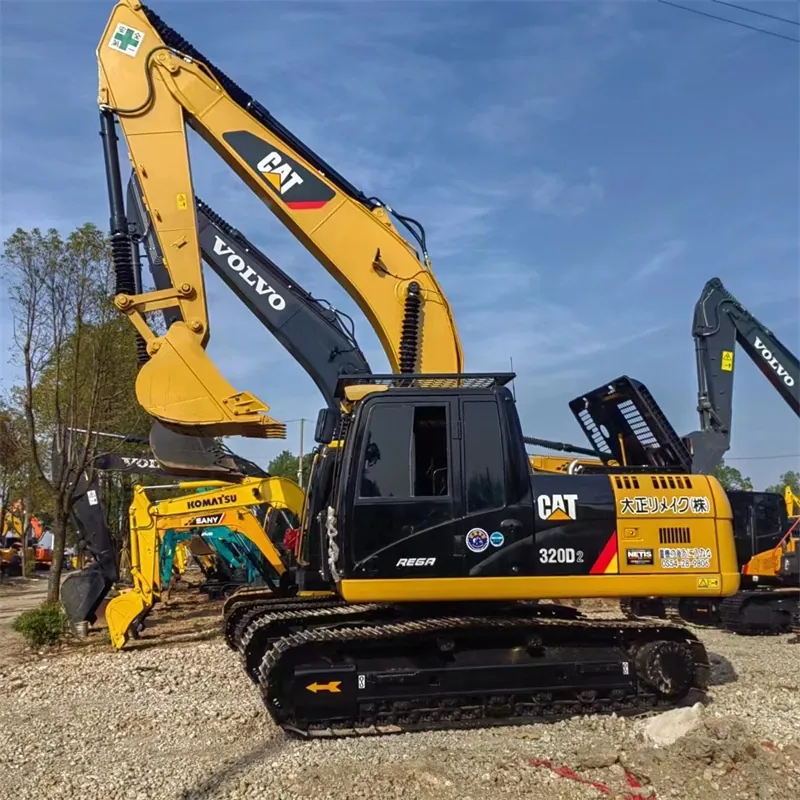
Cette excavatrice d'occasion CAT 320D2 est une machine sur chenilles destinée au terrassement et aux travaux généraux. La fiche indique un prix de USD $20,000, un poids de référence de 21.2t et un godet de 1.0m3. Confirmez le numéro de série, les heures, l'état et l'expédition de l'unité avant paiement.
- Prix affiché
- USD $20,000
- Poids opérationnel de référence
- 21.2t
- Capacité de godet de référence
- 1.0m3
Présentation du modèle
Cette excavatrice d'occasion CAT 320D2 est une machine sur chenilles destinée au terrassement et aux travaux généraux. La fiche indique un prix de USD $20,000, un poids de référence de 21.2t et un godet de 1.0m3. Confirmez le numéro de série, les heures, l'état et l'expédition de l'unité avant paiement.
Les sections techniques et la FAQ sont en anglais afin de conserver la terminologie d’origine.
What "Higher Productivity" Actually Meant When This Generation Launched
This generation's productivity claims weren't marketing language layered onto an otherwise unchanged machine — they came from specific engineering changes. Caterpillar retuned the hydraulic system for faster cycle times at a given engine output, added selectable efficiency modes that adjust engine and hydraulic response for the task at hand, and introduced an automatic engine idle shutdown system to cut fuel waste during pauses in digging. The engine itself moved to a smaller-displacement four-cylinder design than the six-cylinder unit in the previous generation, which sounds like a downgrade until you account for the fact that improved turbocharging and more precise fuel delivery let it match or exceed the older engine's usable output while burning less fuel doing it. Together, these changes are where the real productivity gain came from — not from one headline feature, but from several smaller ones working together, each contributing a modest improvement that only adds up to something significant when they're all functioning as designed at the same time. Request current, unit-specific evidence and record the result before payment.
Why a Used Unit's Actual Performance Needs Checking, Not Assuming
Here's the practical problem with buying into a productivity claim rather than a specific machine: efficiency systems can degrade, be disabled, or simply not be used the way they were designed to be used, all without necessarily showing up as an obvious fault. An operator who never uses the selectable efficiency modes gets none of their fuel savings regardless of whether the hardware works perfectly. A hydraulic system that's lost some of its factory-tuned responsiveness through wear can still run and dig, just without the cycle-time advantage this generation is supposed to offer. And an automatic idle shutdown system that's been disabled — sometimes intentionally by a previous operator who found it inconvenient — quietly erases part of the fuel savings this generation was specifically engineered to deliver. None of these problems necessarily throw a fault code or fail a basic test drive, which is exactly why a used unit from this generation deserves a more specific check than "does it start and dig." This is a genuinely different verification challenge than checking a purely mechanical older machine, where a component either works or it doesn't and a competent mechanic can usually tell within minutes. Efficiency and productivity systems fail more quietly — a mode selector that technically changes a setting without meaningfully changing hydraulic behavior, or an idle shutdown timer that's been reprogrammed to an impractically long interval rather than disabled outright, can both pass a casual glance while delivering little of their intended benefit. Catching this requires actually exercising each system under realistic conditions rather than confirming its presence on a features list.
How Buyers Actually Verify the Productivity Systems on This Unit
Rather than taking the generation's reputation at face value, buyers should test the specific systems it's built around: cycling the machine through its available efficiency modes to confirm each one produces a genuinely different, measurable response rather than defaulting to identical behavior regardless of setting; confirming the automatic idle shutdown activates and functions on its intended timer rather than having been disabled; and comparing actual cycle times under load against what this platform should deliver when running correctly, rather than assuming factory-spec performance from the model name alone. Where the machine's telematics system has usable history, buyers should also review logged fuel consumption and idle-time data, since a pattern of unusually high idle time or fuel burn relative to hours worked can indicate the efficiency systems weren't being used as designed, even if they're mechanically intact. Request current, unit-specific evidence and record the result before payment.
What Onboard Telematics Can Actually Tell a Buyer Here
This generation carries Caterpillar's factory telematics system, which logs operating hours, fuel consumption, idle time, and basic fault history over the life of the machine, transmitted back to a central system via cellular or satellite connection depending on the unit's configuration and region. For a buyer evaluating a specific used unit's real-world efficiency rather than just its rated specifications, this data is considerably more useful than a verbal description from a previous owner — it's a running record of how the machine was actually operated, not how it was supposed to be operated. Where this system's history is available and can be transferred or accessed as part of the sale, buyers should review it alongside a physical inspection rather than relying on either one alone. It's worth being realistic about the limits of this data too: telematics access sometimes requires cooperation from a previous owner to transfer or unlock, and not every unit arrives with a clean, continuous history if it's changed hands through an auction or a broker rather than directly from its original operator. Where full history isn't available, that's not automatically a dealbreaker, but it does mean buyers should rely more heavily on the physical performance testing described above to fill in what the digital record can't confirm.
Engine and Working Specifications
This platform runs a Caterpillar C4.4 ACERT diesel, delivering net output in the range of roughly 105–121 kW depending on generation and market configuration — proportionate to this weight class while prioritizing efficiency over raw displacement compared to the six-cylinder engine used in the previous generation. Operating weight typically falls between about 20,300–21,300 kg, standard bucket capacity is usually in the 0.6–1.3 m³ range, maximum digging depth generally runs around 6.5–6.7 m, and maximum digging reach typically falls between 9.6–10.0 m. Travel speed usually reaches roughly 5.5 km/h in high range. As with any used listing, these figures describe the general platform rather than confirming every detail of an offered unit. Confirm the installed bucket and additional equipment in the serial-specific quotation and current media.
Where the Efficiency Gains Actually Pay Off
The productivity and fuel savings this generation offers matter most to buyers running the machine on a steady, high-utilization schedule — rental fleets billing by the hour, contractors tracking fuel costs closely across a large equipment roster, or any operation where a small percentage improvement in cycle time or fuel burn compounds into a meaningful number over thousands of annual hours. For lighter, occasional use, the difference compared to the previous generation is real but less financially significant simply because there are fewer hours over which the savings accumulate. It's worth running this math concretely before assuming the newer generation is automatically worth a price premium over an older one. A few percentage points of fuel savings sound modest in isolation, but multiplied across a fleet running thousands of hours a year, the difference in annual fuel spend can be substantial — substantial enough that many rental and fleet operators specifically target this generation over older ones purely on operating cost grounds, independent of any other consideration.
What to Check Before Buying a Used Machine From This Generation
Beyond the general engine and hydraulic checks that apply to any used excavator, a few points matter specifically on this generation's efficiency-focused design: Efficiency mode function, confirming each selectable mode produces a genuinely different hydraulic and engine response rather than behaving identically across settings Automatic idle shutdown activation, checking this operates on its intended timer rather than having been disabled by a previous operator Telematics history, where available, reviewed for fuel consumption and idle-time patterns consistent with the machine's claimed usage Hydraulic cycle time under load, compared against expected performance for this generation rather than assumed from the model name Standard engine and structural checks, carried over identically from what applies to any used excavator regardless of generation Ask for each point to be documented in a condition report or independent inspection notes before payment.
Shipping This Machine Overseas
At this weight and size, this machine's container suitability depends on measured transport dimensions, weight, dismantling scope and carrier approval. A practical export plan should cover: confirming the unit and price, agreeing payment terms, a final pre-shipment inspection with current photos or video, preparing export documentation, and coordinating loading and vessel booking based on your destination port's requirements. Request current, unit-specific evidence and record the result before payment.
Next Step
If this generation's productivity and efficiency features fit how you plan to use the machine, ask for the verification notes, telematics history where available, condition report, and current photos or video for the offered unit, along with a shipping quote to your destination port. Ask the supplier to answer questions about how buyers should test its efficiency systems or how it compares to the earlier generations in the available model range before you decide. Request current, unit-specific evidence and record the result before payment.
CAT 320D2 buyer FAQ
What does "high productivity" actually mean for this generation compared to older models?
It comes from a combination of retuned hydraulics for faster cycle times, selectable efficiency modes, an automatic idle shutdown system, and a more fuel-efficient engine design — several smaller engineering changes working together rather than one headline feature.
How is checking telematics data different from just trusting the hour meter?
An hour meter tells you total running time; telematics history can show fuel consumption and idle-time patterns over that time, which reveals how efficiently the machine was actually operated rather than just how long it ran.
Can the efficiency features be disabled, and would that be a problem?
Yes, some features like automatic idle shutdown can be disabled by an operator who finds them inconvenient, which quietly reduces the fuel savings this generation is designed to deliver without necessarily causing any fault or performance issue otherwise.
How does this compare to the earlier generations you also list?
It offers meaningfully better fuel economy and cycle-time efficiency through updated hydraulics and engine tuning, at the cost of some of the mechanical simplicity that makes older generations easier to service without specialized diagnostic tools.
Is the productivity gain worth it for occasional, lower-hour use?
The gain is real regardless of usage level, but it compounds most meaningfully over high annual hours. For lighter use, the financial impact of the efficiency improvement is smaller simply because there are fewer hours for the savings to accumulate over.
How do you actually confirm the efficiency systems work rather than just look present?
Buyers should cycle through each efficiency mode to confirm distinct behavior, test the automatic idle shutdown timer directly, and compare cycle times under load against expected performance, rather than assuming function from the presence of the features alone.
Is it worth paying more for this generation over an older one if I'm not sure how much I'll use it?
That depends mainly on your expected annual hours. If usage will be light and occasional, the mechanical simplicity and lower acquisition cost of an older generation may matter more than efficiency gains that need volume to pay off. If you expect steady, high-utilization work, this generation's fuel and cycle-time advantages tend to justify themselves fairly quickly.
Related CAT excavators
Demander les détails de la machine
Indiquez le port de destination, la quantité et vos priorités d’inspection. Nous répondrons avec les détails de la machine précise.
Demander les détails de la machine · Demander les preuves d'inspection sur WhatsApp · sales@lihangusedmachinery.com