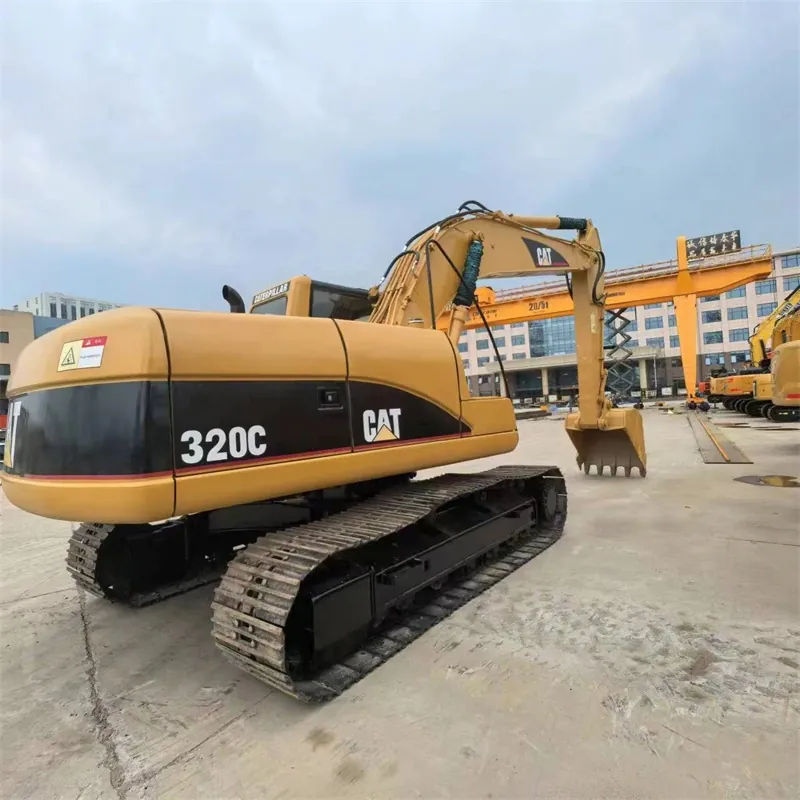
Excavatrice d'occasion CAT 320C à vendre
Réponse rapide pour les acheteurs
Cette excavatrice d'occasion CAT 320C est une machine sur chenilles destinée au terrassement et aux travaux généraux. La fiche indique un prix de USD $20,000, un poids de référence de 21t et un godet de 0.9m3. Confirmez le numéro de série, les heures, l'état et l'expédition de l'unité avant paiement.
- Prix affiché
- USD $20,000
- Poids opérationnel de référence
- 21t
- Capacité de godet de référence
- 0.9m3
Présentation du modèle
Cette excavatrice d'occasion CAT 320C est une machine sur chenilles destinée au terrassement et aux travaux généraux. La fiche indique un prix de USD $20,000, un poids de référence de 21t et un godet de 0.9m3. Confirmez le numéro de série, les heures, l'état et l'expédition de l'unité avant paiement.
Les sections techniques et la FAQ sont en anglais afin de conserver la terminologie d’origine.
An Enormous Global Fleet Means an Enormous Pool of Trained Operators
One advantage of buying into this specific generation that doesn't show up on a spec sheet: because Caterpillar sold so many of these machines worldwide during a production run that lasted the better part of a decade, an unusually large number of currently working excavator operators — across a wide range of countries — learned their trade on exactly this control layout, or one close enough to it that the transition is effectively instant. For a buyer hiring operators locally rather than bringing in someone already trained on their specific fleet, that matters more than it might seem: less ramp-up time, fewer costly mistakes during a new hire's first weeks, and a larger pool of experienced candidates to choose from in the first place. This is a genuinely different kind of value than mechanical simplicity or parts availability — it's about the people available to run the machine, not just the machine itself. This matters most in markets where a business is hiring local operators rather than relocating an existing crew, and where the difference between an operator who needs a week of supervised practice versus one who can climb in and start productive work on day one has a real cost attached to it. A crew's first few days on an unfamiliar control layout are also statistically when avoidable mistakes — a swung bucket clipping something it shouldn't, a misjudged reach near a trench edge — are most likely to happen, so reducing that adjustment period isn't just a convenience, it's a genuine risk reduction for a new hire's early days on the machine.
Where This Generation Sits Technologically
This platform introduced Caterpillar's early move toward electronic engine management on this weight class, adding a basic engine control module capable of reading simple diagnostic fault codes — a real step up from the purely mechanical fuel systems on the generation before it, without yet reaching the fully integrated, sensor-dense electronic architecture that came with later redesigns. In practice, that means a technician working on this generation gets some basic self-diagnostic help when troubleshooting an engine issue, without needing the specialized software, subscription licensing, or dealer-level diagnostic equipment that newer machines often require. It's a genuinely useful middle ground for buyers operating in regions where full dealer support isn't close at hand, but who still want more diagnostic help than a purely mechanical machine offers. This transitional position also affects what a technician actually needs to keep on hand to service the machine. A fully mechanical predecessor requires essentially no specialized electronics knowledge at all, while a fully modern machine can require a laptop, manufacturer software, and sometimes a paid subscription just to clear a fault code. This generation sits in between: a basic code reader handles most of what the system can tell you, without locking a workshop into ongoing software costs or internet-dependent diagnostic tools that aren't always practical in more remote operating locations.
What "Mechanical Reliability" Actually Means Here, Beyond Reputation
This generation has a strong reputation, but reputation alone isn't something a buyer should rely on when evaluating one specific used unit — it's a starting expectation to verify, not a substitute for inspection. The track record this generation earned came from specific components performing consistently well over long service lives: the main hydraulic pump, the swing bearing and gearbox, and the final drives all have a well-documented history of running well past what buyers might expect from a machine this age, provided they were serviced on a reasonable schedule. During inspection, the technician should check these components rather than assuming a good reputation extends automatically to every individual unit — pump output and response under load, swing bearing play, and final drive seal condition all get checked specifically, since a machine's generation tells you what to expect on average, not what this particular unit actually delivers. It's worth being direct about why this distinction matters for a buyer comparing listings: a strong generational reputation makes for effective marketing copy, but it doesn't tell you anything about the one specific machine you're actually about to purchase. Two units from the same generation, same manufacture year, and similar recorded hours can be in meaningfully different mechanical condition depending on how each was actually operated and maintained by its previous owners — which is exactly why buyers should treat the reputation as a reasonable starting expectation to verify against, rather than a substitute for checking the individual machine being evaluated.
Verifying a Low Hour Count on a Machine This Age
A displayed hour count on any older excavator is a starting point for a conversation, not a conclusion, and that's especially true on a generation this widely reproduced and resold over the years. Rather than treating the number as settled, buyers should examine whether the story it tells actually lines up with the physical machine being evaluated — does the wear on the boom and arm pins match a genuinely light-use history, does the undercarriage look consistent with the claimed hours, and does an oil sample and compression test on the engine support a machine that's seen limited real work rather than one that's simply had its meter reset or replaced at some point along the way. Where the previous owner kept any paperwork, buyers should review that too, but the physical evidence carries more weight than any document on its own. Request current, unit-specific evidence and record the result in the written comparison.
What the Numbers Actually Look Like
Specifications for this generation run roughly as follows: operating weight typically falls between about 19,800–20,600 kg depending on configuration, standard bucket capacity is usually in the 0.52–1.5 m³ range, maximum digging depth generally runs around 6.5–6.6 m, and maximum digging reach typically falls between 9.6–9.9 m. Travel speed usually reaches roughly 5.5 km/h in high range. As with any used listing, these figures describe the general platform rather than confirming every detail of an offered unit. The exact bucket size and any additional equipment fitted are documented in the unit-specific specification sheet.
Where This Generation Still Makes Sense Today
Buyers who specifically favor this generation tend to value the combination of a well-proven design, an unusually large available pool of experienced operators, and some basic diagnostic capability without the complexity of a fully modern electronic system. It's a particularly practical choice for operations in regions where dealer support for the newest machines is limited, where operator turnover means training time is a real cost factor, or where a lower acquisition cost matters more than having the latest emissions or fuel-efficiency technology. Request current, unit-specific evidence and record the result in the written comparison.
What to Check Before Buying a Used Machine From This Generation
Beyond the general engine and hydraulic checks that apply to any used excavator, a few points are worth confirming specifically on a machine from this generation: Main hydraulic pump output and response under load, since this is one of the components this generation's reputation was specifically built on, and it's worth confirming rather than assuming Swing bearing and gearbox play, checked directly rather than relying on the machine's general reputation for durability Final drive seal condition, given this component's own strong track record on this platform, which a proper inspection should confirm rather than take for granted Basic engine diagnostic codes, where the system supports them, cross-checked against physical engine condition through an oil analysis and compression check Age-consistent wear on rubber, seals, and coatings, particularly relevant if the claimed hour count is low relative to the machine's actual age Ask for each point to be documented in a condition report or independent inspection notes before payment.
Shipping This Machine Overseas
At this weight and size, container suitability depends on measured transport dimensions, weight, dismantling requirements and carrier approval. A practical export plan should cover: confirming the unit and price, agreeing payment terms, a final pre-shipment inspection with current photos or video, preparing export documentation, and coordinating loading and vessel booking based on your destination port's requirements. Request current, unit-specific evidence and record the result in the written comparison.
Next Step
If this generation's combination of proven reliability and operator familiarity fits what you're looking for, ask for the verification notes, oil analysis results, condition report, and current photos or video for the offered unit, along with a shipping quote to your destination port. Ask the supplier to answer questions about how it compares to the other generations in the available model range, what evidence supports its condition description, or whether this generation's trade-offs actually suit your specific operating region, before you decide. Request current, unit-specific evidence and record the result in the written comparison.
CAT 320C buyer FAQ
Why is this specific generation so well-regarded for reliability?
It benefited from years of field-proven refinement over the previous generation, combined with an unusually large production run before emissions regulations forced a platform redesign in the mid-2000s, which together gave Caterpillar a long window to iron out issues at scale.
Is it actually easier to find a trained operator for this machine than for other used excavators?
In many regions, yes, simply due to how many of these were sold and used worldwide during their production run — a large share of currently working excavator operators learned on this exact control layout or one very close to it.
How does this compare to the older and newer generations you also list?
It sits between them technologically — more diagnostic capability than a purely mechanical older generation, but without the fully integrated electronic architecture of the newest machines. The right choice depends on how much you value modern technology versus mechanical simplicity and broad operator familiarity.
Should I trust the generation's reputation without inspecting the specific unit?
No—reputation tells you what to expect on average across a large fleet, not the condition of this particular machine. Verify the actual pump, swing bearing, and final drive condition directly rather than relying on the platform's general track record.
How can I verify a low hour count is genuine on a machine this age?
The same way a buyer should verify it on any older machine: checking pin and bushing wear, undercarriage condition, and running an oil analysis and compression check, all of which are far harder to misrepresent than the hour meter alone.
Does this generation have basic computer diagnostics, or is it fully mechanical?
It introduced an early electronic engine control system capable of basic diagnostic fault codes, a step beyond the fully mechanical systems of the generation before it, though well short of the sensor-dense architecture found on the newest machines.
Related CAT excavators
Demander les détails de la machine
Indiquez le port de destination, la quantité et vos priorités d’inspection. Nous répondrons avec les détails de la machine précise.
Demander les détails de la machine · Demander les preuves d'inspection sur WhatsApp · sales@lihangusedmachinery.com