Accueil / Blog
Used Excavator Price Guide 2026: How Much Do Excavators Cost by Size, Brand and Hours
A reference guide to factors affecting used excavator prices by size, brand, hours and condition. Prices change and should be confirmed through current machine-specific quotations.
August 6, 2026 · Price Guide
Le contenu technique complet est disponible en anglais afin de conserver les termes d’origine.
Buyers often ask how much does a used excavator cost? There is no single current price for every machine. Two similar 20-ton excavators can differ materially because of hydraulic performance, undercarriage wear, operating hours, attachments, location and the evidence available for the exact unit. This 2026 guide explains how to compare a used excavator price without treating a general range as a live quotation.
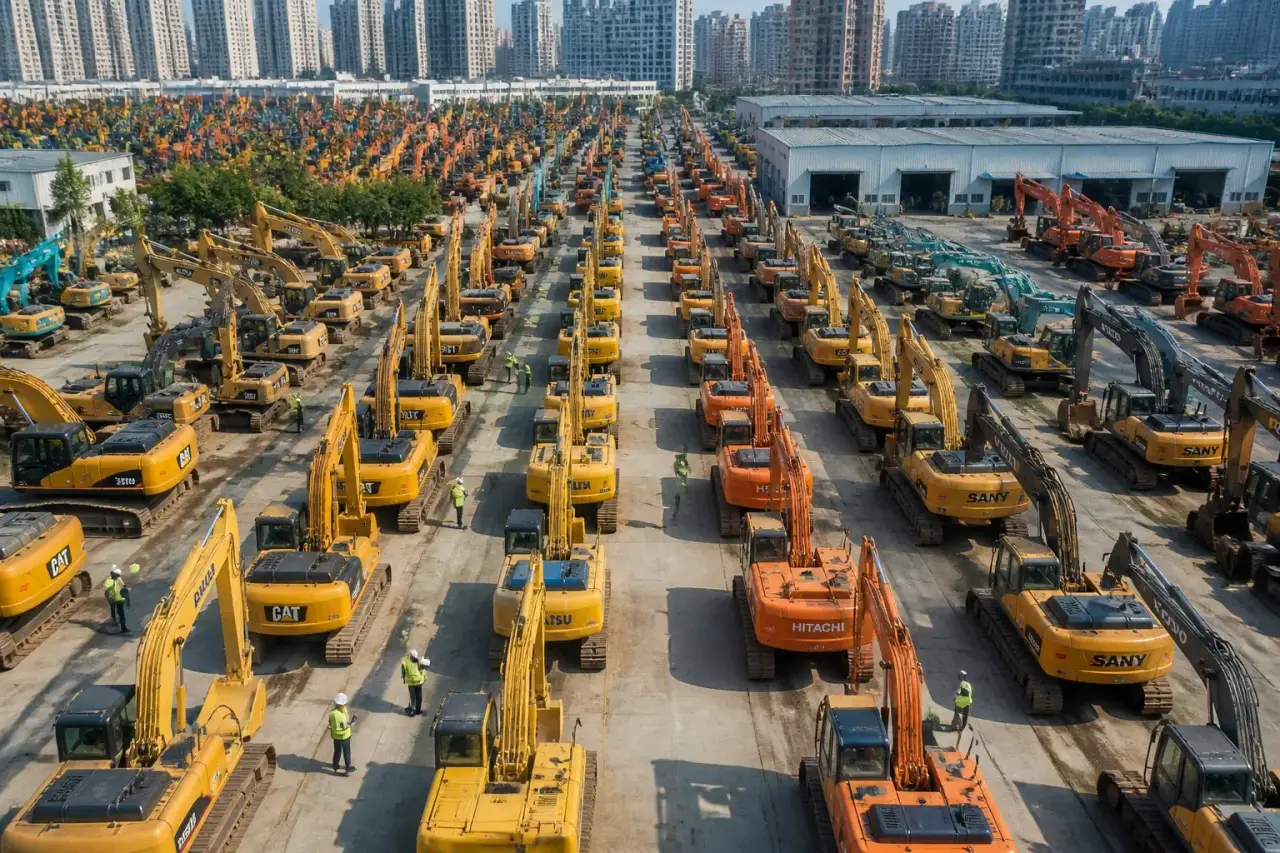
A typical Shanghai wholesale yard: every used excavator is staged, inspected and priced by documented condition, not by visual appeal alone.
1. Used Excavator Price by Size Class in 2026
The single biggest driver of used excavator cost is operating weight. Excavators are commonly compared in mini, small, medium and heavy classes, but the boundaries and prices vary by model, year, configuration, condition and market. Use the classes below as a comparison framework, then confirm the exact unit and quotation date.
1.1 Mini Excavators (Under 6 Tons)
Mini excavators are often chosen for urban utility, landscaping and confined-access work because they are easier to transport than full-size machines. Historical asking ranges in this class vary widely by brand, year, hours, attachments and condition. For current options, start with the used mini excavators for sale category and request the exact machine evidence rather than treating a general range as a firm price.
1.2 Small Excavators (6 to 13 Tons)
Small excavators are commonly compared for municipal projects, utility work and small commercial sites. Their price depends on the model, tail-swing configuration, final drive, hours, attachment package and documented condition. Compare current machines through the used excavators for sale category and request a machine-specific quotation.
1.3 Mid-Size Excavators (18 to 25 Tons)
The 18–25 ton class is frequently compared for road construction, foundation work and bulk earthmoving. A mid-size used excavator price changes with model year, operating hours, hydraulic test results, undercarriage life, attachments, location and destination costs. Use the used excavators for sale category to request current CAT, Komatsu, SANY, Hitachi or Volvo references and the evidence for the exact machine.
1.4 Large and Mining Excavators (30 Tons and Above)
Large and mining excavators require a separate quotation because transport, attachments, undercarriage and structural condition can materially change the total cost. In this class, request serial-specific maintenance evidence, undercarriage measurements, swing-structure inspection and a destination-port logistics plan before comparing offers.
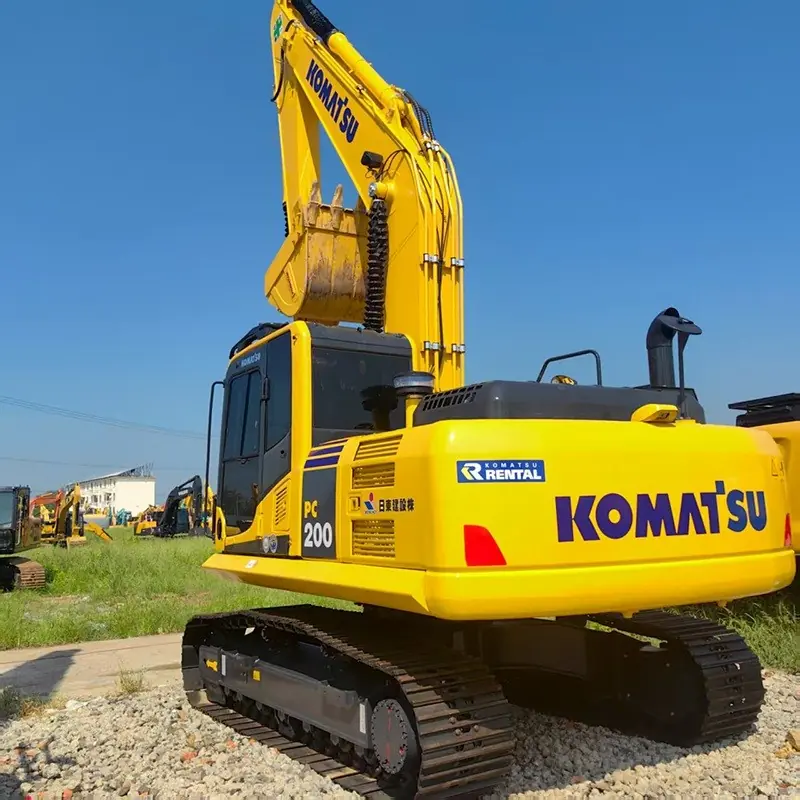
The 20-ton class — represented here by a Komatsu PC200 — is the pricing benchmark for most international used excavator buyers.
2. How Brand Affects Used Excavator Price
Brand is the second major price driver, and it operates through three channels: proven durability, parts availability and resale demand. In the used market, these channels compound. A brand that holds its resale value attracts more buyers, which keeps demand high, which in turn supports prices. The result is a stable price hierarchy that buyers can rely on.
| Brand | What can affect the price | Evidence to request |
|---|---|---|
| Caterpillar | Model demand, parts access, hours and condition | Serial plate, service history, cold start and hydraulic test |
| Komatsu | Model configuration, hydraulics, undercarriage and local support | Exact model, hours, travel/swing video and wear evidence |
| Hitachi | Cycle performance, engine configuration and maintenance record | Cold start, hydraulic operation and structural photos |
| Volvo | Production configuration, electronics and attachments | Controls, diagnostics, attachment list and service records |
| SANY | Model year, hydraulic condition, parts route and hours | Serial identity, operating video, service evidence and quote scope |
| Kobelco | Compact configuration, wear, attachments and destination support | Width, tail-swing, pins, hydraulic response and parts availability |
Brand recognition can affect demand, but it does not replace machine evidence. Compare the model, application, hours, hydraulic performance, undercarriage, attachments and destination support for the exact unit rather than relying on the badge alone.
3. Operating Hours and the Price Curve
Operating hours are the third major price driver, but they behave differently than most buyers expect. The relationship between hours and used excavator cost is not linear — it is a stepped curve. A machine between 1,500 and 3,500 hours typically commands 85 to 95 percent of a like-new price because it has passed its break-in period but retains nearly full hydraulic and structural life. Between 3,500 and 7,000 hours, prices fall more quickly, because buyers start pricing in the approaching undercarriage rebuild and hydraulic component refresh. Beyond 8,000 hours, the value drops toward a floor defined by the engine and final drives alone.
Because hours are influential, verification matters. Ask for hour-meter photos or video and compare the reading with available service records, telematics data or wear evidence. If the evidence does not match, treat the hour claim as unconfirmed and request an independent inspection where needed and available.
4. Condition, Undercarriage and the Hidden Costs
Condition is where the true used excavator cost often appears. Two machines with similar hours can differ because of undercarriage wear, hydraulic performance, structural repairs, attachments and maintenance records. Ask for measurements or clear photos of tracks, rollers, sprockets and idlers, plus hydraulic operating evidence for the exact unit.
When you evaluate a used excavator price, add the cost of inspection, repairs, transport, freight, insurance, import charges and commissioning. A lower asking price is not necessarily a lower total cost. Compare each machine against a defined serviceable condition and record which evidence was available, missing or independently verified.
Condition verification in the yard: undercarriage measurement and hydraulic testing set the real value of every used excavator.
5. Where to Buy: Auctions, Dealers and China Wholesale
The purchase channel affects the used excavator cost as much as the machine itself. Auctions may show lower headline prices but can provide less condition evidence. Dealers may add local support and a margin. A China export supplier may offer yard inspection and loading coordination, but buyers still need to verify the seller, exact machine, documents, payment beneficiary and destination requirements.
For a cross-border purchase, ask for a cold-start video, current walkaround, serial-number photo, inspection scope and written shipping terms for the exact machine. Request an independent inspection when needed and available, and use a local customs broker for destination-specific import requirements.
6. Negotiating the Right Used Excavator Price
A structured negotiation protects both sides. Start by establishing the reference band for the class, brand and hours you are targeting, then verify the four price drivers on the specific machine: tonnage, brand, hours and condition. Ask for three specific pieces of evidence — the cold-start video, the inspection report and the serial-number history. Once the documentation confirms the machine sits at the justified point in its band, negotiate on the basis of the deferred maintenance it needs, not on the sticker price. Exporters who document their machines thoroughly are comfortable with this approach, because it prices their refurbishment work honestly.
7. Budget Checklist for 2026 Buyers
Before you commit to any used excavator purchase in 2026, run this checklist. Confirm the operating weight and configuration. Compare the hour claim with available service or wear evidence. Request undercarriage and hydraulic checks. Add freight, insurance, import charges and commissioning to the purchase price. Finally, compare total cost to a defined serviceable condition rather than choosing the lowest listing.
Frequently Asked Questions
Prices in this section are comparison guidance, not live offers. Confirm the exact machine, quotation date, inspection scope, shipping and destination costs before payment.
How much does a used excavator cost in 2026?
There is no single current price. Historical comparison ranges in this guide are grouped by size class, but the exact used excavator price depends on model, year, hours, hydraulics, undercarriage, attachments, location, shipping and destination costs. Request a current quotation for the serial-numbered unit you are considering.
What is the best price range for a used excavator?
There is no universal best price range. Compare hours together with model year, hydraulic test results, undercarriage condition, attachments, maintenance evidence and destination costs. A machine with a higher asking price can have a lower total cost if its condition and evidence are stronger.
Why are used Caterpillar excavators more expensive?
Caterpillar machines command a premium because of the deepest global parts network, the highest resale demand and a structural reputation for longevity. The premium is real value for contractors who need parts within hours anywhere in the world, and it is why a used CAT 320D typically prices 8 to 12 percent above comparable Komatsu and Hitachi units.
Do operating hours really affect the used excavator price?
Yes, significantly. Hours move the used excavator cost in a stepped curve: machines under 3,500 hours hold 85 to 95 percent of like-new value, the 3,500 to 7,000 hour range drops faster as buyers price in an approaching undercarriage rebuild, and units beyond 8,000 hours fall toward an engine-and-drive floor. Always verify hour claims against telematics or wear evidence.
Is it cheaper to buy a used excavator from China?
The total cost can differ by purchase channel, but no universal saving should be assumed. Compare the machine price, inspection, loading, freight, insurance, import charges and local commissioning together. A responsible cross-border purchase should include a cold-start video, serial-number evidence, an agreed inspection scope and written shipping terms.