Accueil / Blog
Essential Maintenance Tips for Your Used Excavator
Review routine maintenance and daily-check topics that may help reduce avoidable wear. Follow the manufacturer service schedule and qualified technician guidance.
July 24, 2026 · Maintenance
Le contenu technique complet est disponible en anglais afin de conserver les termes d’origine.
Operating a high-performance used excavator requires more than just skilled operators; it demands a technical commitment to mechanical preservation. Whether you manage a fleet of CAT 320D units or nimble Hitachi ZX120 machines, the laws of friction and hydraulic fatigue remain constant. This guide outlines the three non-negotiable maintenance pillars that will safeguard your heavy equipment investment and ensure your iron arrives at the 10,000-hour mark with peak productivity levels.
1. The Hydraulic Bloodstream: Fluid Health and Filtration
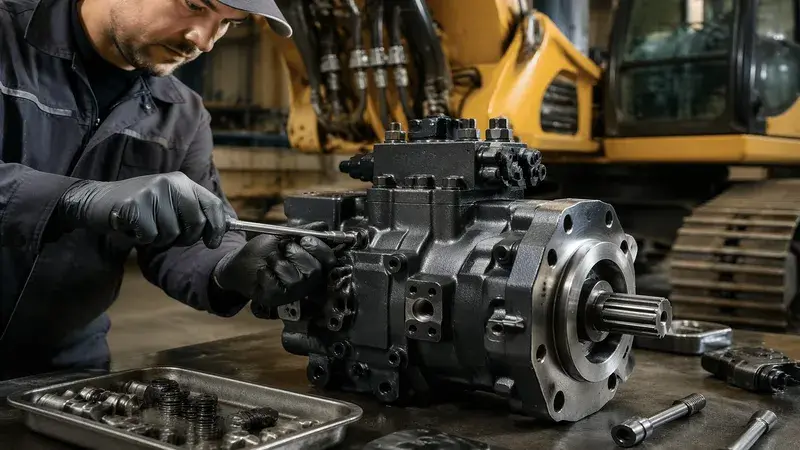
The hydraulic system is the most sensitive and expensive component of your used excavator. Even microscopic contamination—particles as small as 5 microns—can cause cavitation in the main pumps and scoring on control valve spools. We recommend a dual-layer approach: first, adhere to a strict 500-hour fluid sampling interval. Analyzing the copper and iron content in your oil provides an early-warning system for pump wear before a catastrophic failure occurs. Second, never compromise on filters. Genuine OEM filters are designed with specific micron ratings and bypass valve pressures that aftermarket alternatives often fail to match. Keeping your hydraulic "blood" clean is the single most effective way to maintain factory-spec cycle times.
2. Undercarriage Preservation: Managing the 50% Maintenance Cost
On a crawler machine, the undercarriage can account for up to 50% of the total lifetime maintenance expenditure. Many contractors ignore track tension until a de-tracking event occurs, but the damage starts much earlier. A track that is too tight increases the load on bushings and sprockets by up to 300%, leading to rapid heat buildup and internal seal failure in SALT (Sealed and Lubricated Track) joints. Conversely, a loose track causes scalloping on the links and rounded sprocket teeth. Daily removal of packed mud and debris from the roller frames prevents abrasive material from "grinding" away at the metal-to-metal contact points. By maintaining proper tension and keeping the frames clean, you can extend the service life of your tracks by over 2,000 working hours.
3. Engine Thermal Management and Cold-Start Protocols
Modern turbocharged diesel engines, such as the Isuzu and Cummins units found in our used excavator fleet, are engineered for high thermal efficiency. However, the most severe wear occurs during the first 60 seconds after a cold start. Implementing a mandated 5-minute warm-up period at low idle allows the engine oil to reach critical galleys and the turbocharger bearings to be fully lubricated before they are subjected to high RPM loads. Additionally, clean cooling packages are vital. In dusty construction environments, the gap between the radiator and the hydraulic oil cooler can become a "dirt trap," leading to engine overheating that compromises cylinder head integrity. Monthly pressure-washing of the cooling cores will ensure your machine maintains a stable thermal curve during 10-hour shifts.
Maintenance FAQ: Used Excavators
How often should I grease the bucket linkage?
For high-production digging, grease all primary pins and bushings every 8 to 10 hours of operation. If working in water or abrasive sand, increase this frequency to every 4 hours.
What is 'blow-by' and why does it matter?
Blow-by refers to combustion gases leaking past the piston rings into the crankcase. A slight amount is normal, but excessive blow-by indicates internal engine wear that will eventually require a full overhaul.