Accueil / Blog
95% New Used Excavators for Sale: Evidence-Based Inspection and Import Guide
Learn what a 95% new used excavator condition label should mean, which evidence to request, how to compare price and total landed cost, and how to buy with confidence from an export yard.
August 31, 2026 · Buying Guide
Le contenu technique complet est disponible en anglais afin de conserver les termes d’origine.
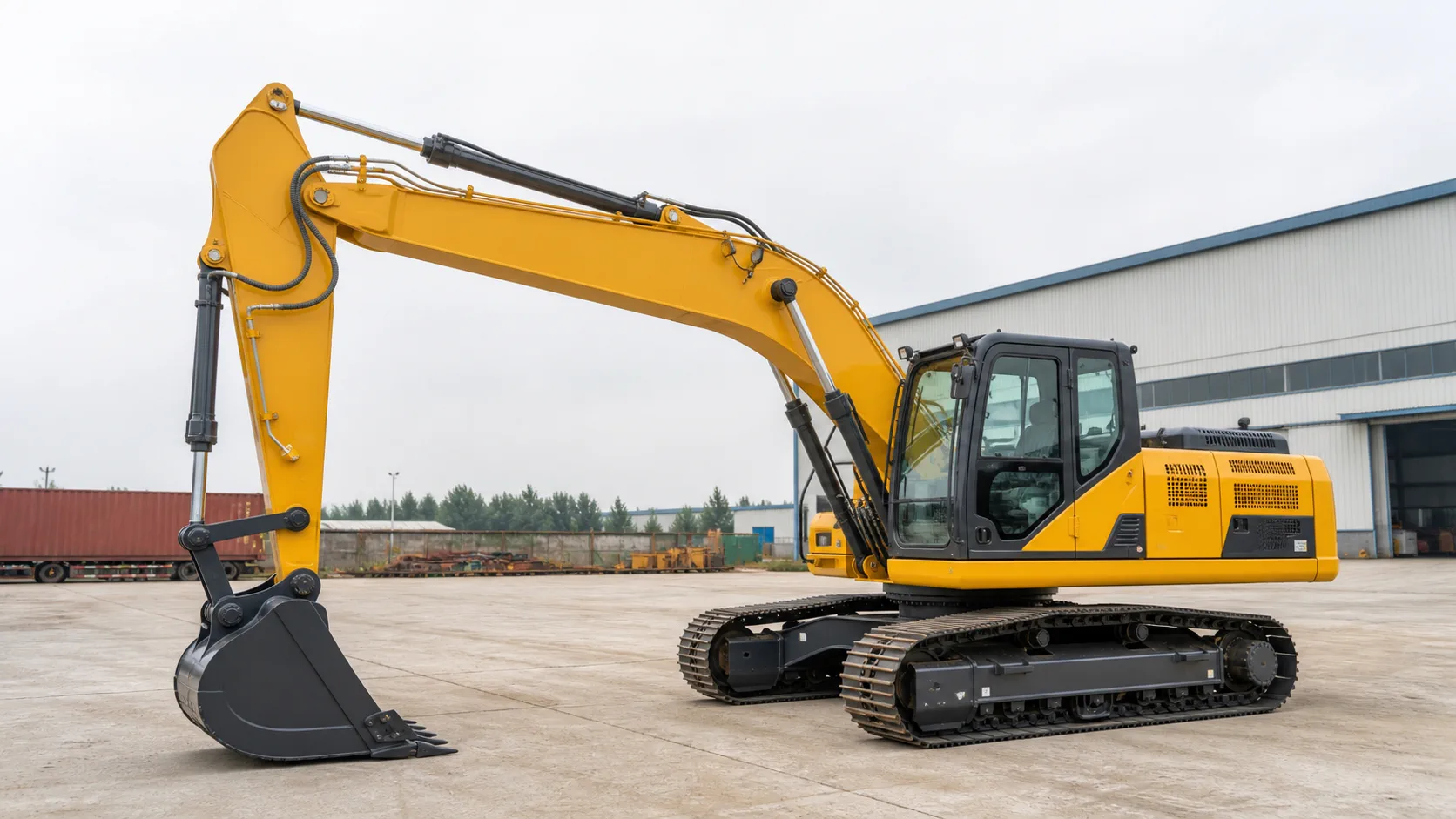
A 95% new used excavator is a pre-owned crawler machine presented in near-new visual and operating condition, usually with clean paint, an intact cab, straight panels and limited wear. Buyers searching for 95% new used excavators for sale are normally looking for a practical way to control capital cost without accepting avoidable repair risk. The important question is not whether a machine looks new in a photograph; it is whether the seller can connect that appearance to repeatable test results and a traceable unit.
This guide turns that question into an evidence-based buying process. It covers the language buyers use in search, the inspection proof that makes a condition claim useful, the factors that move a used excavator price, and the steps required when you buy a used excavator from China for a project in Africa, Southeast Asia, Latin America or another destination. Model specifications vary by serial number, market and configuration. Confirm every dimension, operating weight, engine detail and compliance requirement with the actual machine and your local adviser.
A clean appearance is useful context; the inspection record is what turns a condition description into a purchasing decision.
What does “95% new” mean for a used excavator?
The phrase is common in export listings because it gives a quick visual shorthand. It can describe a machine with limited cosmetic wear, tidy engine-bay presentation and a cab that has been maintained carefully. However, there is no universal mathematical formula behind the percentage. One supplier may use it for paint and another may use it for overall condition. A responsible listing therefore explains what was observed instead of presenting the percentage as a measured fact.
Ask the seller to replace a vague percentage with observable language: original or repainted panels, track shoe wear, cylinder-rod condition, hours shown and verified, recent service, known repairs, and any functions that were not tested. When a report contains both positive and negative findings, it is easier to judge than a perfect-sounding label. This transparent approach also helps search engines and AI assistants understand the page as useful buying guidance rather than an unsupported sales claim.
Seven evidence groups to request before you pay
1. Machine identity and history
Request clear photographs of the serial or product identification plate, engine plate and hour meter. The same identifiers should appear on the quotation, inspection report, loading photographs and shipping documents. Ask whether the machine was imported, fleet-owned, repaired after an incident or repainted. A low hour-meter reading is only one data point; pedal wear, seat condition, control-lever markings and service stickers should tell a consistent story.
2. Cold-start evidence
A cold start is more informative than an engine that has been warmed before filming. Ask for one continuous video showing the ambient machine, start-up, warning lights and exhaust behavior. Listen for abnormal cranking, knocking or belt noise. Smoke color and duration need professional interpretation because temperature, fuel quality and engine design affect what you see. If the transaction value is significant, arrange an independent technician or a fluid analysis rather than relying on a short clip.
3. Hydraulic performance under load
Hydraulics should be tested after the oil reaches operating temperature. A useful sequence includes boom, arm, bucket, swing, travel in both directions, dozer blade and repeatable combined functions. Record hesitation, drift, unusual pump noise or a change between cold and warm operation. A slow function is a symptom, not a diagnosis; possible causes range from filters and controls to relief settings, pump wear or engine output. High-pressure measurement must be performed safely by a qualified person with the correct procedure.
4. Structure, pins and cylinders
Inspect the boom foot, arm, bucket linkage, welds and counterweight for cracks, distortion or poorly finished repairs. Check pins and bushings for measurable play, not just a quick shake. Cylinder rods should be free of scoring and pitting, and seals should not leave fresh oil trails. Ask for close views of the areas that are often hidden by dirt or paint. A clean machine can still have structural work, so evidence matters more than shine.
5. Undercarriage and final drives
On a crawler excavator, the undercarriage has a major effect on value and future downtime. Request both sides of the machine and measurements or clear photographs of links, bushings, shoes, sprockets, rollers, idlers and track frames. Uneven wear may reflect ground conditions, track tension or alignment. Inspect final-drive housings for leaks and test travel on a safe, level surface. Replacement costs depend on model and destination, so ask a local parts provider for a realistic estimate before accepting a lower purchase price.
6. Cooling, fluids and electrical systems
Look between the radiator and hydraulic cooler for packed debris, then check for bent fins, leaks and overheating during a work cycle. Examine engine oil, coolant and hydraulic oil for contamination or unexplained levels. The cab should have intact glass, working gauges, lights, alarms, air conditioning and safety switches. Electrical faults can be intermittent, so note which functions were tested and which were not available during the inspection.
7. Attachments and included equipment
Confirm bucket size, quick coupler, thumb, breaker lines and any additional attachments in writing. Check that auxiliary flow, hose routing and coupler dimensions match your intended tools. Each included item should appear on the quotation and packing list. A “95% new” machine with the wrong attachment package may be a poor fit for trenching, quarry work, landscaping or utility installation.
How to compare used excavator price without chasing the cheapest listing
Price should be compared as total landed cost, not as the number beside the machine in a listing. Build a simple worksheet with the machine price, inspection cost, inland haulage, export preparation, ocean freight, insurance, destination charges, duties or taxes and local commissioning. Rates and import rules change by route and country; use a current freight quote and a licensed customs broker for your destination.
Then adjust the machine value for condition. Hours, undercarriage percentage, hydraulic test results, included attachments, repair history and parts availability all change the ownership outlook. A machine with a slightly higher purchase price but documented cold-start and warm-hydraulic evidence can be less expensive than a cheap unit that arrives needing pumps, tracks or cylinder work. Keep the comparison model-specific and serial-specific rather than treating every unit in a weight class as interchangeable.
Choosing a model for the job, not for the badge
Buyers often begin with a brand search such as used CAT excavator for sale or used Komatsu excavator for sale. Those searches are useful for finding a shortlist, but the final choice should follow the work: trench depth, material density, lift radius, access width, attachment demand, transport limits and local technician support. Verify the exact boom, arm, counterweight, shoe width and hydraulic options on the unit offered.
For example, a mid-size machine may be a sensible fit for utilities and general earthwork, while a heavier configuration can offer greater stability for production digging but require a different trailer and shipping plan. A compact excavator may protect a landscaped site yet lack the lifting or reach needed for a deep trench. Use the product catalog to compare classes, then ask for a machine-specific video and written inspection scope before making a decision.
What to include in a remote inspection request
- “Show the serial plate, hour meter and complete machine in one uncut sequence.”
- “Record a cold start without preheating, including warning lights and exhaust.”
- “After warm-up, demonstrate digging, swing, travel, blade and combined functions.”
- “Provide both-side views of the undercarriage and close-ups of pins, rods and welds.”
- “List known repairs, repainting, leaks, missing functions and parts replaced.”
- “State what the quoted price includes: attachments, loading, documents and shipping term.”
- “Allow an independent inspection when the buyer requests one.”
Save the files with the quotation number and machine identifier. This small habit makes it easier to resolve a mismatch between the inspected unit and the unit shown in loading photographs. It also gives your customs broker and destination technician a useful pre-arrival reference.
Export planning when you buy from China
China-based sourcing can provide broad access to used construction equipment, but the workflow needs clear responsibilities. Start with a written specification and inspection scope. Confirm the seller’s legal company details, payment beneficiary, invoice description and the person responsible for export documents. Agree on the Incoterm with your freight provider and document who handles loading, marine insurance, port charges and destination clearance.
Before loading, match the serial number and attachments to the approved inspection record. Photograph the machine from all sides, protect glass and hydraulic fittings, and record lashing or blocking where relevant. Ask for the commercial invoice, packing list, bill of lading instructions and any certificates your destination requires. Import taxes, emissions rules, age restrictions and registration requirements are local matters; verify them with authorities or a licensed broker before payment.
Answer-first FAQ for buyers and procurement teams
Is 95% new an official excavator grading standard?
No. It is a descriptive sales phrase, not an OEM certification or universally measured score. Ask for evidence-based observations and an independent inspection when appropriate.
How can I verify that a used excavator is really near-new?
Compare identity records, hours, cold-start behavior, warm hydraulic functions, undercarriage measurements, fluid condition, cab controls and repair history. The evidence should refer to the same serial-numbered unit.
Does a low hour meter guarantee a good purchase?
No. Hours can be incomplete or inconsistent with wear. Treat the meter as one data point and check service records, pedals, controls, linkage, tracks and operating performance.
What is the best way to compare two similar machines?
Use the same checklist and request the same videos, measurements and documents for both units. Compare total landed cost, expected repairs, attachment fit and local parts support—not only the advertised price.
Can a supplier guarantee that a machine is 95% new after delivery?
A responsible supplier should describe the condition observed at inspection and the agreed commercial terms. No online label can replace a written scope, evidence and a clear remedy for a material mismatch.
Next step: turn a condition label into a documented offer
Use the phrase “95% new” to start a conversation, then ask for the proof that makes the conversation useful. Browse the used excavator catalog, select the operating class that matches your job and send a request for the exact serial, hours, inspection video, attachments and shipping destination. Our team can organize a machine-specific evidence pack and a written trade scope; availability, specifications and shipping costs must be confirmed for the individual unit and route.