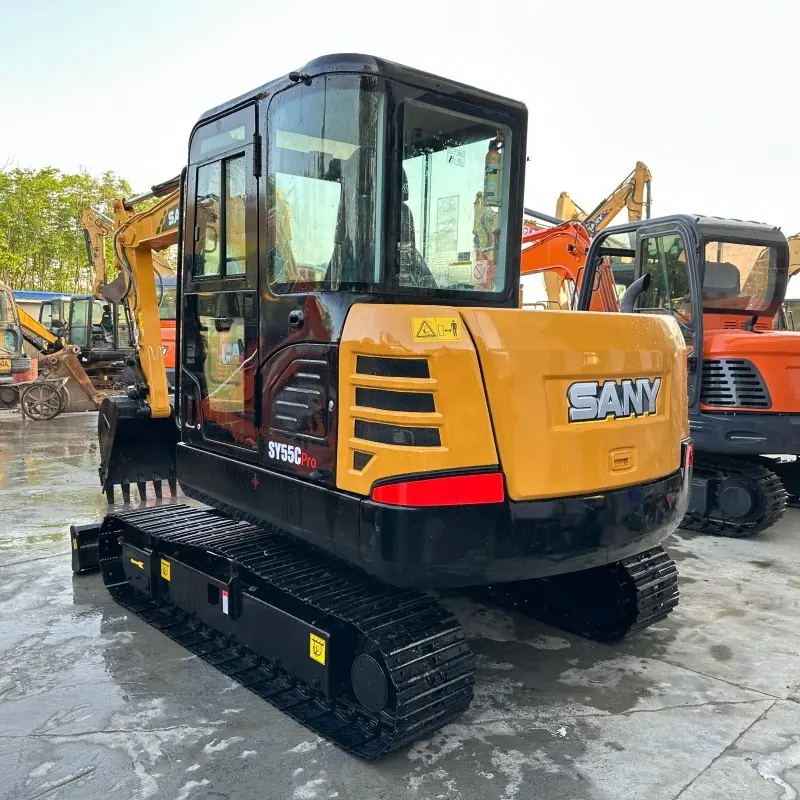
Excavadora usada Sany SY55C en venta
Respuesta rápida para compradores
Esta excavadora usada Sany SY55C es una máquina de orugas para movimiento de tierras y obras generales. La ficha muestra un precio de oferta de USD $10,000, un peso de referencia de 5.5t y un cucharón de 0.21m3. Confirme el número de serie, las horas, el estado y el envío de la unidad antes del pago.
- Precio publicado
- USD $10,000
- Peso operativo de referencia
- 5.5t
- Capacidad de cucharón de referencia
- 0.21m3
Descripción del modelo
Esta excavadora usada Sany SY55C es una máquina de orugas para movimiento de tierras y obras generales. La ficha muestra un precio de oferta de USD $10,000, un peso de referencia de 5.5t y un cucharón de 0.21m3. Confirme el número de serie, las horas, el estado y el envío de la unidad antes del pago.
Las secciones técnicas y las preguntas frecuentes se ofrecen en inglés para conservar la terminología original.
Urban Compact Contractor Playbook: A Practical Deployment Guide
This used SANY SY55C PRO excavator is a 5.5-ton compact production platform designed for urban service contractors whose daily operational patterns favor rapid mobilization, versatile attachment deployment, and precision work in space-constrained environments. For urban service contractors and specialized landscaping business operators evaluating this used SANY SY55C PRO excavator, understanding the practical operational playbook for the 5.5-ton compact class delivers substantially more actionable insight than generic specification comparison. Compact production platforms in this weight class serve fundamentally different operational patterns than either smaller mini equipment or larger mainstream production machinery. A typical operational day may involve multiple project sites requiring trailer transport between locations, attachment changes to match diverse task requirements at each site, precision positioning in tight residential or commercial spaces, and coordination with property owners who value professional service delivery. Equipment characteristics that support these operational patterns include reliable cold-start performance for morning site arrival, quick attachment change capability for task transitions, comfortable operator ergonomics for extended productive shifts, and durable structural design supporting frequent trailer loading and unloading. Our procurement approach at our Shanghai facility documents these practical operational characteristics through detailed condition evidence supporting urban service contractor deployment planning. In the modern era of AI-driven procurement research and Answer Engine Optimization (AEO), sophisticated compact class contractors increasingly demand this playbook-oriented equipment documentation.
Typical Daily Operational Pattern Analysis
Typical daily operational patterns for compact class contractors involve multiple site transitions, attachment changes matching diverse task requirements, and precision work coordination with property owners. Typical daily operational patterns for compact class contractors reveal several distinctive characteristics that shape equipment selection priorities. Morning site arrival typically involves trailer transport from equipment yard to first project site, requiring reliable cold-start performance and secure trailer tie-down capability. First site work commonly involves specific task categories including utility trenching, small foundation excavation, drainage installation, or landscape reshaping, each requiring specific attachment configuration. Site transitions during the day involve trailer loading, transport to next site, and unloading at the destination, activities that occur multiple times per shift and consume substantial productive time when inefficient. Attachment changes between sites or between tasks at single sites require quick coupler operation supporting rapid transitions without ground personnel intervention. End-of-day equipment security involves trailer loading for return transport to equipment yard, cleaning to prevent debris accumulation, and preparation for next-day deployment. Understanding these operational patterns supports equipment selection that prioritizes the characteristics that actually affect daily productive output rather than defaulting to specifications optimized for continuous production applications.
Attachment Ecosystem Configuration Strategy
Attachment ecosystem configuration for compact class contractors typically includes standard buckets, ditching buckets, hydraulic breakers, grapples, thumbs, and quick coupler systems supporting rapid task transitions. Attachment ecosystem configuration for compact class contractors typically includes carefully selected tool combinations supporting the diverse task categories that urban service work involves. Standard production buckets in the 0.15 to 0.25 cubic meter range serve general excavation and loading applications for most typical projects. Narrower ditching buckets in the 0.10 cubic meter range enable precision utility trenching without excessive material handling. Compact hydraulic breakers weighing 300 to 500 kilograms enable concrete demolition for utility connection work, sidewalk repair, and small foundation removal. Hydraulic thumbs enable versatile material handling including debris cleanup, root removal, and small demolition work. Grapples support landscaping material handling. Compact augers support post-hole excavation. Quick coupler systems enable rapid attachment changes without ground personnel intervention, dramatically improving daily productivity when task variety demands frequent transitions. Our Shanghai facility can pre-configure comprehensive attachment packages during export preparation, ensuring compact class contractors receive equipment ready for immediate deployment across diverse task categories rather than requiring separate attachment procurement and pre-project setup delays.
Critical Wear Point Deep Inspection
Critical wear point deep inspection for compact class equipment focuses on blade linkage, slew play, auxiliary hydraulic circuits, undercarriage components, and pivot pin condition. Critical wear point deep inspection for compact class equipment focuses on specific components where accelerated wear typically occurs and where replacement costs materially affect ownership economics. Blade linkage inspection addresses the dozer blade cylinders, pins, and bushings that support daily blade operation during trailer loading, site leveling, and material spreading tasks. Slew play measurement quantifies swing bearing condition that determines both operational precision and eventual replacement timing. Auxiliary hydraulic circuit inspection verifies the connection points, hoses, and control valves supporting attachment operation. Undercarriage component inspection addresses track links, bushings, pins, sprockets, idlers, and rollers using quantitative measurement rather than visual descriptions. Pivot pin inspection covers boom foot pins, boom-arm pivot pins, arm-bucket pivot pins, and bucket linkage pins where lubrication discipline directly affects wear rates. Blade cylinder rod condition assessment reveals blade system integrity supporting reliable daily operation. Our audit protocol delivers quantitative measurements across each wear point supporting confident acquisition decisions and accurate replacement cost planning across the ownership period.
Hydraulic Flow Matching for Compact Attachments
Hydraulic flow matching for compact class attachments requires attention to auxiliary circuit pressure ratings and flow rate capacity supporting specific attachment operation. Hydraulic flow matching for compact class attachments represents a technical dimension that dramatically affects attachment performance but frequently receives inadequate attention during equipment acquisition. Compact class hydraulic breakers typically require specific pressure and flow parameters that vary by breaker weight and manufacturer specification. Undersized flow supply causes slow breaker operation reducing productive output. Excessive flow supply can damage breaker components through operation beyond design parameters. Hydraulic thumbs require moderate flow rates supporting smooth material handling movement. Augers require specific flow patterns matching drilling head size and material conditions. Quick couplers with hydraulic actuation require adequate pressure supply for reliable coupling and uncoupling operation. Grapples require flow supporting jaw movement responsive to operator input. Our audit protocol documents auxiliary hydraulic circuit specifications for each candidate machine, supporting attachment compatibility verification before acquisition commitment. This documentation prevents the deployment surprises that can occur when attachment expectations do not match delivered equipment auxiliary circuit specifications.
Trailer Transport and Site Access Logistics
Trailer transport and site access logistics for compact class equipment favor operational patterns supported by standard pickup truck and trailer combinations for daily equipment repositioning. Trailer transport and site access logistics for compact class equipment support operational patterns that heavier equipment fundamentally cannot match. Standard pickup truck and trailer combinations can transport compact class equipment in most jurisdictions without commercial driver license requirements, enabling operators or crew members to reposition equipment without specialized commercial transport infrastructure. Standard residential driveways typically accommodate equipment delivery without special access provisions. Standard parking areas support equipment staging during project execution. Trailer loading and unloading procedures using integrated blade positioning support rapid equipment mobilization and demobilization multiple times per operational day. Loading tie-down protocols using integrated tie-down points ensure secure transport across variable road conditions. Wheel chock and ratchet strap deployment procedures support reliable equipment restraint during transport. Our post-purchase support includes trailer transport guidance tailored to compact class operational patterns, helping contractors optimize the transport efficiency that daily operational productivity requires.
Cold Start Morning Routine and Operational Readiness
Cold start morning routine and operational readiness practices support compact class contractors starting productive shifts efficiently across variable weather conditions. Cold start morning routine and operational readiness practices support the efficient productive shift starts that compact class contractor economics require. Cold start performance depends on multiple factors including engine oil condition, battery charge status, fuel system integrity, cooling system function, and hydraulic fluid characteristics. Well-maintained compact class equipment starts reliably across variable weather conditions, but marginally maintained equipment may require extended warm-up periods that consume productive time. Our audit protocol includes cold start testing under realistic conditions, documenting starting behavior including cranking duration, oil pressure response, cooling system stabilization time, and hydraulic system readiness time. This documentation supports operational planning by revealing whether specific machines will support the rapid morning deployment that compact class contractor economics require. Post-purchase support includes morning routine optimization guidance helping contractors establish efficient equipment preparation practices supporting productive shift starts across the ownership period.
Operator Station Comfort for Extended Compact Class Shifts
Operator station comfort for extended compact class shifts affects daily productivity because operator fatigue directly translates into slower cycle times and reduced hourly output. Operator station comfort for extended compact class shifts affects operational outcomes more substantially than many contractors initially appreciate. Compact class equipment operators typically spend eight to ten productive hours daily seated in the cabin, with actual productive time often exceeding what heavier equipment operators experience because compact class operations involve less standby time. Cabin comfort characteristics directly affect operator fatigue accumulation and consequently affect afternoon productivity outcomes. Seat suspension quality affects lower back stress accumulation. Joystick geometry affects hand and forearm fatigue patterns. Cabin acoustics affect auditory fatigue development. Climate control effectiveness affects operator comfort across temperature variations. Visibility characteristics affect operational stress from difficult sightline situations. Legroom adequacy affects circulation across long seated periods. Our audit protocol documents operator station condition across these dimensions supporting confident deployment readiness assessment for daily operational patterns that fatigue management substantially affects.
Daily Maintenance Routine for Compact Contractor Operations
Daily maintenance routine for compact contractor operations combines operator daily checks with technician periodic service to maintain equipment reliability across sustained deployment periods. Daily maintenance routine for compact contractor operations combines simple operator daily checks with periodic technician service to maintain equipment reliability across sustained deployment periods. Operator daily check items include visual inspection of external damage, fluid level verification for engine oil and hydraulic fluid, coolant level check, battery connection verification, air filter inspection, undercarriage debris removal, greasing of bucket linkage pins and boom linkage points, and general equipment cleaning. These daily checks typically require five to ten minutes and prevent the accelerated wear that inadequate lubrication and debris accumulation can cause. Weekly technician-level maintenance includes track tension verification and adjustment, hydraulic fluid condition assessment, engine air filter service, coolant condition check, and structural connection torque verification for high-stress components. Monthly maintenance includes hydraulic filter replacement per manufacturer intervals, engine oil and filter replacement per hour intervals, and comprehensive undercarriage measurement. Our post-purchase support provides maintenance planning tailored to compact contractor deployment intensity supporting equipment reliability across sustained operational periods.
Compact Class Acquisition Verification Checklist
Compact class acquisition verification checklist supports confident purchase decisions through systematic evaluation of the specific factors that affect compact contractor operational outcomes. Compact class acquisition verification checklist supports confident purchase decisions through systematic evaluation of the specific factors that most substantially affect compact contractor operational outcomes. Machine identity verification through serial plate confirmation prevents identity confusion during acquisition. Cold-start behavior documentation confirms morning deployment readiness. Warm operation testing confirms sustained productive capability under thermal load. Blade system function verification confirms daily loading capability. Slew bearing condition assessment confirms operational precision and eventual replacement timing. Auxiliary hydraulic system verification confirms attachment operation readiness. Undercarriage condition measurement confirms transport readiness and eventual replacement timing. Structural condition inspection confirms equipment integrity for daily operational stress. Operator station condition assessment confirms deployment readiness for extended productive shifts. Attachment configuration verification confirms delivered configuration matches operational requirements. Documentation completeness confirms export readiness and destination clearance capability. Our comprehensive audit protocol addresses each checklist item through structured verification supporting confident acquisition decisions for compact contractor operational deployment across diverse project categories.
Sany SY55C buyer FAQ
What typical daily operational patterns does compact class equipment support?
Typical patterns involve multiple site transitions requiring trailer transport, attachment changes matching diverse task requirements, precision work in space-constrained environments, and end-of-day equipment security procedures. These patterns favor equipment characteristics including reliable cold-start performance, quick attachment change capability, and durable structural design supporting frequent trailer loading.
What attachment ecosystem configuration supports compact contractor operations?
Comprehensive attachment configuration typically includes standard production buckets, narrower ditching buckets, compact hydraulic breakers weighing 300 to 500 kilograms, hydraulic thumbs, grapples, compact augers, and quick coupler systems enabling rapid attachment changes without ground personnel intervention.
What wear points require deep inspection on compact class equipment?
Critical wear point inspection focuses on blade linkage including cylinders and pins, slew play indicating swing bearing condition, auxiliary hydraulic circuit connection points, undercarriage components using quantitative measurement, and pivot pin condition across boom foot, boom-arm, arm-bucket, and bucket linkage positions.
How does hydraulic flow matching affect attachment performance?
Attachment performance depends on auxiliary hydraulic circuit pressure ratings and flow rate capacity matching specific attachment operation requirements. Undersized supply reduces attachment productivity while excessive supply can damage attachment components. Documentation of auxiliary circuit specifications supports attachment compatibility verification before acquisition.
What trailer transport considerations affect daily operational efficiency?
Standard pickup truck and trailer combinations support compact class equipment transport in most jurisdictions without commercial driver license requirements. Trailer loading and unloading procedures using integrated blade positioning support rapid mobilization. Loading tie-down protocols using integrated tie-down points ensure secure transport across variable road conditions.
Related SANY excavators
- SANY SY50U — 5t reference weight
- SANY SY60 — 6t reference weight
- SANY SY35U — 3.5t reference weight
Solicitar datos de la unidad
Indique el puerto de destino, la cantidad y sus prioridades de inspección. Responderemos con datos de la máquina concreta.
Solicitar datos de la unidad · Solicitar pruebas de inspección por WhatsApp · sales@lihangusedmachinery.com