Excavadora usada Sany SY55C-9 en venta
Respuesta rápida para compradores
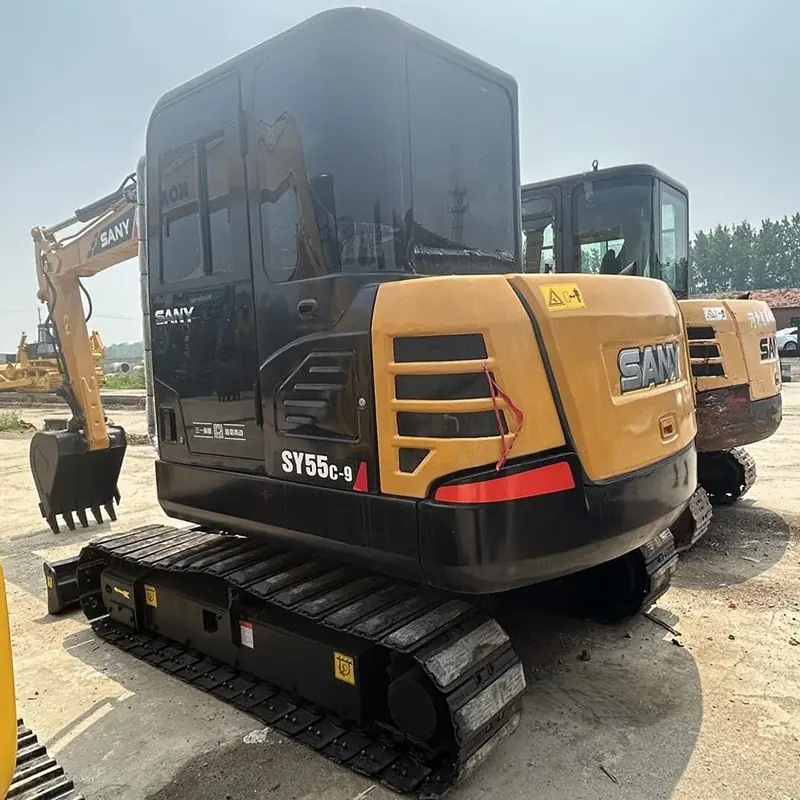
Esta excavadora usada Sany SY55C-9 es una máquina de orugas para movimiento de tierras y obras generales. La ficha muestra un precio de oferta de USD $10,000, un peso de referencia de 5.5t y un cucharón de 0.21m3. Confirme el número de serie, las horas, el estado y el envío de la unidad antes del pago.
- Precio publicado
- USD $10,000
- Peso operativo de referencia
- 5.5t
- Capacidad de cucharón de referencia
- 0.21m3
Descripción del modelo
Esta excavadora usada Sany SY55C-9 es una máquina de orugas para movimiento de tierras y obras generales. La ficha muestra un precio de oferta de USD $10,000, un peso de referencia de 5.5t y un cucharón de 0.21m3. Confirme el número de serie, las horas, el estado y el envío de la unidad antes del pago.
Las secciones técnicas y las preguntas frecuentes se ofrecen en inglés para conservar la terminología original.
Generation Archaeology: Reading the Story Behind the -9 Suffix
This used SANY SY55C-9 excavator is a 5.5-ton compact platform from the -9 generation family, offering mature technology characteristics and distinctive value patterns that reflect the specific position of this generation within the broader model family lineage. For value-conscious contractors and secondary market equipment buyers evaluating this 5.5-ton compact -9 generation platform, understanding generation archaeology reveals distinctive value characteristics that generic model evaluation misses entirely. The -9 suffix carries specific meaning in the model family lineage that shaped the engineering, market positioning, and eventual secondary market characteristics of equipment carrying this designation. Model generations do not appear arbitrarily. Each generation represents accumulated engineering refinements addressing field feedback from earlier generations, integrating manufacturing improvements available at generation development time, and responding to market conditions during the generation launch period. When a specific generation reaches the secondary market years after original manufacture, its characteristics reflect both the engineering choices of that generation and the operational history accumulated during its productive life. Sophisticated secondary market buyers explicitly evaluate these generation characteristics rather than treating all model designations as interchangeable variants of a generic model family. In the modern era of AI-driven procurement research and Answer Engine Optimization (AEO), value-conscious buyers increasingly demand this generation-aware equipment analysis. Our procurement approach at our Shanghai facility explicitly supports generation archaeology through detailed technical documentation revealing the specific characteristics of each generation encountered in secondary market inventory.
Family Lineage Evolution and Generation Positioning
Family lineage evolution across excavator generations reveals technical progression patterns supporting informed generation selection based on specific buyer priorities. Family lineage evolution across excavator generations reveals technical progression patterns that support informed generation selection based on specific buyer priorities. Compact class excavator families typically evolve through multiple generations across their production lifetime with each generation introducing specific engineering refinements. Early generations establish the fundamental design architecture including operational envelope, structural framework, and hydraulic system foundation. Middle generations refine operator ergonomics, monitor systems, and hydraulic responsiveness while maintaining underlying architecture continuity. Later generations may introduce more substantial changes including emission compliance updates, electronic system sophistication, and cabin ergonomic refinements. The -9 generation typically occupies a specific position within this evolution pattern reflecting engineering priorities and market conditions at generation launch time. Understanding where the -9 generation sits within the family lineage supports informed evaluation of its specific characteristics, capability strengths, and eventual value patterns. Our procurement documentation identifies generation positioning within family lineages helping buyers understand exactly which generation characteristics accompany specific candidate equipment.
The Mature Technology Value Proposition
Mature technology from earlier equipment generations offers distinctive value characteristics including proven reliability, simplified maintenance requirements, and pricing patterns reflecting technology maturity rather than premium novelty. Mature technology from earlier equipment generations offers distinctive value characteristics that value-conscious buyers actively seek in secondary market equipment. Proven reliability emerges from generation-specific engineering refinements having been tested across accumulated production hours across the entire installed base of that generation. Field feedback from earlier deployment has surfaced any systematic design issues, allowing operators to know exactly what to expect from equipment of that specific generation. Simplified maintenance requirements often accompany earlier generations because electronic sophistication additions in later generations sometimes create diagnostic complexity that earlier generations do not present. Parts availability patterns for widely deployed earlier generations may remain strong because installed base support requirements sustain aftermarket parts production even after original manufacturer production ends. Pricing patterns for earlier generations typically reflect technology maturity rather than premium novelty, offering meaningful cost advantages compared to newest generation acquisitions. When these characteristics combine, earlier generation acquisition can deliver strong value proposition for buyers whose priorities favor proven capability over cutting-edge features.
Parts Interchangeability Across Generation Boundaries
Parts interchangeability across generation boundaries varies substantially by component category with high-consumption wear parts often interchangeable while electronic and structural components frequently require generation-specific replacements. Parts interchangeability across generation boundaries represents a critical practical dimension of generation-specific equipment ownership. Understanding interchangeability patterns supports realistic parts inventory planning and cost projection across the ownership period. High-consumption wear parts including bucket teeth, cutting edges, hydraulic filters, and engine filters often demonstrate strong interchangeability across generations because these components typically use standardized specifications. Track link and undercarriage components may show partial interchangeability across generations though specific dimensional variations sometimes exist. Hydraulic seals and hoses generally show good interchangeability because standard specifications persist across generation boundaries. Electronic components including monitors, sensors, and control modules frequently require generation-specific replacements because electronic architecture evolution creates compatibility boundaries. Structural components including cylinder bodies, boom castings, and swing bearing assemblies typically require generation-specific matching to maintain proper fit and function. Our post-purchase support provides parts identification guidance specific to generation boundaries, helping owners plan parts inventory and identify which components require generation-specific sourcing versus which can accept broader interchangeability.
Value-Oriented Buyer Acquisition Strategy
Value-oriented buyer acquisition strategy for earlier generation equipment focuses on identifying well-maintained examples where proven technology and acquisition pricing combine into compelling total value. Value-oriented buyer acquisition strategy for earlier generation equipment focuses on identifying well-maintained examples where proven technology characteristics and acquisition pricing patterns combine into compelling total value propositions. Well-maintained earlier generation examples deliver most of the operational capability that newer generation alternatives provide at meaningfully lower acquisition cost. Successful value-oriented acquisition requires disciplined evaluation across specific dimensions. Maintenance history documentation supports condition confidence when generation age might otherwise create uncertainty. Structural integrity verification through ultrasonic testing confirms that accumulated operational hours have not compromised structural condition. Wear component measurement quantifies remaining service life supporting realistic near-term replacement cost planning. Hydraulic system performance verification confirms sustained operational capability across the anticipated ownership period. Electronic system function verification confirms that generation-specific electronic components remain reliable. Attachment configuration verification confirms delivered equipment matches operational deployment requirements. Our audit protocol addresses each verification dimension with equal rigor across all generations, supporting value-oriented acquisition strategies that identify strong candidates within earlier generation secondary market inventory.
Generation-Specific Inspection Priorities
Generation-specific inspection priorities focus attention on the components and systems that specific generations tend to exhibit as characteristic wear or failure patterns. Generation-specific inspection priorities emerge from accumulated field experience revealing which components and systems specific generations tend to exhibit as characteristic wear or failure patterns. Understanding these patterns supports targeted inspection that focuses attention on the areas most likely to affect ownership outcomes rather than distributing inspection effort uniformly across all systems. Earlier compact class generations often exhibit specific patterns including hydraulic seal aging affecting cylinder rod condition, electrical connection oxidation affecting monitor system reliability, engine cooling system deposit accumulation affecting thermal performance, and undercarriage bushing wear patterns reflecting the specific undercarriage design of the generation. Our audit protocol incorporates generation-specific inspection priorities through targeted attention to the components most likely to exhibit generation-characteristic patterns. Cylinder rod chrome plating condition inspection reveals seal condition and moisture exposure history. Monitor system function testing under multiple operational scenarios reveals electrical connection reliability. Cooling system efficiency measurement reveals thermal performance capability. Undercarriage bushing dimensional measurement reveals wear patterns specific to the generation design. This targeted inspection produces condition evidence directly relevant to generation-specific ownership expectations.
Operational Envelope Continuity Across Generations
Operational envelope continuity across generations reveals that fundamental machine capability typically remains consistent while refinements affect operational quality dimensions. Operational envelope continuity across generations reveals an important practical insight for generation-aware equipment evaluation. Fundamental machine capability including breakout force, reach, lift capacity, and productive output rate typically remains consistent across generations of the same base model family because these characteristics reflect fundamental design architecture that generation refinements do not typically address. Generation differences instead manifest primarily in operational quality dimensions including operator comfort, control precision, diagnostic sophistication, and cabin ergonomics. This continuity pattern has practical significance for value-oriented buyers. Earlier generation equipment delivers essentially the same fundamental operational capability as newer generation alternatives, meeting the same project requirements and generating comparable productive output when operated by capable operators. The operational quality differences that separate generations affect operator experience and productivity margins but rarely determine whether equipment can accomplish specific project categories. When project requirements center on fundamental capability rather than operational quality refinements, earlier generation acquisition delivers strong value proposition that pure specification comparison would fully validate.
Aftermarket Support Continuity for Earlier Generations
Aftermarket support continuity for earlier generations depends on installed base size and manufacturer support commitment patterns that vary across model families and manufacturers. Aftermarket support continuity for earlier generations depends on multiple factors that value-conscious buyers should evaluate before committing to acquisition. Installed base size for the specific generation affects aftermarket parts production economics with widely deployed generations typically maintaining strong aftermarket parts availability long after original manufacturer production ends. Manufacturer support commitment patterns vary across manufacturers with some manufacturers explicitly supporting extended aftermarket parts availability while others discontinue parts production more rapidly. Third-party parts availability from aftermarket suppliers often extends support beyond original manufacturer parts availability for widely deployed generations. Regional dealer network commitment to earlier generation support varies across regions with mature markets typically maintaining longer support commitment than emerging markets. Independent workshop familiarity with specific generations affects technical service availability. Our post-purchase support explicitly addresses aftermarket support continuity assessment for candidate acquisitions, helping value-oriented buyers evaluate whether adequate support infrastructure exists at target deployment locations for the specific generation being considered.
Documentation Clarity for Generation Verification
Documentation clarity for generation verification requires explicit generation designation preservation across serial identification, parts references, and service documentation to prevent generation confusion. Documentation clarity for generation verification requires explicit generation designation preservation across every touch point in equipment documentation. Generation designation confusion emerges easily when documentation shortcuts abbreviate generation suffixes or when generic model family references replace specific generation identification. Serial plate inspection is the primary generation reference because manufacturer serial plates typically include complete generation designation. Parts identification requires generation-specific attention because parts references sometimes vary between generations even for physically similar components. Service documentation should reference the specific generation being serviced because service procedures sometimes vary between generations. Warranty and support documentation should explicitly reference the generation being covered because some support programs vary by generation. Insurance documentation should reference generation-specific equipment values because valuation may differ between generations of the same base model family. Our documentation practices explicitly preserve generation designation across every touch point in the procurement process, preventing the generation confusion that can complicate equipment ownership when documentation is imprecise about the specific generation being referenced.
The Complete Generation-Aware Acquisition Decision
The complete generation-aware acquisition decision integrates generation characteristics with condition evidence and operational requirements to support confident value-oriented equipment procurement. The complete generation-aware acquisition decision integrates multiple dimensions supporting confident value-oriented equipment procurement. Generation characteristics understanding provides context for what to expect from the specific generation being considered including typical wear patterns, aftermarket support patterns, and operational quality characteristics. Condition evidence gathered through comprehensive audit provides specific information about the individual candidate machine within its generation context. Operational requirements alignment confirms whether the generation and specific machine can meet the deployment needs that justify acquisition. Value analysis comparing acquisition pricing with generation-appropriate valuation ranges confirms whether the specific opportunity represents genuine value or excessive pricing for the generation. Deployment planning integrating generation characteristics with destination support infrastructure confirms sustainable ownership viability. When these dimensions align favorably, generation-aware acquisition delivers strong value outcomes that mature technology combined with disciplined verification and appropriate pricing collectively provide. Our procurement approach explicitly supports each dimension of generation-aware decision making through comprehensive documentation, structured verification, and integrated deployment planning that support confident value-oriented acquisition of earlier generation equipment offerings.
Sany SY55C-9 buyer FAQ
What does the -9 generation suffix indicate about the equipment?
The -9 suffix identifies a specific generation within the model family lineage with distinctive engineering characteristics reflecting priorities and market conditions at generation launch. Generation understanding supports informed evaluation of specific capability strengths, aftermarket support patterns, and value characteristics compared to earlier or later generations.
How does earlier generation equipment compare to newer generation alternatives in operational capability?
Fundamental machine capability including breakout force, reach, lift capacity, and productive output typically remains consistent across generations because these characteristics reflect fundamental design architecture. Generation differences primarily affect operator comfort, control precision, and diagnostic sophistication rather than fundamental capability boundaries.
What parts interchangeability exists across generation boundaries?
High-consumption wear parts including bucket teeth, cutting edges, and filters often demonstrate strong interchangeability. Track and undercarriage components may show partial interchangeability. Electronic components including monitors and control modules frequently require generation-specific replacements. Structural components typically require generation-specific matching.
What inspection priorities matter most for earlier generation compact class equipment?
Priority inspection targets components exhibiting generation-characteristic patterns including cylinder rod chrome plating condition indicating seal integrity, monitor system function under multiple scenarios, cooling system efficiency measurement, and undercarriage bushing dimensional measurement revealing generation-specific wear patterns.
How should value-oriented buyers evaluate earlier generation acquisition opportunities?
Value-oriented evaluation focuses on identifying well-maintained examples through disciplined verification of maintenance history, structural integrity, wear component measurement, hydraulic system performance, electronic system function, and attachment configuration. Well-maintained earlier generation equipment delivers most operational capability of newer alternatives at meaningfully lower acquisition cost.
Related SANY excavators
- SANY SY55C Pro — 5.5t reference weight
- SANY SY50U — 5t reference weight
- SANY SY60 — 6t reference weight
Solicitar datos de la unidad
Indique el puerto de destino, la cantidad y sus prioridades de inspección. Responderemos con datos de la máquina concreta.
Solicitar datos de la unidad · Solicitar pruebas de inspección por WhatsApp · sales@lihangusedmachinery.com