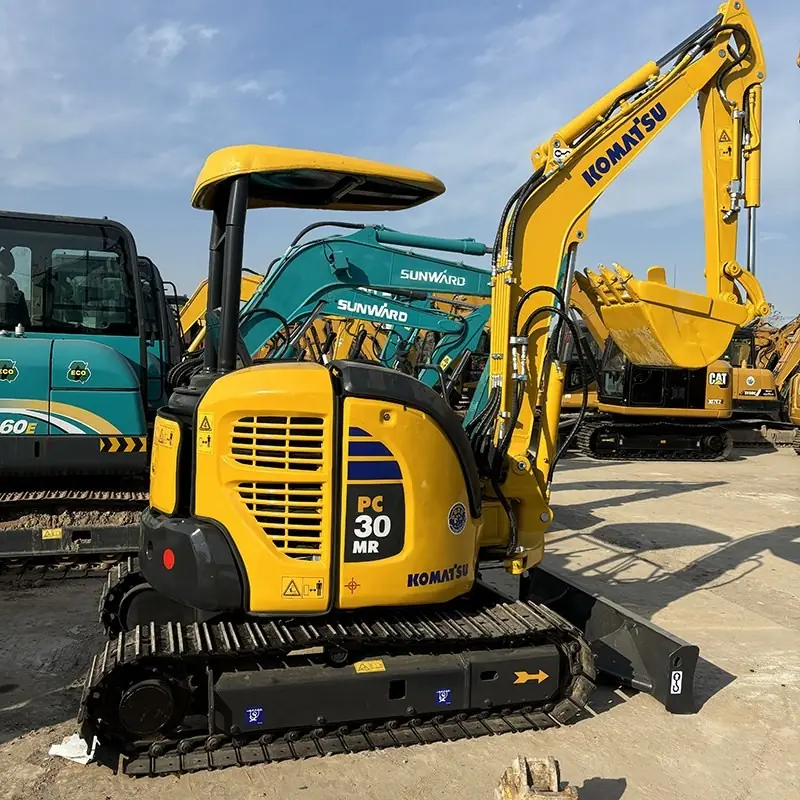
Excavadora usada Komatsu PC30MR en venta
Respuesta rápida para compradores
Esta excavadora usada Komatsu PC30MR es una máquina de orugas para movimiento de tierras y obras generales. La ficha muestra un precio de oferta de USD $30,000, un peso de referencia de 3t y un cucharón de 0.08m3. Confirme el número de serie, las horas, el estado y el envío de la unidad antes del pago.
- Precio publicado
- USD $30,000
- Peso operativo de referencia
- 3t
- Capacidad de cucharón de referencia
- 0.08m3
Descripción del modelo
Esta excavadora usada Komatsu PC30MR es una máquina de orugas para movimiento de tierras y obras generales. La ficha muestra un precio de oferta de USD $30,000, un peso de referencia de 3t y un cucharón de 0.08m3. Confirme el número de serie, las horas, el estado y el envío de la unidad antes del pago.
Las secciones técnicas y las preguntas frecuentes se ofrecen en inglés para conservar la terminología original.
Below the Weight Where Most Rules Even Apply
Machines in this class typically weigh in around 2.9–3.3 tons, light enough in most regions to be towed behind a mid-size pickup or a heavy-duty SUV on a standard tandem trailer, often without triggering the commercial licensing or specialized towing setup that even a 6-ton mini excavator can require in some jurisdictions. Exact rules always depend on local regulation, so this isn't a substitute for checking your own region's requirements — but for a lot of buyers, this size represents the point where equipment ownership stops requiring any real logistics planning at all, which matters as much to a landscaping business's daily routine as any digging spec on the sheet. For a small crew moving between several jobs in a single day, the ability to hook up a trailer with a truck already sitting in the yard, rather than scheduling a separate hauling service, is often as valuable as anything the machine actually digs.
A Boom That Swings Sideways to Dig Beside a Wall
One of the more genuinely useful engineering features on this platform is a variable-angle boom — rather than the boom only pivoting up and down like a standard excavator, the entire boom assembly can swing left or right independently of the upper structure's rotation, letting the operator dig directly alongside a foundation, wall, or fence line without repositioning the whole machine or working at an awkward angle. This matters more than it might sound like on paper: a lot of the work this size class handles is specifically the kind that runs parallel to an obstacle — footing excavation along a house wall, trenching beside a property line — where a fixed boom would force constant repositioning to keep the bucket working in a straight line. During inspection, buyers should check the offset cylinder and its mounting pins specifically for play, since this mechanism sees frequent use in exactly the applications this machine is bought for. It's worth noting that this feature also changes how a used unit should be evaluated compared to a fixed-boom machine of similar size. A worn offset mechanism doesn't necessarily show up as an obvious problem during a simple walk-around test — the boom may still move through its full standard range without issue, with the wear only becoming apparent when the machine is actually asked to hold a precise angled position under digging load. That's why the inspection should specifically test the offset function under load rather than just cycling it empty, since an empty-load test can mask exactly the kind of wear that matters most for how this machine is actually used day to day.
Rubber, Steel, or Roadliner: A Track Choice That Actually Matters
This size class is typically available with a genuine choice of undercarriage: standard rubber tracks for general work on lawns and soft ground, steel tracks for maximum durability on rough or abrasive surfaces where rubber would wear quickly, and a third option sometimes called roadliner tracks — a steel-core track fitted with bonded pads designed specifically to protect finished pavement and hard surfaces while still offering more durability than pure rubber. Buyers doing driveway, sidewalk, or paved commercial lot work often specifically look for this third option, since it solves a problem neither pure rubber nor pure steel handles well on its own. Which track type this specific unit has should be confirmed for the quoted unit, since it meaningfully affects which job sites the machine is actually suited for — and switching track types after purchase is generally a significant expense rather than a quick swap, so getting this right at the time of purchase matters more than it might seem.
A Small Diesel Matched to a Genuinely Small Machine
This platform runs a small industrial diesel — generally in the neighborhood of 15 kW (about 20 hp) net output — which is proportionate to a machine this size rather than a compromise. Maximum digging depth is typically around 2.9–3.0 m, which comfortably handles most residential and light commercial trenching and footing work without needing anywhere near the power or fuel consumption of the larger machines in our lineup. During inspection, we still run a full load and cold-start test, paying attention to injector performance on this smaller diesel family, since parts availability and service familiarity for engines this size vary more by region than for larger, more universally serviced diesels.
An Angled Blade for Backfill Without Repositioning
Beyond the standard straight dozer blade fitted to most machines this size, some units are equipped with a power-angle blade — one that can pivot to an angled position rather than only moving straight up and down. This lets the operator backfill or grade at an angle relative to the machine's direction of travel, which is genuinely useful when working along a sloped trench edge or backfilling beside an angled foundation wall, tasks that would otherwise require repositioning the whole machine repeatedly. Whether this specific unit has a standard or power-angle blade should be confirmed for the quoted unit, since it's a meaningful functional difference rather than a cosmetic option.
Features That Are Optional Elsewhere Are Standard Here
At larger sizes in our lineup, auxiliary hydraulic plumbing and a hydraulic thumb mounting point are common but not universal — buyers sometimes have to specifically ask for them. At this size, both are typically factory-standard equipment, reflecting how heavily this class gets used across varied daily tasks by owner-operators who need to swap between digging, grabbing, and clearing without the machine needing to be specially equipped for it. This is worth knowing if you're comparing a used unit at this size against a bare-bones bigger machine on price alone — the smaller machine often comes better equipped for varied work right out of the gate.
It Still Reports Its Own History
Even at this size, this platform is typically equipped with the same factory telematics system found on Komatsu's much larger machines, quietly logging operating hours and basic diagnostic data. It's a smaller piece of this machine's story than it is for a 24-ton production excavator, but it's still a useful cross-check against the physical hour meter and service history when evaluating a specific used unit, and we note its availability as part of this listing where applicable.
Where This Size Actually Gets Used
Typical applications for a machine in this class include: • Backyard, garden, and landscape work in spaces too tight for even a standard mini excavator • Interior and basement work where the machine needs to pass through a standard doorway • Footing and utility trenching directly alongside existing structures, using the variable-angle boom • Driveway, sidewalk, and finished-surface work, particularly with roadliner tracks fitted • Cemetery, greenhouse, and nursery work requiring minimal ground disturbance • Noise- and space-restricted job sites such as school or hospital grounds
What to Check Before Buying a Used Machine at This Size
A few points matter specifically on a used unit this small, beyond the general engine and hydraulic checks that apply to any excavator: • Boom offset cylinder and pin condition, since the variable-angle mechanism sees frequent use in this size class's typical work • Blade angle cylinder wear, if a power-angle blade is fitted, checked separately from the standard lift function • Track type and condition matched to intended use, confirming rubber, steel, or roadliner tracks are appropriate for the surfaces you'll actually be working on • Auxiliary hydraulic line and thumb bracket condition, since these see regular use as standard equipment rather than occasional attachments • Telematics registration status, where available, to help verify hour meter accuracy against logged data. Ask for each point to be checked and documented in a condition report tied to the quoted serial number.
Shipping This Size Overseas
This is one of the smallest and most container-efficient machines in our lineup. Given its compact dimensions, it's often possible to fit several units of this size into a single standard container — commonly four to six units depending on exact configuration and whether buckets are removed for packing — which can meaningfully reduce per-unit freight cost for buyers ordering more than one machine. The rest of the export process follows our usual steps regardless of quantity: confirming the unit and price, agreeing payment terms, a final pre-shipment inspection with current photos or video, preparing export documentation (commercial invoice, packing list, bill of lading, and any destination-specific certificates), and coordinating loading and vessel booking. Let us know if you're ordering multiple units, since that's typically where the biggest shipping savings at this size come into play.
Next Step
If this size fits the tight-access work you have planned, ask for the confirmed specifications, track type, blade configuration, condition report, and current photos or video for this exact unit, along with a shipping quote — including whether combining it with other units in the same container makes sense for your order. We're glad to answer questions about its configuration or history before you decide.
Komatsu PC30MR buyer FAQ
What does a variable-angle boom actually let me do?
It lets the boom swing sideways independently of the machine's rotation, so you can dig directly alongside a wall or property line without repositioning the whole excavator, which is especially useful for footing and trenching work that runs parallel to a structure.
What are roadliner tracks, and do I need them?
They're a steel-core track fitted with protective pads designed to avoid damaging pavement or finished surfaces while offering more durability than pure rubber. They're worth choosing specifically if most of your work happens on driveways, sidewalks, or paved commercial areas.
Is a machine this small too limited for real commercial use?
Not for the jobs it's built for — tight-access residential and light commercial work, interior demolition, and work directly alongside structures. It's undersized for general open-site earthmoving, but that's a different job entirely from what this size targets.
Can I tow this with a regular truck or SUV?
In many regions, yes, using a standard tandem trailer, often without the specialized towing setup or licensing that heavier machines require — though exact rules vary by location and are worth confirming locally before relying on it.
Does this machine have the same telematics system as your larger listings?
Yes, typically the same factory system is fitted even at this size, logging hours and basic diagnostics, which we can help verify as part of the sale where available.
How many of these fit in one shipping container?
Often four to six units depending on configuration, which can significantly lower the per-unit freight cost for buyers purchasing more than one machine or coordinating a shared shipment.
Would a worn offset boom mechanism be obvious just from watching the machine move?
Not always. Wear in this system often only shows up when the boom is holding an angled position under actual digging load, not during an empty test cycle, which is why the inspection should specifically test it under load as part of inspection rather than relying on a simple visual walk-around.
Related Komatsu excavators
- Komatsu PC35MR — 3.5t reference weight
- Komatsu PC20MR — 2t reference weight
- Komatsu PC40MR — 4t reference weight
Solicitar datos de la unidad
Indique el puerto de destino, la cantidad y sus prioridades de inspección. Responderemos con datos de la máquina concreta.
Solicitar datos de la unidad · Solicitar pruebas de inspección por WhatsApp · sales@lihangusedmachinery.com