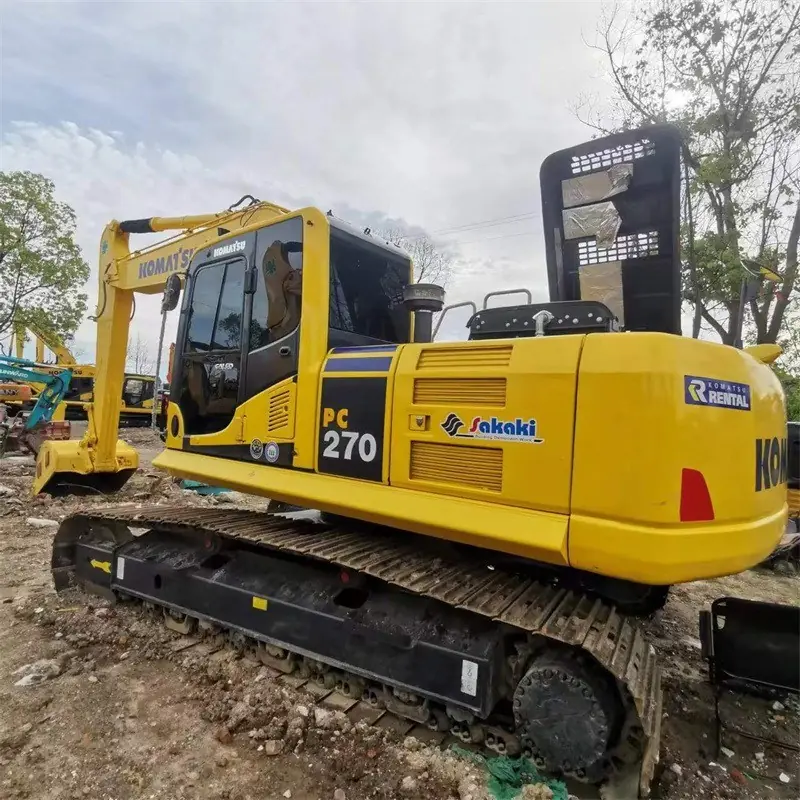
Excavadora usada Komatsu PC270 en venta
Respuesta rápida para compradores
Esta excavadora usada Komatsu PC270 es una máquina de orugas para movimiento de tierras y obras generales. La ficha muestra un precio de oferta de USD $23,000, un peso de referencia de 27t y un cucharón de 1.25m3. Confirme el número de serie, las horas, el estado y el envío de la unidad antes del pago.
- Precio publicado
- USD $23,000
- Peso operativo de referencia
- 27t
- Capacidad de cucharón de referencia
- 1.25m3
Descripción del modelo
Esta excavadora usada Komatsu PC270 es una máquina de orugas para movimiento de tierras y obras generales. La ficha muestra un precio de oferta de USD $23,000, un peso de referencia de 27t y un cucharón de 1.25m3. Confirme el número de serie, las horas, el estado y el envío de la unidad antes del pago.
Las secciones técnicas y las preguntas frecuentes se ofrecen en inglés para conservar la terminología original.
Define the production problem before choosing this class
A twenty-seven-ton crawler makes commercial sense when repeated excavation, loading or attachment duty can use its working range and mass consistently. Build a work profile from material density, required cut, spoil radius, truck size, repeated lifts, grade, travel and hours per shift. Separate time spent on bulk cycles from trimming, repositioning, lifting and tool operation. A heavier machine can maintain output where smaller equipment works near its limit, but it also increases fuel, mobilization and ground demands. If the project has occasional heavy moments within mainly light work, renting specialist support may cost less than carrying unused capacity. If deep pipeline cuts, hard digging or quarry cleanup dominate, the additional class may reduce cycle count and scheduling risk. Estimate annual productive hours and identify whether support trucks, breakers and operators can keep pace. The decision should follow the repeatable work package rather than a preference for the largest available machine.
Assess pipeline and quarry-support suitability
Deep cuts, heavy material and demanding tools require a verified configuration, controlled site plan and inspection evidence suited to the intended application. Pipeline projects add trench depth, spoil reach, bedding, trench protection, pipe handling and long travel corridors. Quarry support may include face cleanup, fragmented rock, breaker work, stockpile management and loading. Record the percentage of each activity, because hydraulic demand and wear differ. Check whether the selected boom, arm, bucket and tracks fit the production plan. For object handling, use the correct serial-specific load chart, approved lifting point and destination procedures; operating weight alone is not a capacity rating. In quarry conditions, inspect guards, cooling, structure and attachment lines more closely. For pipeline work, plan edge distance, ground support, visibility and travel on changing surfaces. A model page can identify these questions, but safe suitability depends on the actual unit, site engineering, operator competence and local rules.
Turn bucket volume into a realistic payload estimate
The 1.25m3 reference must be combined with bucket construction, fill factor and material density before it can inform production or stability. Ask for current photographs of the installed bucket, its width, profile, teeth, wear protection, capacity marking and weight. Estimate filled mass for the actual material rather than assuming every cubic meter weighs the same. Dense or poorly fragmented material may require a smaller or more heavily protected tool, while loose soil may use a larger profile within carrier limits. Consider breakout resistance, cycle time and spill as well as volume. For truck loading, calculate passes, legal truck payload and loading balance. Position the receiving vehicle to limit unnecessary swing while preserving safe separation, stable edges and visibility. For trenching, choose width around pipe, shoring, bedding and backfill. Put included buckets and couplers in the quotation. A transparent payload assumption is more valuable than repeating a single nominal capacity throughout the page.
Plan ground bearing, travel routes and working edges
The machine's mass requires suitable support throughout unloading, travel and operation, particularly on fill, slopes and excavation margins. Review geotechnical or site information where available and identify weak fill, saturated ground, underground voids, slopes and recently disturbed areas. Confirm actual track shoe width and crawler dimensions for the offered configuration. Wider shoes can influence ground pressure but do not make unsupported ground safe and may affect transport width or turning wear. Establish working pads and access routes capable of supporting the machine and attachments. Account for the load transferred while digging, lifting or traveling with a tool. Maintain planned distances from trench or bench edges and coordinate other vehicles. Loading and unloading ramps also need adequate bearing and approach geometry. Buyers should include temporary works, mats, ground improvement or alternate equipment in the project cost where needed. Selecting more machine mass without a ground plan can reduce productivity and increase risk.
Anchor all technical data to the serial plate
Serial-linked documents and physical measurements prevent nearby generations or variants from supplying the wrong specifications. Obtain a clear identification plate before selecting engine, working-range, hydraulic, lift or transport data. Model families can include different regional engines, emission systems, boom and arm options, track shoes, counterweights and auxiliary arrangements. Confirm that any brochure or service source matches the complete designation and serial range. Measure overall length, width and height in the proposed shipping condition, noting items removed. Determine the best available actual weight including bucket, coupler, guarding and tools. Do not combine values from PC240, 300-series or other close listings. Reference figures are appropriate for discovery and class comparison; the serial-specific specification sheet should control site fit, load charts, parts, attachment matching, logistics and final acceptance. Record each information source so the purchase file remains understandable after delivery.
Create one traceable identity and history file
Link the plate, monitor, condition, records and operating video so each claim can be traced to the quoted asset. Request current wide photographs and a readable plate. The operating video should begin at the identification, move into the cab, show the monitor before start-up and continue without unexplained cuts. This helps avoid mixing evidence from similar units. Compare displayed hours with wear on controls, seat, pedals, steps, panels, pins, bucket linkage, slew area and running gear. Application and maintenance influence wear, so inconsistencies guide further inspection rather than calculate hours. Review service invoices, repair records, oil reports and older meter images when available, checking serial references and dates. 500 entries on this site are catalog labels until supported for one machine. If machine history or emissions equipment affects import eligibility, confirm which original documents are acceptable with the destination authority or broker before payment.
Screen engine and cooling performance from cold to load
A continuous temperature cycle provides evidence of start behavior, warning status, smoke, cooling and response during real work. When practical, film before the day's first start. Show ambient conditions, the engine area, key-on lamps, cranking, exhaust and idle. Note warnings that remain, prolonged cranking, uneven sound, persistent smoke and fluid leakage. Weather, fuel and recording quality affect interpretation, so technicians should assess concerns. Warm the machine gradually, then work it under a controlled, representative load while observing temperature and monitor status. Inspect radiator and cooler cleanliness, hoses, clamps, belts, mounts, wiring and accessible intake or turbo components. Check fluids only by safe methods and consider analysis where commercial exposure warrants it. Maintenance stickers and invoices contribute context but do not prove complete condition. High ambient temperatures, dust and sustained tool duty make cooling capacity and cleanliness especially important to uptime.
Evaluate hydraulic response and heat under combined demand
Testing individual circuits and coordinated cycles after warm-up helps expose delay, leakage, drift or weakness hidden by a short cold demonstration. Operate boom, arm, bucket, swing and both travel sides separately before combining movements used in excavation and loading. Observe hesitation, surge, slow response, pump or relief noise and behavior that changes with temperature. Avoid unsafe overload or stall tests. Inspect cylinder rods for scoring, corrosion and impacts, then examine glands, hoses, fittings, pumps, valves and the center-joint area for fresh oil. A drift observation can support screening only when load, position, temperature and test duration are recorded. If performance differs between circuits, qualified pressure, flow and electronic diagnostics may be needed. For auxiliary tools, identify installed circuits, controls, connector standards and available settings. Documenting test conditions lets buyers estimate repair and commissioning costs rather than relying on phrases such as excellent hydraulics.
Examine high-load structures and swing components
Front equipment, frame connections and the rotating platform should be assessed as one system for cracks, repair quality and excessive movement. Request clean close-ups of boom foot and bend, arm, cylinder mounts, bucket linkage, coupler region, upper-frame joints and accessible lower-frame areas. Look for deformation, cracks, reinforcement, irregular welds, localized paint and mismatched surfaces. A documented professional repair may be serviceable; an unexplained modification requires competent review. Observe pin and bushing movement during safe operation without allowing anyone into pinch zones. Rotate the house completely on appropriate ground, noting roughness, noise, inconsistent speed and braking. Inspect swing-drive areas for oil and check bearing movement with a manufacturer-appropriate procedure. Previous quarry, breaker or demolition use can increase scrutiny of structure, guards, cooling and hydraulic plumbing. Cosmetic condition alone cannot establish the integrity needed for heavy production duty.
Measure running gear before setting a price
Track-system condition should become a destination-priced maintenance forecast, not an unsupported remaining-life percentage. Photograph complete left and right sides plus detailed shoes, links, pins and bushings, sprockets, carrier rollers, lower rollers, idlers, guards, adjusters and track frames. Note uneven wear, broken shoes, leaks, sharp sprocket profiles and signs of incorrect tension. Where possible, have a qualified inspector measure components and compare them with applicable limits. Travel forward and reverse, steer in each direction and use available speeds on suitable ground. Watch for pulling, one slow side, repeated clicking or grinding and final-drive leakage. Ground slope and track tension can influence behavior, so anomalies need follow-up rather than immediate diagnosis. Price likely interventions with local parts, freight, labor and downtime. For equipment expected to work long shifts, deferred undercarriage work can dominate the first-year ownership budget.
Engineer breakers and other high-demand attachments
Tool mass, interface, oil requirements, controls, cooling and guarding must match the serial-specific carrier and intended duty cycle. Record pin diameter, center distance, stick width, coupler type and attachment weight. For a breaker, crusher, shear, compactor or grapple, obtain required flow, pressure, return arrangement, case-drain needs, connectors and expected continuous-use time. Identify the installed auxiliary circuits and whether settings and cab controls support the tool. Heavy attachments affect stability, structural stress, cooling demand and freight. Review boom and arm compatibility, approved operating procedures and destination guard requirements. List each bucket, hose, adapter, pin and loose component included in the written offer and packing list. Where compatibility remains uncertain, budget for engineering review, plumbing changes, configuration, testing and commissioning. A tool displayed next to a machine is not evidence that it is included, properly matched or safe for sustained work.
Price downtime as well as purchase and repair
A useful commercial comparison combines delivered cost, maintenance readiness, expected availability and project consequences of failure. Contact destination workshops with the serial range and ask about routine filters, sensors, wiring, seals, hydraulic parts, track components, drives and diagnostic capability. Prepare a commissioning service plan and identify repairs or parts with long lead times. Then standardize quotations: machine, coupler, buckets, tools, inspection, first service, repairs, origin movement, loading, dismantling, freight, insurance when requested, destination charges, duty, tax and inland delivery. Use the same Incoterm and named place. Model fuel, operators, scheduled maintenance and realistic utilization. Add the cost of delayed production if a critical system fails. Unsupported manufacture year or meter fields should not create a premium. A higher purchase price can be rational when evidence and support lower expected downtime and cost per productive hour.
Resolve transport permits and dismantling before release
Measured dimensions, route review and serial-linked loading records should be complete before final payment and shipment approval. Obtain actual transport length, width, height and weight and review low-bed, container, flat-rack or other options with competent providers. This class may cross route, axle or port thresholds that nominal model weight cannot resolve. Agree whether the bucket, arm, counterweight, cab, handrails or other parts need removal, who performs the work and how hydraulic ports, rods, pins and loose items will be protected and labeled. Immediately before loading, photograph the plate, monitor, attachments, every side and existing damage. Create a component list tied to the invoice and obtain lifting, placement and securing evidence where available. At destination, verify identity and cargo before movement or reassembly. Final release should follow completed job-fit, identity, mechanical, economic, support and logistics gates.
Komatsu PC270 buyer FAQ
What work suits a used Komatsu PC270 excavator?
This 27-ton reference class is commonly considered for quarry support, pipelines, roads, large foundations, bulk earthmoving and truck loading. Confirm material, range, site and output requirements.
What weight and bucket are listed?
The website lists 27t operating weight and 1.25m3 bucket capacity as references. Actual values depend on the serial-specific machine and work equipment.
What should a hydraulic test include?
Test boom, arm, bucket, swing and travel individually and in combined cycles after warm-up. Observe response, drift, leakage, abnormal noise and temperature-related changes.
Which structural areas need inspection?
Inspect boom foot and bend, arm, cylinder mounts, linkage, coupler area, upper and lower frames, slew behavior, welds and any reinforcement or localized paint.
Can this machine run a hydraulic breaker?
Possibly, but tool weight, mounting, flow, pressure, return, case drain, controls, cooling, structure and guarding must match the exact carrier and duty cycle.
How should quotations be compared?
Use equal Incoterms and destination assumptions and include tools, inspection, service, repairs, track reserve, freight, fees, taxes, delivery and expected downtime.
Can an independent inspection be arranged?
An inspection may be arranged subject to access, inspector availability, scope, safe test limits, timing and cost. The report should identify the exact unit and limitations.
Related Komatsu excavators
- Komatsu 240LC — 24t reference weight
- Komatsu 300 — 30t reference weight
- Komatsu PC240 — 24t reference weight
Solicitar datos de la unidad
Indique el puerto de destino, la cantidad y sus prioridades de inspección. Responderemos con datos de la máquina concreta.
Solicitar datos de la unidad · Solicitar pruebas de inspección por WhatsApp · sales@lihangusedmachinery.com