Excavadora usada Komatsu PC18MR en venta
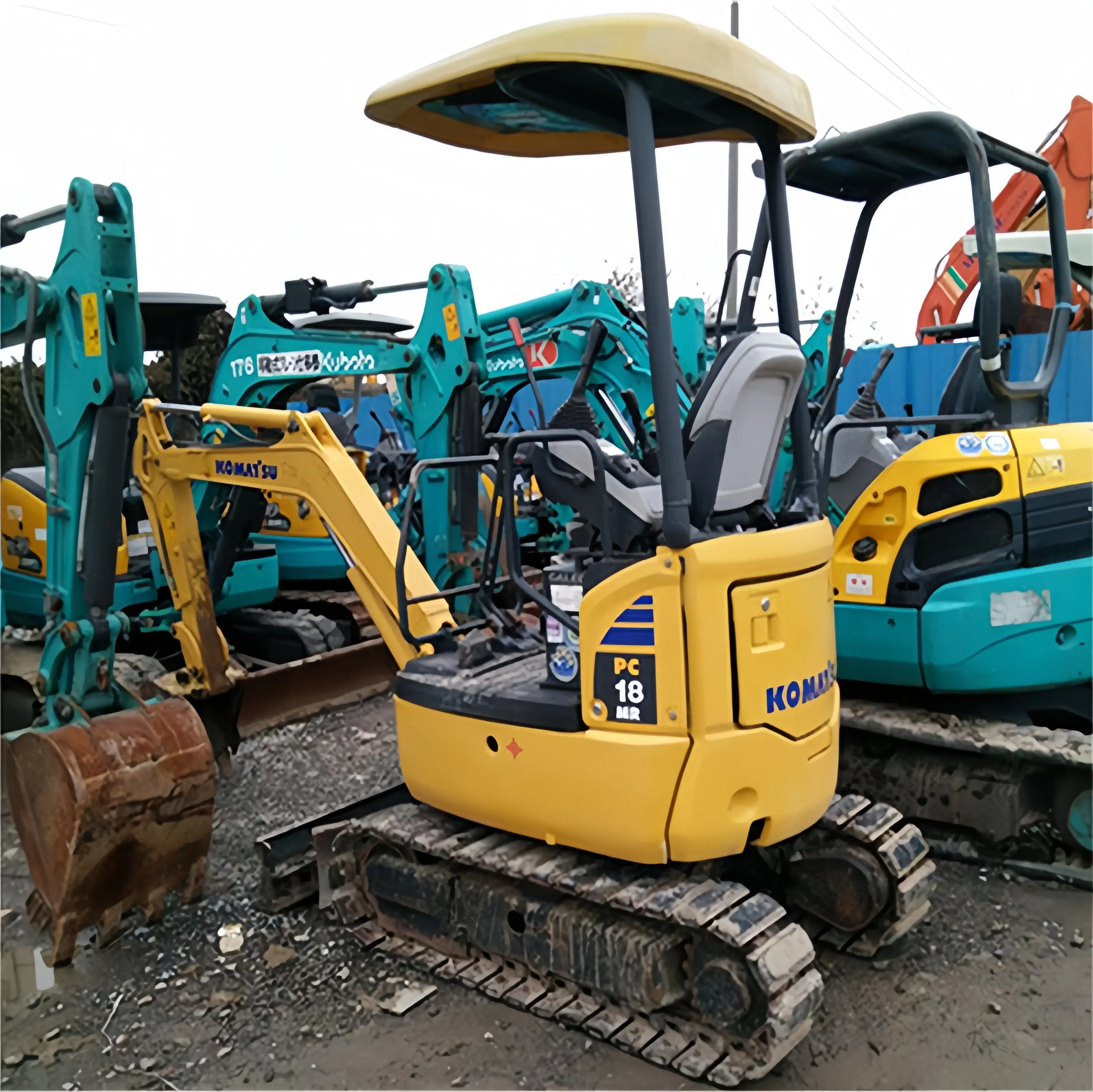
Respuesta rápida para compradores
Esta excavadora usada Komatsu PC18MR es una máquina de orugas para movimiento de tierras y obras generales. La ficha muestra un precio de oferta de USD $10,000, un peso de referencia de 1.8t y un cucharón de 0.05m3. Confirme el número de serie, las horas, el estado y el envío de la unidad antes del pago.
- Precio publicado
- USD $10,000
- Peso operativo de referencia
- 1.8t
- Capacidad de cucharón de referencia
- 0.05m3
Descripción del modelo
Esta excavadora usada Komatsu PC18MR es una máquina de orugas para movimiento de tierras y obras generales. La ficha muestra un precio de oferta de USD $10,000, un peso de referencia de 1.8t y un cucharón de 0.05m3. Confirme el número de serie, las horas, el estado y el envío de la unidad antes del pago.
Las secciones técnicas y las preguntas frecuentes se ofrecen en inglés para conservar la terminología original.
Where does a 1.8-ton mini excavator earn its place?
This class is most useful when access, careful surface protection and low mobilization effort matter more than maximum bulk production. Typical work can include garden renovation, fence and drainage trenches, small utility connections, residential footings, interior demolition support, tree and stump preparation and maintenance around existing buildings. A compact machine is not automatically the cheapest option for every small job. Buyers should define gate width, travel route, floor or paving limits, required digging depth, spoil location, soil type and attachment use. Estimate the volume that must be moved and the time available. If the crawler spends each shift at full reach in dense material, a larger machine may complete the work with fewer cycles. If the project involves narrow passages, frequent relocation and careful finishing, the smaller carrier can reduce disruption and transport complexity. The best fit comes from matching the recurring task rather than choosing only by purchase price or the appeal of easy towing.
Measure the complete access envelope
Use actual machine width, height, tail sweep and blade configuration to prove access instead of relying on a mini-excavator label. Measure every gate, doorway, alley, overhead obstruction and turning point between unloading and the work area. Then obtain current measurements of the machine with its tracks and blade in the intended positions. Some compact crawlers may have adjustable undercarriage or blade arrangements, but the offered unit must demonstrate those features and their operating condition. Consider counterweight and rear-body sweep during rotation, especially beside walls, vehicles or public paths. Check cab or canopy height and determine whether folding or removal is permitted and safe. Ground clearance, approach angle and ramp transition can also stop a machine that appears narrow enough on paper. Record the fitted bucket width because the tool can be wider than the tracks. A simple access drawing with verified dimensions is more useful than generic claims such as “fits anywhere” or “zero tail.”
Interpret weight and bucket references correctly
Use 1.8t and 0.05m3 for initial classification, then confirm serial-specific configuration and measured transport figures before purchase. Operating mass can change with canopy or cab, rubber or steel tracks, adjustable crawler equipment, blade, arm length, coupler, bucket, auxiliary piping and extra counterweight. Bucket capacity alone cannot predict output because width, profile, teeth, soil density and fill factor change each cycle. Ask for photographs and measurements of the work tool that is actually included. Obtain total length, width, height and weight in transport condition, noting loose buckets or attachments. When digging depth, dumping height, reach, engine output, hydraulic flow or lift capacity controls the project, request a technical source matching the complete designation, regional version and serial range. Do not copy data from a similar two-ton model. Reference specifications are appropriate for search and shortlisting; contracted logistics and job planning require evidence tied to the offered machine.
Verify serial identity, manufacture context and meter reading
Connect the identification plate, monitor, current exterior and operating sequence before treating age or hours as valuation facts. Request a continuous video that begins with the entire crawler and readable plate, moves to the monitor before start-up and follows the machine through basic operation. This makes it harder for photographs, meter footage and operating evidence from different assets to be mixed accidentally. Compare displayed hours with wear on the seat, joysticks, pedals, blade control, steps, pins, bucket, slew area and track system. Application and maintenance strongly affect wear, so this comparison identifies questions rather than proving a number. Review service invoices, inspection documents and historical meter photographs when available, checking serial references and date progression. 500 catalog labels on this site remain unverified until supported for a particular unit. If age affects import eligibility or registration, confirm acceptable documents with the destination broker or authority before making a payment commitment.
Request a cold start and warm operating demonstration
A single cold-to-warm sequence can reveal start behavior, warnings, leakage and temperature-related changes that edited clips may miss. When safe and practical, ask the seller not to pre-start the engine. Show ambient conditions, the engine area, key-on panel, cranking, exhaust and idle in one sequence. Note extended cranking, warning lamps that remain active, irregular sound, persistent smoke and visible leaks. Weather, fuel and video quality affect interpretation, so a qualified technician should assess concerns. Allow the system to reach normal operating temperature, then demonstrate work functions under a sensible load while monitoring warnings and temperature. Inspect the radiator and cooler for blocked fins or damage, and view belts, hoses, clamps, mounts and accessible intake areas. Check fluids only by safe procedures. Filter labels and service notes may support the history but cannot establish complete maintenance. The objective is a transparent screening record that helps decide whether in-person diagnostics or repair allowances are necessary.
Test hydraulics, swing and blade as a coordinated system
Operate each function separately and in combination after warm-up, observing delay, drift, leakage, noise and control quality. Cycle boom, arm, bucket, swing, travel and blade through normal ranges on suitable ground. Follow with combined digging movements to see whether response stays smooth when several functions share flow. Watch for hesitation, sudden changes, unusual pump noise, excessive cylinder drift and performance loss as temperature rises. Inspect cylinder rods for scoring or impact marks and check glands, hoses, fittings, valve areas and accessible pump spaces for fresh oil. Blade linkage and cylinders deserve attention because the blade supports grading, backfilling and machine positioning. If a performance concern remains, qualified pressure, flow or diagnostic tests provide stronger evidence than remote video. Avoid unsafe stall or overload demonstrations. Record what was tested, the temperature state and any limits, so an inspector and buyer can distinguish observed behavior from assumptions.
Inspect rubber tracks and travel components carefully
Track condition, rollers, idlers, sprockets and final-drive behavior can materially change the real cost of a small used crawler. Rubber tracks should be photographed on both sides, including tread, edges, internal lugs and visible cable damage. Cracks vary in importance, so document location, depth and exposed reinforcement rather than describing tracks only as good or worn. For steel equipment, inspect shoes, links, pins and bushings. Check sprocket tooth profiles, rollers, idlers, adjusters, guards and the lower frame for leaks, damage and uneven wear. Observe track tension on level ground according to an appropriate procedure. Travel forward and reverse, steer both ways and use available speed modes. Note pulling, a weak side, repeated noise or leakage near drive components. If an adjustable undercarriage is fitted, demonstrate expansion and retraction and inspect sliding or hydraulic parts. Cost replacements using local supply and labor; inexpensive-looking track wear can become substantial when parts availability or downtime is poor.
Check compact-machine pin wear and structural history
Frequent attachment changes and confined work can concentrate wear around the front linkage, blade and body corners. Obtain clean close views of boom foot, boom bend, arm, cylinder mounts, bucket linkage, coupler area, blade arms, upper-frame connections and accessible lower-frame sections. Look for cracks, distortion, irregular welds, reinforcement plates, fresh localized paint and impact damage. Repairs are not automatically disqualifying, but location, method and documentation affect confidence. During safe operation, observe movement at pins and bushings without allowing anyone into a pinch zone. Rotate the upper body through a full circle and listen for roughness or inconsistent braking. Check slew-bearing movement using a safe, manufacturer-appropriate method and inspect the swing-drive area for leakage. Compact machines often work close to buildings and carry multiple tools, so cosmetic panels and counterweight corners can show contact; distinguish superficial damage from structural issues. A competent independent inspector should assess uncertain cracks, welding or excessive movement.
Verify bucket, coupler and auxiliary-tool compatibility
Record mechanical dimensions and hydraulic requirements for every planned tool rather than assuming that visible auxiliary lines ensure compatibility. Measure pin diameter, pin centers, stick width, bucket width and coupler interface. Confirm the mass of each bucket, breaker, auger, grapple or compactor because a small carrier is sensitive to attachment weight and operating radius. For powered tools, compare required oil flow and pressure with serial-specific carrier information. Identify return routing, case-drain requirements, connector standard and whether controls support one-way or two-way operation. Review cooling demand and expected duty cycle. Check hoses for rubbing and fittings for leakage. Destination rules may require specific guarding, operator protection or safe coupling procedures. List each included tool, pin, hose and loose part in the quotation and loading record. If matching cannot be proven, include adapter, plumbing, setup and commissioning costs in the comparison. A tool shown in a sales photograph should not be assumed to be included or ready to operate.
Calculate towing and delivery from the complete load
Machine weight is only one part of the transport calculation; trailer, attachments, fuel, securing equipment and local limits all matter. Obtain measured transport dimensions and the best available actual mass for the offered configuration. Add buckets, breaker, ramps, spare parts and other items carried on the trailer. Check trailer payload, axle ratings, tow-vehicle capacity, tongue or pin load, brake requirements, license rules and route restrictions with competent local providers. Never infer legal towing from the 1.8-ton catalog reference. Plan safe loading angles and confirm that ramps and deck can carry concentrated crawler loads. Identify approved tie-down points and use appropriate securing equipment and procedures. For international freight, compare consolidated container, full-container or other available methods using current written quotes. State who loads, protects, documents and unloads the machine. Small size can simplify logistics, but only a complete load calculation prevents an apparently easy delivery from becoming unsafe or non-compliant.
Assess controls, operator environment and local service
Usability, safety equipment, parts access and technician familiarity determine how quickly the machine can become productive after delivery. Photograph the display or hour meter before and after start-up, including warning indicators and accessible modes. Test horn, lights, travel alarm, wiper where fitted and other quoted electrical equipment. Inspect seat, controls, pedals, safety lock, canopy or cab, glazing, mirrors, handholds and steps. Confirm that operators can understand labels and that appropriate manuals or training are available. Requirements for rollover or falling-object protection and special applications vary; verify destination rules rather than relying on appearance. Contact local workshops with the serial range and ask about filters, seals, hoses, rubber tracks, rollers, electrical items and diagnostic support. Prepare an initial service plan for fluids and filters plus a contingency for undocumented history. On a small fleet, a modest component can still stop work, so parts lead time and technician access deserve space in the buying calculation.
Compare utilization and total ownership cost
Judge purchase value by cost per productive hour and avoided mobilization—not only by the seller's headline price. Estimate annual working hours, average job duration, transport frequency and the revenue or subcontracting cost the machine can replace. Add purchase price, inspection, first service, known repairs, wear reserve, attachments, origin movement, freight, insurance when requested, destination fees, tax and final delivery. Use the same Incoterm and named place for each supplier quotation. Include storage, finance, operator training and expected downtime where relevant. A compact excavator that can move quickly between profitable small jobs may justify a higher verified purchase cost. Another unit may look cheap but remain underused or require immediate tracks, pins and hydraulic work. Unsupported manufacture year or meter claims should not create automatic value. Record unknowns and decide whether each requires evidence, an inspection condition, a cost allowance or rejection. The defensible number is risk-adjusted cost to reliable service divided by realistic utilization.
Use clear approval gates before payment
Approve only when access fit, identity, condition, attachments, delivered economics, local support and transport planning are documented. First confirm that measured machine dimensions and working envelope fit recurring jobs. Next connect the plate, meter and operating evidence, then review inspection findings and repair estimates. Confirm every included attachment and unresolved compatibility item. Standardize the commercial offer with Incoterm, named place, payment terms, quote validity and document responsibilities. For export, ask the destination broker about current age, emission, conformity, tax and import requirements. Before loading, photograph the serial plate, meter, all sides, attachments and existing damage; create a component list and record securing where available. Inspect the delivered cargo before movement or commissioning. A missing critical video, measurement, document or commercial term should pause approval. This gate system turns a broad online inquiry into a traceable purchasing decision and gives the buyer an evidence file that remains useful for arrival inspection, maintenance planning and future resale.
Komatsu PC18MR buyer FAQ
What jobs suit a used Komatsu PC18MR excavator?
This 1.8-ton reference class is commonly considered for landscaping, restricted-access trenching, drainage, utilities, residential footings and property maintenance. Verify access, depth, material and production needs.
What weight and bucket are listed?
The website lists 1.8t operating weight and 0.05m3 bucket capacity as references. Actual values change with configuration, so confirm serial-specific data and the fitted tool.
How should access width be checked?
Measure the complete travel path and obtain actual track, blade, bucket, body and tail-clearance dimensions in the intended configuration. Demonstrate adjustable equipment if fitted.
What should a mini excavator inspection cover?
Check cold start, warm hydraulics, blade linkage, swing, pins and bushings, cylinders, track condition, rollers, sprockets, travel behavior, auxiliary lines and structural repairs.
Can it operate a breaker or auger?
Possibly, but attachment mass, interface dimensions, flow, pressure, return, case drain, controls, cooling and protective equipment must match the exact machine and duty cycle.
Can it be transported on a trailer?
That depends on actual machine and attachment mass, trailer payload and axles, tow vehicle, brakes, license and route rules. Use a complete load calculation from local professionals.
Can an independent inspection be arranged?
An inspection may be arranged when access, inspector availability, scope, safe test limits, timing and costs are agreed. The report should identify the exact unit and explain limitations.
Related Komatsu excavators
- Komatsu PC20MR — 2t reference weight
- Komatsu PC30MR — 3t reference weight
- Komatsu PC35MR — 3.5t reference weight
Solicitar datos de la unidad
Indique el puerto de destino, la cantidad y sus prioridades de inspección. Responderemos con datos de la máquina concreta.
Solicitar datos de la unidad · Solicitar pruebas de inspección por WhatsApp · sales@lihangusedmachinery.com