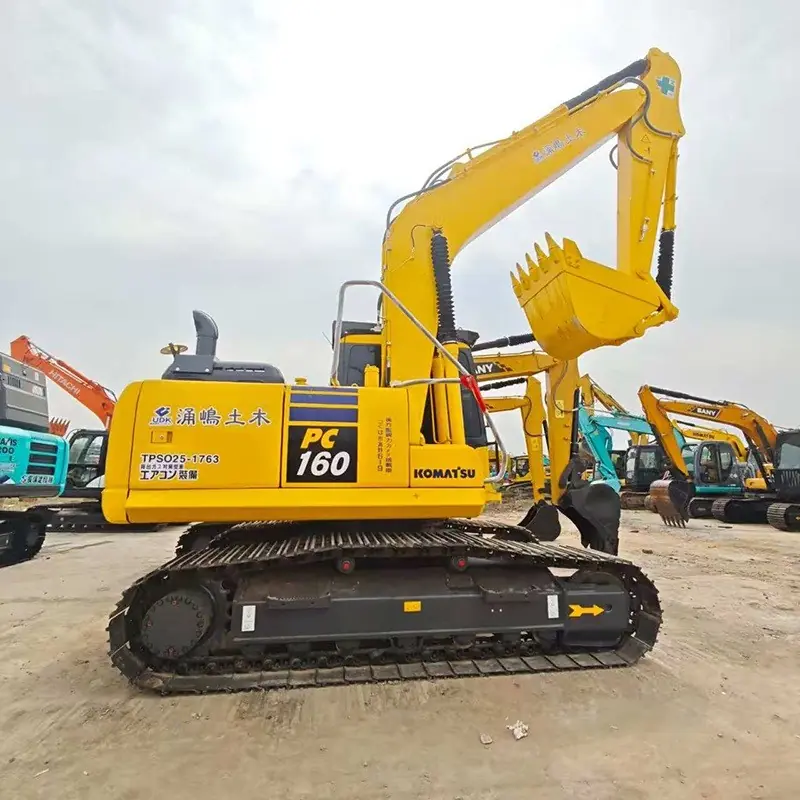
Excavadora usada Komatsu PC160 en venta
Respuesta rápida para compradores
Esta excavadora usada Komatsu PC160 es una máquina de orugas para movimiento de tierras y obras generales. La ficha muestra un precio de oferta de USD $15,000, un peso de referencia de 16t y un cucharón de 0.65m3. Confirme el número de serie, las horas, el estado y el envío de la unidad antes del pago.
- Precio publicado
- USD $15,000
- Peso operativo de referencia
- 16t
- Capacidad de cucharón de referencia
- 0.65m3
Descripción del modelo
Esta excavadora usada Komatsu PC160 es una máquina de orugas para movimiento de tierras y obras generales. La ficha muestra un precio de oferta de USD $15,000, un peso de referencia de 16t y un cucharón de 0.65m3. Confirme el número de serie, las horas, el estado y el envío de la unidad antes del pago.
Las secciones técnicas y las preguntas frecuentes se ofrecen en inglés para conservar la terminología original.
What role does a sixteen-ton excavator fill?
This size class suits contractors who need more reach, stability and earthmoving capacity than a compact crawler without moving directly to a twenty-ton production machine. A sixteen-ton excavator can serve as the main carrier on small commercial foundations, drainage improvements, utility corridors, road rehabilitation and general site development. Its appeal is not simply greater size. It can offer a practical match where material volume and working depth exceed the comfortable range of smaller equipment, yet access, ground pressure, trailer choice or daily utilization do not justify a heavier crawler. Buyers should define the recurring work before judging the listing: average trench depth, truck side height, spoil placement radius, soil density, attachment hours, travel distance and restricted areas all matter. If most tasks require maximum reach or constant heavy loading, moving up a class may improve production. If narrow access and finish work dominate, a smaller or compact-swing carrier may be more economical. The strongest purchase case exists when routine jobs fall near the middle of the machine's working envelope rather than at its limits.
How to interpret the listed weight and bucket capacity
Use 16t and 0.65m3 as classification references, then replace them with serial-specific specifications and physical measurements before contracting transport or production work. Operating weight is affected by track shoe width, boom and arm selection, counterweight, cab protection, blade equipment, coupler, bucket, auxiliary plumbing and other options. Bucket capacity also needs context: width, profile, teeth, material density and realistic fill factor determine cycle load. Ask the supplier to photograph the fitted bucket, show any identification markings and state exactly which work tools are included in the quotation. Obtain measured transport length, width and height in the proposed loading condition rather than relying on a nearby brochure. When digging depth, reach, engine output, hydraulic pressure or lift data influences the decision, request documentation that matches the full model suffix, market and serial range. Never combine attractive figures from neighboring variants. Reference specifications help buyers shortlist; verified configuration controls productivity, stability, freight cost and legal transport limits.
Match the machine to foundations, roads and utility work
A good fit depends on the production target, working radius, ground conditions and support equipment—not on nominal tonnage alone. For foundation excavation, record required depth, soil type, benching method, spoil location and truck access. Utility work adds pipe handling, trench-box clearance, existing services and controlled backfilling. Road projects may combine bulk removal, slope shaping, lifting, breaker work and frequent repositioning. Translate these activities into measurable requirements and estimate how many hours each represents. Compare the fitted bucket with the material and receiving truck so cycles are productive without overloading either machine. Review reach at the actual digging depth instead of using maximum brochure reach as a normal operating point. For object handling, use the correct serial-specific load chart, approved lifting point, trained personnel and local procedures; operating weight does not establish safe lifting capacity. Also consider grade, soft ground and edge distance. A buyer gains more from a realistic duty-cycle map than from a long list of generic applications.
Establish identity, hour-meter context
Connect the identification plate, monitor, current condition and available records in one evidence sequence before accepting manufacture-year or hour statements. Begin with clear photographs of the complete machine and identification plate. Request a continuous video that moves from the exterior and plate into the cab, shows the monitor before start-up and continues through operation. This helps connect the serial identity, displayed hours and observed machine without proving that the meter has never changed. Compare the meter narrative with wear on the seat, controls, pedals, steps, door, pins, slew area, bucket and running gear. Wear is influenced by application and maintenance, so treat inconsistencies as prompts for more investigation rather than as a mathematical hour test. Review service invoices, inspection records or prior meter photographs when available, checking that dates and serial references are coherent. 500 catalog labels on this site are unverified until supported for a particular unit. If machine history affects import eligibility, ask the destination broker which original documents are accepted before payment.
Start the mechanical inspection with a true cold start
A cold-to-warm operating sequence reveals starting behavior, warning status and temperature-related changes that a short pre-warmed demonstration can hide. Ask the seller not to start the engine before filming, when site conditions safely allow. The video should show ambient context, engine area, key-on panel, start-up, exhaust and idle without disruptive editing. Note cranking time, warning lights, smoke duration, uneven running, knocking, belt noise and visible leakage. A qualified technician should interpret persistent smoke or abnormal sounds because weather, fuel and camera recording can affect impressions. After warm-up, operate under load and watch the temperature and warning panel. Inspect oil and coolant condition only through safe procedures, review filter labels or maintenance records, and check the radiator and cooler for contamination or damage. Look around hoses, clamps, turbo plumbing and mounts. The purpose is not to diagnose an engine remotely from one clip; it is to identify evidence gaps, decide what must be inspected in person and prevent a polished walk-around from replacing an operating test.
Evaluate hydraulic response after the oil is warm
Test individual and combined functions at working temperature while observing delay, drift, leakage, noise and response under load. Hydraulic oil viscosity changes with temperature, so a cold demonstration alone gives an incomplete picture. Cycle boom, arm, bucket, swing and travel individually, then combine normal digging motions to see whether response stays smooth. Ask for a controlled lift or digging sequence within safe site limits, never an improvised overload test. Observe hesitation, surging, unusual pump noise, weak response, excessive cylinder drift and any change as the system warms. Inspect exposed rods for scoring, pitting or impact damage and examine gland areas, hoses, fittings, valve areas and accessible pump compartments for fresh oil or heavy residue. If auxiliary hydraulics are important, identify actual line routing, valve arrangement, controls, connector type and available flow and pressure evidence. A pressure or flow test should be performed by qualified personnel using appropriate instruments. Video can help with screening, but measurements and competent inspection provide a stronger basis for repair allowance and acceptance.
Inspect boom, arm, frame and slew system as one load path
Check high-stress structures, pins and swing behavior together because wear or repair in one area can change the risk elsewhere. Clean, close images should cover boom foot, boom bend, arm, cylinder mounts, bucket linkage, coupler region, upper-frame connections and accessible lower-frame areas. Look for irregular weld profiles, fresh paint confined to stress points, plating, distortion, cracks or mismatched surfaces. A repair is not automatically unacceptable, but its location, method and documentation matter. During controlled operation, watch pin and bushing movement from safe angles and distinguish normal clearance from obvious impact or displacement. Rotate the upper structure through a full circle on suitable ground, noting noise, roughness, inconsistent speed and braking behavior. Check for excessive movement at the slew bearing using a safe manufacturer-appropriate procedure. Inspect swing drive and nearby areas for leakage. If the machine previously performed breaker, quarry or demolition work, increase scrutiny of the front structure, attachment circuit, guards and cooling system. Structural decisions should involve a competent inspector rather than cosmetic appearance alone.
Measure undercarriage wear instead of calling it good
Record component condition and travel behavior so the remaining-life estimate can be priced using local parts and labor. The crawler system can represent a major future expense. Request close photographs of track links, shoes, pin and bushing areas, sprocket teeth, carrier rollers, bottom rollers, idlers, guards and adjuster regions on both sides. Images should show full sides as well as detailed wear surfaces. Where practical, ask a qualified inspector for measurements and compare them with appropriate service limits. Observe track tension on level ground and note oil leakage around rollers, idlers and final drives. The operating video should include straight travel in both directions, steering each way and available speed modes. Watch whether one side lags or the machine pulls, and listen for repeated clicking, grinding or drive noise. Ground slope and track tension can influence behavior, so investigate rather than diagnose from a single observation. Convert expected repairs into destination-market costs and planned downtime. A vague percentage of remaining life is less useful than component evidence, measurements and a documented assumption.
Confirm coupler and attachment compatibility before purchase
Match tool dimensions, mass, hydraulic requirements, controls and safety equipment to the exact carrier and intended duty cycle. A buyer planning to use a breaker, compactor, grapple, shear or tilt attachment should go beyond asking whether auxiliary lines are visible. Record pin diameter, center distance, stick width, coupler type, bucket interface and tool weight. For hydraulic tools, confirm required flow, pressure, return arrangement, case drain, connector standard, control method and cooling demand. Check whether the installed circuit is one-way or two-way and whether the settings can be configured appropriately. Attachment mass changes stability and transport planning, while high-demand continuous operation can create different heat and maintenance requirements than intermittent trenching. Review guarding and destination safety rules for the intended application. Put included attachments and loose parts on the written quotation and loading list. If compatibility cannot be demonstrated before purchase, price adapters, plumbing, control work and commissioning as unresolved costs rather than assuming the tool will operate correctly on arrival.
Review the cab as an operating and diagnostic environment
Controls, monitor behavior, visibility and safety equipment affect daily productivity and can reveal gaps in the machine's history. Photograph the monitor with ignition on and after start-up, including any warnings, modes or stored messages that can safely be displayed. Test work lights, horn, wipers, travel alarm, camera if fitted, air conditioning and other quoted equipment. Inspect the seat, joysticks, pedals, switches, glazing, mirrors, handrails and access steps. Their condition helps explain use patterns but should not be treated as a precise hour meter. Check that control labels are understandable for the destination operator and determine whether manuals are available. Requirements for object handling, roadwork, demolition and special tools vary by market, so identify required alarms, guards, certifications and inspections before mobilization. If diagnostic software or dealer support is important, ask a destination workshop what can be accessed for the relevant serial range. Cab evidence is valuable because it links operator usability, electrical condition and the hour narrative in one place.
Estimate serviceability and ownership risk at destination
Parts availability, technician familiarity and repair lead time can outweigh a small difference in purchase price. Contact local workshops and suppliers before committing. Provide the full serial range and ask about routine filters, seals, hoses, electrical components, track parts and higher-cost hydraulic or drive components. Determine whether diagnostic support, manuals and trained technicians are accessible in the destination region. Build a first-service plan covering fluids, filters, sampling if appropriate and replacement of undocumented wear items. Include an allowance for issues identified during inspection and for unknown maintenance history. Estimate downtime as well as the invoice cost of repairs, especially if the machine will be the only excavator supporting a project. Review fuel quality, climate, working altitude and cooling cleanliness where relevant. Brand familiarity can help, but it does not guarantee every regional configuration is equally supported. A realistic ownership forecast separates routine maintenance, measured near-term work, contingency and optional improvements instead of hiding all risk inside one arbitrary discount.
Compare risk-adjusted delivered cost rather than listing price
Standardize condition evidence, included equipment and Incoterm before comparing the amount required to place each candidate into reliable service. Start with the machine price and identify the exact bucket, coupler, attachments and spare parts included. Add independent inspection, initial service, known repairs, undercarriage allowance, origin haulage, loading, dismantling or packing, ocean freight, insurance when requested, destination handling, duties, taxes and inland delivery. Use the same Incoterm and named place for competing quotations. Ask how long the quote remains valid and which charges may change. Do not pay an automatic premium for a manufacture year or meter figure that lacks unit-specific evidence. Estimate repairs with destination labor rates and parts lead times. A higher advertised price can represent lower total risk when identity, condition and maintenance evidence are stronger; a low headline number can be expensive after freight and deferred work. Record every uncertainty and decide whether it requires additional proof, an inspection condition, a price allowance or rejection.
Set shipping evidence and final approval gates
Approve the purchase only after job fit, identity, condition, total cost, local support and measured transport configuration all align. Obtain actual length, width, height and weight for the planned shipping condition and confirm carrier, route and port limits with the logistics provider. Agree whether the bucket, arm, cab or other parts require removal, who performs the work and how pins, lines and loose components will be labeled and protected. Cap hydraulic openings correctly and protect exposed cylinder rods. Immediately before loading, photograph the serial plate, monitor, all sides, attachments and existing damage, then produce a component list linked to the invoice. Ask for loading and securing images. On arrival, inspect the cargo and identification before inland movement. Import rules, freight rates and port procedures change, so use current advice from a broker and freight partner. Final approval should require acceptable evidence at each gate; a missing critical measurement, video, document or commercial term should pause the decision rather than be replaced by assumptions about the model name.
Komatsu PC160 buyer FAQ
What work suits a used Komatsu PC160 excavator?
This 16-ton reference class is commonly evaluated for foundations, utilities, drainage, road construction, loading and general site preparation. Actual suitability depends on working range, ground conditions, access, attachments and production targets.
What weight and bucket capacity are listed?
The website lists 16t operating weight and 0.65m3 bucket capacity as references. Confirm the serial-specific configuration, fitted work tool and measured transport values for the machine quoted.
Which inspection areas deserve priority?
Prioritize identity, cold start, warm hydraulic response, boom and arm structure, pin clearance, slew behavior, undercarriage measurements, travel, final drives, leakage and monitor warnings.
Can this excavator operate a hydraulic breaker?
It may be possible, but the tool mass, flow, pressure, return, case drain, connectors, controls, cooling, structure and guarding must match the exact carrier and intended duty cycle.
How should buyers compare prices?
Compare verified configuration and condition on the same Incoterm basis, including attachments, inspection, initial service, repairs, loading, freight, destination charges, duties and inland delivery.
Can it be shipped in a container?
Feasibility depends on measured transport dimensions and weight, available equipment, safe dismantling and current carrier rules. Obtain a unit-specific loading plan before payment.
Is an independent inspection available?
An inspection may be arranged when machine access, inspector, scope, safe testing limits, timing and cost are agreed. The report should identify the exact serial-numbered unit and state any limitations.
Related Komatsu excavators
- Komatsu PC160 — 16t reference weight
- Komatsu PC120 — 12t reference weight
- Komatsu PC200 — 20t reference weight
Solicitar datos de la unidad
Indique el puerto de destino, la cantidad y sus prioridades de inspección. Responderemos con datos de la máquina concreta.
Solicitar datos de la unidad · Solicitar pruebas de inspección por WhatsApp · sales@lihangusedmachinery.com