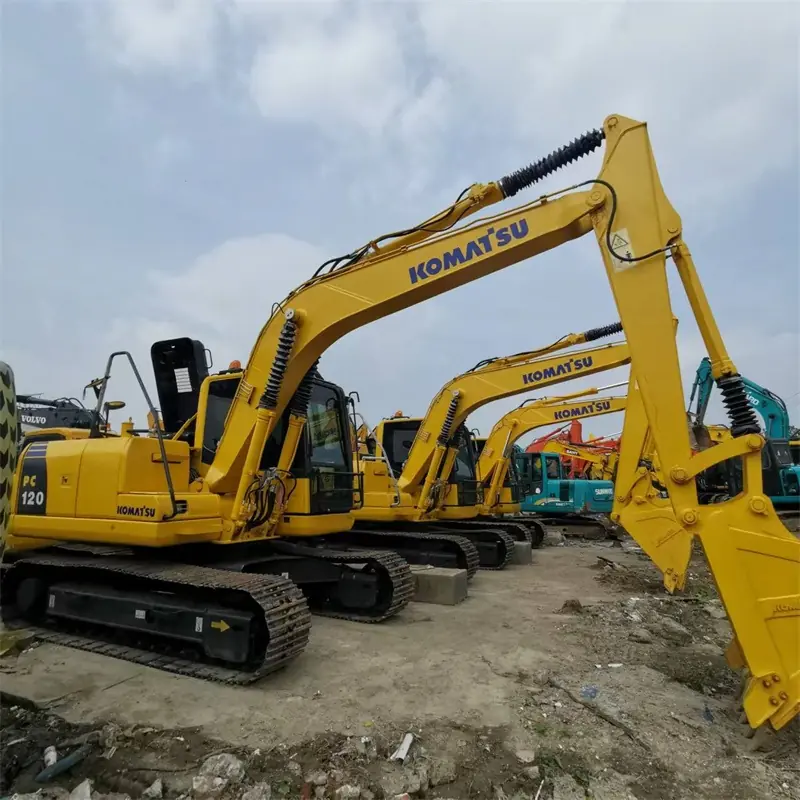
Excavadora usada Komatsu PC120 en venta
Respuesta rápida para compradores
Esta excavadora usada Komatsu PC120 es una máquina de orugas para movimiento de tierras y obras generales. La ficha muestra un precio de oferta de USD $15,000, un peso de referencia de 12t y un cucharón de 0.5m3. Confirme el número de serie, las horas, el estado y el envío de la unidad antes del pago.
- Precio publicado
- USD $15,000
- Peso operativo de referencia
- 12t
- Capacidad de cucharón de referencia
- 0.5m3
Descripción del modelo
Esta excavadora usada Komatsu PC120 es una máquina de orugas para movimiento de tierras y obras generales. La ficha muestra un precio de oferta de USD $15,000, un peso de referencia de 12t y un cucharón de 0.5m3. Confirme el número de serie, las horas, el estado y el envío de la unidad antes del pago.
Las secciones técnicas y las preguntas frecuentes se ofrecen en inglés para conservar la terminología original.
Plan production before choosing a twelve-ton excavator
This class is most useful when the expected cycle, reach and attachment work justify more capacity than a compact machine without requiring a much heavier carrier. Start with bank volume, material density, trench geometry, swing angle, truck size, spoil location, working hours and frequency of transport. A twelve-ton excavator may improve cycle time and stability on foundations or utility projects, yet it carries higher fuel, track and haulage costs than a smaller unit. A larger machine may outperform it in open-site bulk excavation but create access or logistics problems on mixed projects. Estimate production under the normal task, not the easiest demonstration or one exceptional lift. Include operator skill, bucket selection and site layout. If the carrier would spend most of every shift near maximum reach or hydraulic demand, compare a larger class. If it will complete light work with low utilization, compare a smaller alternative. The economic goal is usable output per total project cost.
Reference specifications versus offered-machine facts
Use 12t and 0.5m3 for discovery, but use measured configuration and correct serial-range documentation for purchase decisions. Operating weight changes with tracks, cab options, counterweight, boom, arm, coupler, bucket, piping and guarding. Bucket capacity must be considered with width, profile, material density and fill factor. Ask for current images of the work tool, any markings and confirmation of what is included. Obtain overall length, width and height in transport position. If working range, lift, engine power or hydraulic data matters, confirm the source applies to the exact generation and regional version. Do not borrow a specification from an adjacent model simply because the names and tonnage are close. For lifting, consult the correct chart and consider radius, height, orientation, attachment and ground conditions. A model guide frames the right questions; it cannot authorize unit-level operations.
Foundation excavation and truck-loading fit
The machine can be shortlisted for medium foundations and loading where working range, bucket size and site mobility need to remain balanced. Foundation projects often change from bulk digging to trimming, material handling and backfill, so a general-purpose configuration may be valuable. Record the deepest cut, benching or shoring method, truck body dimensions, swing angle and ground bearing. Match the bucket to material rather than chasing nominal volume. Dense or sticky material can reduce fill and increase stress. Loading productivity depends on truck positioning and consistent cycles as much as hydraulic speed. Ensure the machine can move safely around excavations and that its working platform is suitable. If project volume is high and space unrestricted, compare larger carriers using actual hourly output. If access and frequent mobilization dominate, a smaller machine may deliver a better total result. The choice should come from planned cycles and cost, not a broad claim of high performance.
Utility, pipeline and drainage decision factors
Utility work requires the correct reach, trench geometry, attachment circuit and controlled lifting plan rather than tonnage alone. Identify required trench depth and width, pipe diameter, bedding material, spoil location, existing services and the heaviest object handled at routine radius. Confirm that any trench-support method and operator position fit the site plan. For pipe or chamber handling, use the approved lifting point, serial-specific chart and local procedure; never infer capacity from operating weight or a demonstration with the load close to the tracks. Drainage and road work may need grading buckets, compactors or breakers, making hydraulic compatibility important. Consider traffic separation, visibility and surface restoration. A twelve-ton machine can be versatile, but only when its specific boom, arm, bucket, coupler and circuit match the work sequence.
Build a serial-linked machine history
Connect the identification plate, catalog fields, monitor, records, current photographs and quotation to one machine before valuation. The site displays 500 as a catalog label; it is not verified machine history or hours. Request a continuous plate-to-monitor-to-operation video. Compare displayed hours with wear on the seat, controls, steps, boom and bucket joints, slew system and undercarriage. Review service invoices or previous inspection records when available, confirming serial identity and plausible meter progression. Records without a matching unit number have limited value. If age affects import eligibility, ask the destination broker or authority what evidence is accepted. Write verified fields in the quotation and keep unsupported history separate. This evidence chain reduces the chance that specifications or media from a nearby unit are used accidentally and provides a clear basis for an independent inspector.
Engine response through cold start and working load
Observe starting, exhaust, cooling and power behavior from cold through a meaningful hydraulic cycle instead of relying on a pre-warmed walkaround. Show monitor warnings, cranking duration, initial exhaust, idle quality and gradual acceleration. Begin with light control inputs before moving into digging or loading cycles. Continue long enough to observe temperature and response after warm-up. Inspect oil and coolant where safe, leaks, hoses, wiring, belts, intake, radiator and cooler cores. Engine model, rated output and emissions equipment vary across generations and markets, so identify installed components from the plate and correct literature. If aftertreatment is fitted, review current warnings and available fault or regeneration information without assuming a complete record. Qualified technicians can inspect codes, samples or performance when warranted. Avoid unsupported statements about originality, fuel economy or remaining life.
Hydraulic efficiency under combined demand
Warm-test the machine in realistic combined movements and document response, noise, drift, leakage and available work modes. Record travel, swing, boom, arm and bucket individually, then demonstrate combinations that resemble trenching, loading and grading. Observe hesitation, surge, chatter, cylinder drift, pump noise and changes as oil temperature rises. Examine rods, seals, hose crimps, valve areas, center joint and auxiliary lines. Demonstrate only the modes actually fitted to the unit. Pressure and flow testing requires trained personnel and correct service information. If an attachment is planned, match its flow, pressure, circuit direction, return, case drain, mounting geometry and mass to the serial-specific carrier data. A machine can appear fast with one unloaded function but behave differently when multiple circuits demand flow. The buyer needs evidence of the complete cycle.
Boom pins, slew system and structural review
Load joints gently and inspect major structural paths so pin wear, swing movement and previous repairs can be separated and evaluated. Observe the boom foot, cylinder mounts, arm end, bucket linkage and coupler under controlled load. Check retainers, bosses and lubrication. Demonstrate swing in both directions, noting start, stop, braking, noise and movement at the upper structure. Distinguish slew-ring movement from worn pins. Examine boom, arm, upper frame, carbody and track frames for cracks, distortion, plates, grinding and welds. A documented repair is not automatically unacceptable, but its cause, location and workmanship need review. Close photographs are more useful than a statement that the structure is good. Where a critical area remains uncertain, a qualified inspector can recommend measurement or specialist testing.
Convert undercarriage condition into ownership cost
Measure both sides and price expected work because track-system condition can materially change the economics of a used mid-size excavator. Photograph track shoes, links, pins and bushings, sprockets, idlers, rollers, guards, frames and final-drive areas. Observe straight travel, steering and noise from each side. Ask for measurement values and service limits before accepting a remaining-life percentage. Look for uneven wear from slopes, hard-surface turning or partial component replacement. Inspect final drives for leakage and review oil-service history when available. Track shoe width affects ground pressure, transport width and turning behavior, so record what is fitted. Estimate repair timing using destination parts and labor prices. A low purchase price can lose its advantage quickly if undercarriage replacement or final-drive work is required soon after arrival.
Attachments, coupler and operator-use checks
Confirm tool compatibility and cab functionality because both influence the range of work the machine can perform safely and productively. Identify the coupler or pin arrangement and inspect locking components, controls and hoses. Match buckets and hydraulic tools to carrier limits, flow, pressure, returns, case drain and attachment mass. Include supplied items in the quotation with current photographs. In the cab, check seat and restraint, controls, pedals, monitor, warnings, horn, lights, mirrors, glass, wipers, climate system, steps and handrails. Ask about active fault codes. Safety and guarding requirements vary by application and destination, particularly for lifting, roads or breaker work. Confirm local needs before mobilization. A usable cab supports long shifts, while correctly matched attachments prevent the machine's versatility from becoming a source of heat, instability or wear.
Estimate ownership cost beyond the sale price
Compare productive value, service needs, wear, freight and downtime under the same commercial assumptions for every candidate. List machine, buckets, coupler and tools separately. Add inspection, initial service, immediate repairs, undercarriage allowance, origin haulage, loading, packing, freight, insurance when requested, destination handling, duties and inland delivery. State Incoterm and named place. Use destination rates for labor and parts and consider technician and diagnostic availability. Do not award an automatic premium for manufacture year or hours. A machine with a higher meter but coherent service evidence and measured wear may present less risk. Include projected annual utilization, fuel exposure and downtime cost when comparing size classes. The useful number is risk-adjusted cost per productive hour or project, not the isolated asking price.
Freight preparation and arrival commissioning
Design transport from measured dimensions and a written component plan, then verify the unit before controlled start-up at destination. Confirm actual shipping weight, length, width and height, carrier limits and whether the bucket or another component must be removed. Agree responsibility for dismantling, labeling pins and hoses, capping hydraulic ports, packing loose parts and reassembly. Photograph the serial plate, meter, equipment and existing damage immediately before loading. At arrival, inspect cargo before movement, reconcile the component list and verify identity. Check fluids, battery and visible connections before starting. Route availability, port handling, duties and import rules change, so use current advice from freight providers and destination brokers. A general model page should help buyers prepare questions, not promise one universal container or transit solution.
A practical approval framework for procurement teams
Proceed only after production fit, identity, mechanical condition, delivered economics and destination support have each passed review. First, translate the project into cycles, reach, access, tools and annual use. Second, connect serial plate, monitor, media and records. Third, review cold start, warm hydraulics, pins, slew, structure, undercarriage, final drives, cab and attachments, escalating uncertain findings to qualified inspection. Fourth, calculate total delivered and commissioning cost with realistic wear allowances. Fifth, confirm local parts, technicians and diagnostics for the serial range. Record unknowns and assign each to evidence, inspection, price allowance or rejection. The machine should win because the supported configuration and economics match the buyer's work—not because a generic specification or repeated keyword makes the listing appear more certain than it is.
Komatsu PC120 buyer FAQ
What work suits a used Komatsu PC120 excavator?
This 12-ton reference class is commonly evaluated for foundations, utility infrastructure, roads, drainage and medium site development. Suitability depends on working range, material, attachments, access and production targets.
What weight and bucket are listed?
The website uses 12t operating weight and 0.5m3 bucket capacity as references. Confirm actual configuration, fitted bucket and measured transport values for the offered serial-numbered machine.
What should be inspected after warm-up?
Test travel, swing, boom, arm, bucket and available auxiliary functions individually and together. Observe delay, surge, drift, noise, leakage and changes with hydraulic temperature.
How should undercarriage wear be reported?
Photograph and measure both sides, including tracks, links, sprockets, idlers and rollers. Any remaining-life percentage should identify measurements, reference limits and method.
Can it handle pipe or precast components?
Only within the correct serial-specific load chart, approved lifting point, configuration, radius and local procedure. Nominal weight does not establish lifting capacity.
How should two prices be compared?
Align evidence, attachments, Incoterm and named place, then include inspection, service, repairs, loading, freight, insurance when requested, destination costs, duties and delivery.
Can an independent inspection be requested?
An inspection may be arranged when access, inspector, scope, safe test limits, timing and costs are agreed. The report should identify the exact unit and test limitations.
Related Komatsu excavators
- Komatsu PC110 — 11t reference weight
- Komatsu PC160LC — 16t reference weight
- Komatsu PC160 — 16t reference weight
Solicitar datos de la unidad
Indique el puerto de destino, la cantidad y sus prioridades de inspección. Responderemos con datos de la máquina concreta.
Solicitar datos de la unidad · Solicitar pruebas de inspección por WhatsApp · sales@lihangusedmachinery.com