Excavadora usada Komatsu 78US en venta
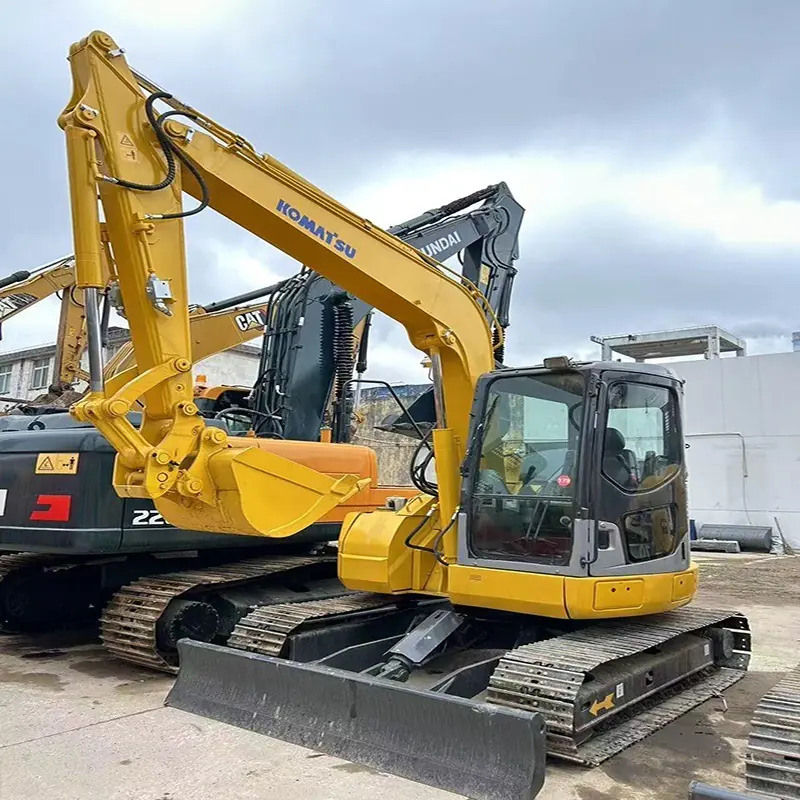
Respuesta rápida para compradores
Esta excavadora usada Komatsu 78US es una máquina de orugas para movimiento de tierras y obras generales. La ficha muestra un precio de oferta de USD $11,000, un peso de referencia de 7.8t y un cucharón de 0.3m3. Confirme el número de serie, las horas, el estado y el envío de la unidad antes del pago.
- Precio publicado
- USD $11,000
- Peso operativo de referencia
- 7.8t
- Capacidad de cucharón de referencia
- 0.3m3
Descripción del modelo
Esta excavadora usada Komatsu 78US es una máquina de orugas para movimiento de tierras y obras generales. La ficha muestra un precio de oferta de USD $11,000, un peso de referencia de 7.8t y un cucharón de 0.3m3. Confirme el número de serie, las horas, el estado y el envío de la unidad antes del pago.
Las secciones técnicas y las preguntas frecuentes se ofrecen en inglés para conservar la terminología original.
Why compact swing matters in the eight-ton range
A reduced rear operating envelope can help a capable utility excavator work beside walls, lanes and services where a conventional counterweight needs more clearance. Compact swing becomes valuable when the machine must rotate within a road closure, fenced easement or developed property while still handling larger trenches and attachments than a small mini excavator. The design does not eliminate swing hazards. Track width, rear overhang, boom movement, bucket path, blade, carried load and people inside the work zone all influence safe clearance. Measure the narrowest operating area and request a video showing a complete rotation over both sides of the undercarriage. If the project depends on working close to a fixed object, confirm the relevant serial-specific dimension rather than relying on the US letters or a marketplace description. Plan exclusion zones, traffic separation and operator visibility. Compact geometry is a tool for site planning, not permission to work without a controlled envelope.
Choose this class by daily work, not nominal tonnage
The 7.8-ton category is most useful when additional reach, stability and attachment capability justify moving above a six-ton machine without accepting a full-size excavator's footprint. List the normal trench depth, spoil distance, lift radius, material density, truck size, access width and attachment hours. A smaller carrier may mobilize more easily but require more cycles or work near its limit. A larger conventional machine may produce faster in open ground but demand more swing room and transport capacity. This intermediate class often suits mixed utility and municipal work because the same machine can excavate, backfill, grade and operate compatible tools. It may be less economical where the job is almost entirely light landscaping or high-volume open-site loading. Compare annual productive hours, fuel, operator time, haulage, wear and downtime. The correct machine is the one that comfortably completes the repeated task, not merely the heaviest lift or deepest cut that occurs once.
Use the 7.8t weight and 0.3m3 bucket correctly
Treat the website values as shortlist references and use measured, serial-linked information for transport, stability and attachment decisions. Operating mass may change with cab equipment, track shoes, blade, arm, counterweight, coupler, bucket, hydraulic plumbing and guards. Bucket capacity must be read with width, shape, material density and fill factor; the largest available bucket is not automatically the most productive or stable choice. Ask for current bucket photographs, dimensions or markings, and identify what is included in the quotation. Request overall transport length, width and height in the proposed loading configuration. If the seller supplies digging depth, reach, engine or hydraulic figures, verify that the source matches the relevant generation, market and serial range. Do not combine specifications from adjacent PC or US variants. Model-level data helps a buyer ask better questions, while unit-level facts should control the purchase file.
Roadside, utility and developed-site applications
The machine is commonly evaluated for water and drainage lines, road repair, foundations and property work where output and clearance must be balanced. A utility crew may need to open a trench, place bedding, handle pipe within approved limits, backfill and restore the surface without expanding the work zone. Roadside assignments add traffic, pedestrians and restricted spoil placement. Commercial landscaping introduces finished surfaces, gates and sensitive underground services. Translate each project into required reach, trench width, attachment, ground pressure, truck access and movement plan. Identify overhead and buried hazards before positioning the excavator. When object handling is planned, use the correct load chart, lifting point and local procedure; carrier weight and a lowered blade alone do not establish safe capacity. If most work happens on wide open sites, compare a conventional machine because compact packaging may not always provide the best cost per cubic meter.
Serial identity, hour-meter evidence
The manufacture year and 500 hour-meter entry are provisional until one evidence sequence links the identification plate, monitor and operating machine. Request a continuous recording that starts with the complete exterior and serial plate, enters the cab to show the monitor before start-up and continues into operation. This protects against mixing media from nearby models or similar-looking units. Compare displayed hours with wear on the seat, controls, pedals, access steps, blade joints, bucket linkage, slew area and undercarriage. Wear does not prove hours, but inconsistencies can guide deeper inspection. Review invoices, service sheets or previous reports when available, confirming serial number and plausible meter progression. If machine history affects import eligibility, confirm acceptable documents with the destination broker or authority. Put supported identity in the quotation and label any remaining manufacture-year information, hour or ownership statements as unverified rather than allowing precise catalog fields to imply certainty.
Cold-start and cooling-system screening
A useful remote test begins before the first start and continues until engine and hydraulic behavior can be observed at normal working temperature. Show monitor warnings, cranking duration, initial exhaust, idle stability and gradual acceleration. Begin with light hydraulic movements before working through a normal digging cycle. Watch for persistent smoke, uneven response, warning lamps and temperature changes. Inspect oil and coolant where safe, visible leakage, belts, hoses, wiring, air intake, radiator and cooler cleanliness. The installed engine, power rating and emissions equipment can vary across generations and regional builds, so use the plate and correct technical literature instead of a generic marketplace specification. A video is preliminary evidence; it does not replace fault-code review, oil sampling or approved measurements when symptoms justify them. Avoid unsupported statements such as original engine, low fuel use or no repair needed.
Hydraulic performance through a complete work cycle
Test individual and combined functions after warm-up because control, pump and valve problems may become visible only under simultaneous demand. Demonstrate travel, swing, boom raise and lower, arm in and out, bucket curl and blade operation. Then repeat combinations used during trenching and loading. Observe delay, surge, drift, chatter, unusual pump sound, cylinder movement and changes as oil temperature rises. Examine rods, seals, hose crimps, main lines, valve areas and the center joint for fresh leakage or damage. Working modes should be demonstrated as fitted, but their behavior depends on generation and configuration. Pressure and flow testing belongs to trained personnel with correct service information. A short edited clip may show that the machine moves, yet it cannot establish warm performance. Request enough continuous operation for an inspector or experienced buyer to understand response and identify which additional tests are worth arranging.
Slew condition, blade use and stability boundaries
Check swing control and blade hardware directly, and use serial-specific charts and site conditions for any lifting assessment. Observe smooth swing start and stop in both directions, unusual noise, braking behavior and movement in the slew area. Separate actual slew-ring play from wear at boom or attachment pins. Inspect the blade face, cutting edge, arms, cylinder, hoses and pivot points, then show it raising, lowering and holding position. The blade can assist grading and affect stability, but it does not create one universal lifting capacity. Reach, height, orientation, attachment, ground slope, soil bearing and approved lifting point all matter. Object handling should be planned by a competent person using the correct load chart and local requirements. For compact-swing machines, also confirm how the counterweight, boom and load move within the constrained work zone. Safe geometry is a combination of machine, configuration and site—not a feature label.
Travel motors and undercarriage condition
Inspect and measure both sides because uneven running-gear wear can affect travel performance, stability, downtime and delivered value. Photograph track shoes or rubber tracks, links, pins and bushings, sprockets, idlers, rollers, guards and final-drive areas. Demonstrate straight travel, steering and available speed ranges on suitable ground. Note a side that lags, pulls, becomes noisy or shows leakage. Check rubber systems for cuts, chunking and exposed internal material; steel systems require the appropriate wear measurements. A percentage estimate should identify measurement points, reference limits and method. Side-to-side differences may reflect slope work, frequent counter-rotation or partial replacement. Ask about final-drive oil service and recent track work when components appear newer than the rest. Running gear is a significant cost center, so a buyer should convert evidence into a repair allowance before comparing headline prices.
Pin joints, work equipment and repair history
Review the boom foot, cylinder mounts, arm, bucket linkage, coupler and frames under controlled load rather than judging steel from fresh paint. Ask the operator to load the attachment gently so movement at each joint can be observed. Inspect pins, retainers, bosses and grease condition. If a coupler is fitted, identify its type and separate coupler movement from carrier pin wear. Examine the boom, arm, upper frame, lower frame and blade mounts for cracks, distortion, reinforcement plates, grinding and non-factory welds. A repair is not automatically unacceptable, but its cause, location, method and subsequent condition should be understood. Close photographs before cosmetic preparation are particularly useful when available. Qualified structural inspection may be appropriate for uncertain high-stress repairs. A generic description such as reinforced or excellent condition cannot replace evidence tied to the exact machine.
Match auxiliary attachments to the actual carrier
Breaker, auger, compactor or grapple compatibility depends on hydraulic requirements, mounting geometry, tool mass and duty cycle—not the presence of hoses alone. Record auxiliary flow and pressure from reliable serial-specific information, circuit direction, return arrangement, case-drain need, connectors and control method. Measure the coupler or pin arrangement and compare attachment mass with the carrier and work conditions. A breaker can create heat and impact loads that require cooling, suitable structure and guarding. An auger or compactor may have different return and control needs. Bucket selection should match soil density, trench width and stable working range. Use the attachment manufacturer's carrier guidance and have diagnostic testing completed by trained personnel where needed. Include every supplied tool in the quotation with current photographs and condition. Correct matching can make this compact-swing class versatile; incorrect matching can produce slow cycles, overheating or component damage.
Operator environment and destination support
Long-term value depends on usable controls and access to parts, technicians and diagnostics for the relevant serial range. Inspect the seat and restraint, joysticks, pedals, monitor, warning lamps, horn, lights, mirrors, glass, wipers, camera where fitted, access steps and handrails. Test heating and air conditioning when present. Ask about active codes and compare control wear with the meter story. Destination work may require specific alarms, guards, inspections or operator documents, especially for roads, lifting or breaker use. Contact local workshops and suppliers before purchase to ask about routine filters, seals, track parts, electrical support and higher-cost components. Familiar branding does not guarantee every regional or older configuration is equally supported. Service lead time and diagnostic access belong in the buying model because downtime can outweigh a modest difference in purchase price.
Build a landed-cost comparison that includes uncertainty
Compare quotations only after aligning the serial-linked evidence, included equipment, Incoterm and costs required before productive use. Separate machine, bucket, coupler and additional tools. Add independent inspection, initial fluids and filters, track or pin work, hydraulic repairs, origin haulage, loading, packing, freight, insurance when requested, destination handling, duties and inland delivery. State the Incoterm and named place for each quote. Do not assign automatic value to 500 catalog entries. Estimate repairs with destination labor and parts pricing. A higher-priced unit may be lower risk when wear is measured and maintenance evidence is coherent; a low headline price may hide immediate commissioning work. Record unknowns explicitly and decide whether they require evidence, inspection or a financial allowance. The relevant price is the risk-adjusted cost of putting the excavator to work, not the number shown beside a photograph.
Transport planning and final purchase gates
Use measured dimensions and a serial-linked loading record, then approve the purchase only when job fit, condition, economics and destination support align. Confirm transport length, width, height and weight, carrier limits and whether the bucket or another component must be removed. Agree who dismantles, labels pins and loose parts, caps hydraulic ports and supports reassembly. Photograph the plate, monitor, attachments and existing damage immediately before loading, and create a packing list. At destination, inspect cargo before movement and verify identity and included equipment. Route, port and import conditions change, so rely on current freight-provider and broker advice. The final decision should pass five gates: the compact-swing geometry fits the site; identity and catalog fields are correctly classified; mechanical evidence supports the condition; delivered and commissioning cost is acceptable; and local support is practical. Any unresolved critical issue should pause approval rather than be filled with optimistic assumptions.
Komatsu 78US buyer FAQ
What is a used Komatsu 78US excavator used for?
This 7.8-ton reference class is commonly evaluated for utilities, road maintenance, drainage, commercial landscaping and construction near clearance restrictions. Final suitability depends on measured geometry, working range, ground conditions, tools and production targets.
What does compact swing mean?
It generally indicates a reduced rear operating envelope compared with a conventional counterweight. Exact clearance must be measured for the serial-specific configuration, and the boom, bucket, blade, load and exclusion zone still matter.
What weight and bucket capacity are listed?
The website lists 7.8t and 0.3m3 as references. Actual mass and fitted bucket vary with tracks, arm, coupler, work tool, piping and optional equipment, so verify the offered unit.
What should the hydraulic test show?
Show travel, swing, boom, arm, bucket and blade individually and in combined movements after warm-up. Observe delay, drift, surge, noise, leakage and behavior that changes with temperature.
How is slew-ring condition checked?
Observe swing start, stop and noise, then isolate movement in the slew area from play in boom and attachment pins. A qualified inspector can measure uncertain movement using an appropriate procedure.
Can it operate a hydraulic breaker?
Possibly, but flow, pressure, return, case drain, connectors, attachment mass, cooling, structure and guarding must match the exact breaker and intended duty cycle.
How should quotations be compared?
Use the same Incoterm and named place, then add attachments, inspection, service, repairs, origin movement, packing, freight, insurance when requested, destination fees, duties and inland delivery.
Related Komatsu excavators
- Komatsu PC78US — 7.8t reference weight
- Komatsu PC70 — 7t reference weight
- Komatsu 60 — 6t reference weight
Solicitar datos de la unidad
Indique el puerto de destino, la cantidad y sus prioridades de inspección. Responderemos con datos de la máquina concreta.
Solicitar datos de la unidad · Solicitar pruebas de inspección por WhatsApp · sales@lihangusedmachinery.com