Excavadora usada Komatsu 60-8 en venta
Respuesta rápida para compradores
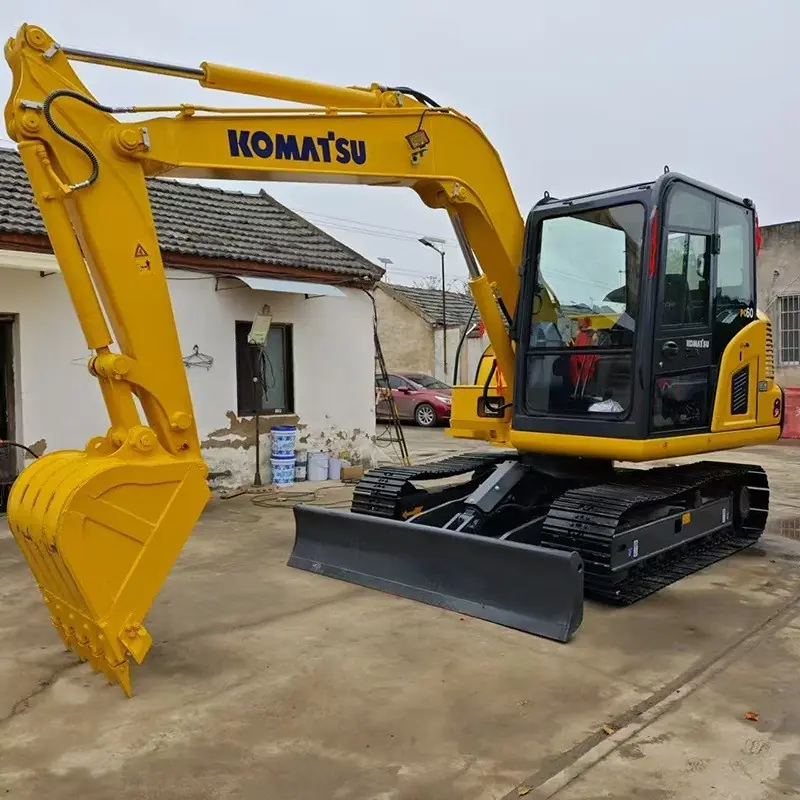
Esta excavadora usada Komatsu 60-8 es una máquina de orugas para movimiento de tierras y obras generales. La ficha muestra un precio de oferta de USD $10,000, un peso de referencia de 6t y un cucharón de 0.25m3. Confirme el número de serie, las horas, el estado y el envío de la unidad antes del pago.
- Precio publicado
- USD $10,000
- Peso operativo de referencia
- 6t
- Capacidad de cucharón de referencia
- 0.25m3
Descripción del modelo
Esta excavadora usada Komatsu 60-8 es una máquina de orugas para movimiento de tierras y obras generales. La ficha muestra un precio de oferta de USD $10,000, un peso de referencia de 6t y un cucharón de 0.25m3. Confirme el número de serie, las horas, el estado y el envío de la unidad antes del pago.
Las secciones técnicas y las preguntas frecuentes se ofrecen en inglés para conservar la terminología original.
Best-fit projects for a used Komatsu 60-8
The 6t reference weight puts Komatsu 60-8 in a compact utility excavator role, where buyers often need urban trenching, road maintenance, drainage and light site preparation. The selection case for Komatsu 60-8 is stronger when the project team knows its deepest cut, heaviest repeated lift, narrowest entry and expected shifts per month. The usual reason to consider this class is mobility with more digging capacity than a mini excavator, but oversizing can raise freight and operating cost while undersizing can reduce hourly production.
How to verify Komatsu 60-8 weight, bucket and configuration
Because marketplace specifications for Komatsu 60-8 can mix regional variants, the serial plate should be the anchor for final data. For Komatsu 60-8, the machine-evidence and meter (500) labels are useful search filters, but they still require unit-specific support. For Komatsu 60-8, use the full serial identity because regional and serial-range equipment can differ even under the same model name. The most useful Komatsu 60-8 specification sheet is the one tied to the same serial number shown in the quotation and inspection media.
Identity and variant control for Komatsu 60-8
For Komatsu 60-8, keep the full model designation and serial identity attached to every specification, image, video and quotation used in the purchase decision. The exact model text “Komatsu 60-8” should follow the machine through the buying process so a nearby variant is not substituted accidentally during specification or parts checks. The catalog fields attached to Komatsu 60-8 include a 500-hour meter label. A purchase file should keep them marked as unconfirmed until plate, monitor and available records agree. A remote buyer should be able to trace Komatsu 60-8 from plate to video to paperwork without relying on filenames, paint condition or seller descriptions. Variant handling for Komatsu 60-8: use the serial range and regional configuration to confirm specifications even though the model name itself carries no obvious variant suffix. For Komatsu 60-8, close alternatives including Komatsu 60, Komatsu PC56 should stay separate in the sourcing file so measurements, videos and quotations cannot drift between machines. Queries such as “used Komatsu 60-8 excavator,” “Komatsu 60-8 bucket capacity” and “Komatsu 60-8 price” are most useful when the answer states which figures are references and which must be confirmed.
Why the cheapest Komatsu 60-8 listing may not be the best value
Price research for Komatsu 60-8 is more useful when it explains cost drivers instead of publishing one universal number. A Komatsu 60-8 comparison sheet should show purchase price, immediate repairs, wear-item allowance, loading, ocean freight, inspection and local delivery as separate rows. For Komatsu 60-8, age and hours matter only when they can be linked to the same serial-numbered machine being priced. A higher-priced Komatsu 60-8 can still be the lower-cost choice when measured wear is lower and service support is stronger at the destination.
How should Komatsu 60-8 be planned for export?
For Komatsu 60-8, freight should be priced from the actual loading arrangement rather than operating weight alone. At this size, the practical issues for Komatsu 60-8 include overall dimensions, road limits, trailer or container fit and lifting access. Keep Komatsu 60-8 loading photographs tied to the same serial number shown on the invoice, packing information and transport document. Destination import rules, age limits, taxes and conformity requirements for Komatsu 60-8 must be checked with the buyer’s broker or local authority because they vary by country.
What should you inspect on a used Komatsu 60-8?
A used Komatsu 60-8 inspection should prioritize boom-foot play, swing movement, travel motors, undercarriage wear and warm hydraulic response. Start Komatsu 60-8 from cold when practical, show the warning panel, note smoke or abnormal noise, then warm the hydraulics before judging cycle response. On Komatsu 60-8, any percentage claim for undercarriage life should be backed by measured wear points and the service limits used to calculate it. For Komatsu 60-8, the brand-level verification lens includes serial-range specifications, hydraulic behavior, undercarriage wear and destination-market service access.
Komatsu 60-8 model-specific comparison notes
Komatsu 60-8 should be compared with nearby Komatsu models using reference size, actual condition and destination cost together. A size comparison places Komatsu 60-8 in the same nominal weight class as relative to Komatsu 60; Komatsu PC56 provides a second reference point before the buyer moves to a different weight class. Komatsu 60-8 uses a 0.25m3 catalog bucket reference, compared with 0.25m3 for Komatsu 60; that difference should be checked against actual installed buckets, not treated as guaranteed production. Because Komatsu 60-8 is listed at 6t, its transport plan belongs to the compact utility excavator discussion; Komatsu 60 at 6t may or may not change the freight method once real dimensions are measured. The final reason to choose Komatsu 60-8 should come from unit-specific condition and project fit, not from repeating generic claims that could describe any excavator in the class. A useful answer to “how much is a used Komatsu 60-8?” must include condition, included equipment and destination cost, which is why unit-level evidence comes before a fixed online number. A “Komatsu 60-8 weight” or “Komatsu 60-8 bucket capacity” search can start with this page, but the purchase file should preserve measured and serial-specific values for the actual unit.
A practical buying scenario for Komatsu 60-8
For a contractor planning utility excavation and frequent site moves, Komatsu 60-8 can be evaluated through four gates: job fit, mechanical evidence, total delivered cost and destination support. Komatsu 60-8 should first be tested against the project’s deepest cut, routine lift radius, access width and expected material density. The second gate for Komatsu 60-8 is evidence quality; a continuous operating sequence and close wear images are more useful than a long description without proof. A buyer should not rank Komatsu 60-8 against alternatives until the quoted packages include the same assumptions about attachments, inspection and transport. The last decision gate for Komatsu 60-8 is support after arrival: technician familiarity, diagnostics, parts availability and the project’s tolerance for downtime. This sequence gives Komatsu 60-8 a clear pass-or-fail path: project fit, confirmed condition, comparable landed cost and serviceability at the destination.
Nearby alternatives to Komatsu 60-8
For Komatsu 60-8, nearby alternatives such as Komatsu 60, Komatsu PC56 and Komatsu PC55MR help test whether more capacity or lower transport burden is actually worth paying for. When comparing Komatsu 60-8, use one set of criteria for every candidate: required work, condition proof, near-term repairs, parts access and all-in destination cost. For Komatsu 60-8, moving one class up or down can change bucket choice, truck matching, low-bed requirements and daily fuel, so the trade-off should be calculated rather than assumed. Within the Komatsu family, serial-range support and local technician familiarity should be part of the Komatsu 60-8 decision.
Komatsu 60-8 buyer FAQ
What size excavator is Komatsu 60-8?
Komatsu 60-8 is listed at approximately 6t, which places it in the compact utility excavator category. Actual operating mass can change with track, arm, bucket and regional equipment, so verify the serial-specific configuration.
What should I inspect on a used Komatsu 60-8?
For Komatsu 60-8, start with serial identity and a cold-to-warm operating test, then inspect boom-foot play, swing movement, travel motors, undercarriage wear and warm hydraulic response. Record visible wear or repairs and use qualified technicians for diagnostic measurements.
How should I compare used Komatsu 60-8 prices?
Put every Komatsu 60-8 quote on the same basis: supported identity, manufacture-year and hour evidence, wear condition, included attachments, expected repairs, origin charges, ocean freight and destination costs. Compare the all-in figure rather than the headline price.
How can I verify Komatsu 60-8 working hours?
Treat the Komatsu 60-8 hour meter as one evidence point. Ask for a continuous identity-and-monitor video, compare control and undercarriage wear with the displayed hours, and review maintenance records when available.
What export documents should I request for Komatsu 60-8?
The exact document set for Komatsu 60-8 depends on the route and destination. Ask the seller and freight partner to identify commercial, packing and transport documents, then confirm import requirements with the destination broker.
What is the bucket capacity of Komatsu 60-8?
This catalog uses 0.25m3 as the reference bucket size for Komatsu 60-8. The bucket on an offered used machine can differ, so ask for current photos, width and any available capacity marking.
Related Komatsu excavators
- Komatsu 60 — 6t reference weight
- Komatsu PC56 — 5.6t reference weight
- Komatsu PC55MR — 5.5t reference weight
Solicitar datos de la unidad
Indique el puerto de destino, la cantidad y sus prioridades de inspección. Responderemos con datos de la máquina concreta.
Solicitar datos de la unidad · Solicitar pruebas de inspección por WhatsApp · sales@lihangusedmachinery.com