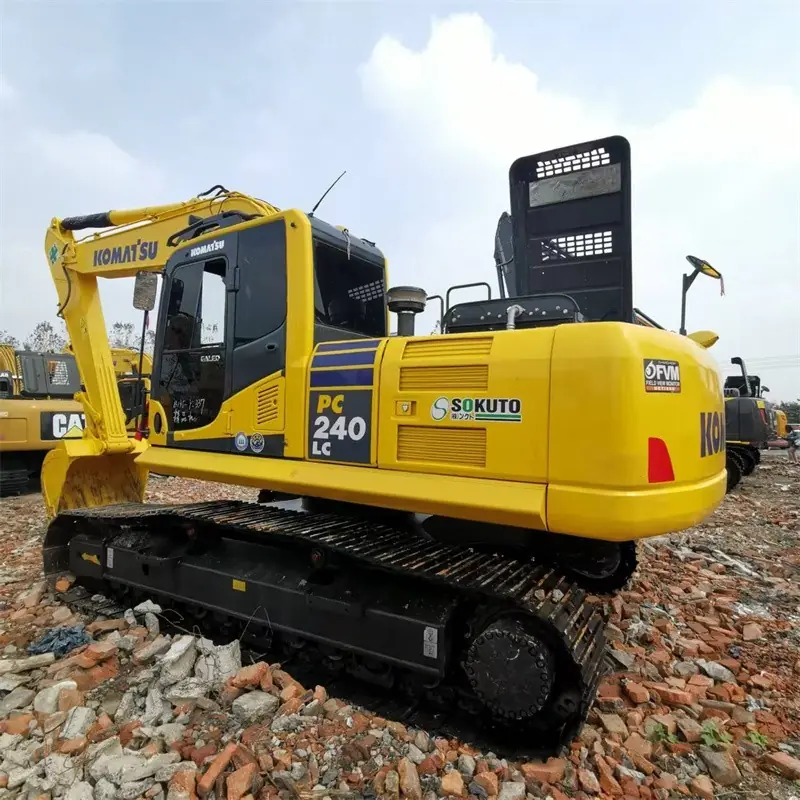
Excavadora usada Komatsu 240LC en venta
Respuesta rápida para compradores
Esta excavadora usada Komatsu 240LC es una máquina de orugas para movimiento de tierras y obras generales. La ficha muestra un precio de oferta de USD $21,000, un peso de referencia de 24t y un cucharón de 1.2m3. Confirme el número de serie, las horas, el estado y el envío de la unidad antes del pago.
- Precio publicado
- USD $21,000
- Peso operativo de referencia
- 24t
- Capacidad de cucharón de referencia
- 1.2m3
Descripción del modelo
Esta excavadora usada Komatsu 240LC es una máquina de orugas para movimiento de tierras y obras generales. La ficha muestra un precio de oferta de USD $21,000, un peso de referencia de 24t y un cucharón de 1.2m3. Confirme el número de serie, las horas, el estado y el envío de la unidad antes del pago.
Las secciones técnicas y las preguntas frecuentes se ofrecen en inglés para conservar la terminología original.
Where the 24-ton class fits in an earthmoving fleet
This size is often shortlisted when a 20-ton machine may be production-limited but a 30-ton excavator would add transport, fuel and site-access costs. The decision should start with the buyer's routine cycle rather than nominal tonnage. Record average and maximum trench depth, reach to the spoil pile or truck, material density, truck body size, lift requirements, underfoot conditions and expected productive hours. A 24-ton carrier may offer a useful step in stability and bucket handling for infrastructure or site-development work while remaining easier to deploy than a heavier production unit. That advantage disappears if the machine spends most of its time on tasks a smaller excavator can complete comfortably, or if daily output demands keep it near maximum capability. Compare expected cycles per hour, haul-unit matching, fuel, operator time, mobilization and wear. The right class minimizes total project cost across the normal work mix, not the single heaviest bucket or deepest cut in the tender document.
How to use the 24t and 1.2m3 catalog references
Use the figures for initial comparison, then verify actual mass, work equipment, dimensions and bucket on the serial-numbered machine. Operating weight can change with track shoes, cab equipment, counterweight, boom, arm, coupler, bucket, auxiliary piping and guarding. Bucket capacity needs context from width, profile, material density and fill factor; an oversized bucket in dense material may reduce stability and increase stress. Request a clear plate photograph, configuration images and measurements of overall length, width and height in the proposed shipping position. If a specification sheet is provided, make sure its generation, region and serial range match the unit. Digging depth, reach, lift capacity and hydraulic values should never be copied from a nearby variant without confirmation. For transport, use measured dimensions and actual shipping configuration rather than a model-family estimate. This separation between model reference and machine fact improves both purchasing accuracy and page credibility.
Commercial construction and infrastructure job fit
The class is commonly considered for foundations, bulk excavation, road work, pipelines, drainage and loading where a mid-size machine needs additional production margin. Commercial foundation work may combine deep excavation, material placement and loading within a changing site layout. Road and infrastructure projects can require ditching, slope shaping, culvert work and repeated movement across variable ground. Pipeline work adds lift-radius and trench-safety considerations, while stockpile loading depends on truck match and swing angle. For each application, translate the task into working range, cycle time, attachment and ground-pressure requirements. Do not assume the LC designation or a wide-looking undercarriage guarantees suitability on soft ground or for lifting. Track shoe width, soil bearing capacity, machine orientation, blade or counterweight configuration and load chart all matter. If the job is dominated by open-face high-volume loading, compare a heavier excavator. If access and mobilization dominate, compare a smaller class.
Identity, hour-meter and telematics evidence
Remote monitoring data can support a history review when available and transferable, but it should be cross-checked with the plate, monitor, records and physical wear. The website currently displays 500 as catalog labels, not verified facts. Ask for a continuous video that links the full machine, identification plate, monitor before start-up and subsequent operation. Review any service documents for matching serial number and coherent meter progression. Some units may have manufacturer or fleet telematics capable of recording hours, location, fault events or operating patterns, but access, retention and ownership transfer vary. Never promise a complete digital history until the account and records for the exact serial number are available. Compare digital or paper data with wear on pedals, seat, controls, boom and bucket pins, slew area and undercarriage. Classify each item as verified evidence, seller statement or unknown. Put the confirmed identity in the quotation and inspection request so media from another similar unit cannot enter the purchase file unnoticed.
Generation, engine and emissions-system questions
Confirm the installed engine, rated output and aftertreatment from the serial-specific configuration rather than using a power figure from the model family. Different production generations and markets can carry different engines, control calibration and emissions equipment. The correct plate and technical literature should identify what is installed. Begin condition review with a genuine cold start: show monitor lamps, cranking, exhaust behavior, idle stability and gradual acceleration. Continue into sustained hydraulic work to observe engine response and cooling. Inspect oil and coolant where safe, leakage, intake, wiring, belts, radiator and cooler cleanliness. If diesel particulate filters or other aftertreatment are fitted, request current warning status, fault history and available regeneration information without assuming completeness. Destination fuel quality, service support and emissions rules can affect ownership. Diagnostic codes, samples or pressure checks should be handled by qualified personnel. The purpose is to understand the offered machine, not to repeat a generic engine claim.
Hydraulic pump response and combined-movement testing
A warm operating test should show both individual and simultaneous functions because emerging pump, valve or control issues may appear only under combined demand. Record travel, swing, boom raise and lower, arm in and out, bucket curl and any fitted auxiliary circuit. Then demonstrate representative combinations such as swing with boom and bucket movement. Note delay, surging, chatter, drift, weak response, unusual pump sound and changes as temperature rises. Inspect cylinder rods and seals, hose crimps, valve areas, exposed lines and center joint for leakage or damage. Working modes may alter response, but the number and behavior of available modes depend on generation and configuration; demonstrate what the monitor actually offers. Pressure and flow testing requires trained personnel, correct ports and service information. If a breaker, compactor, grapple or other tool is planned, match required flow, pressure, return, case drain, coupler geometry and attachment mass to the actual carrier. Hoses alone do not establish readiness.
Long-undercarriage stability and wear assessment
The undercarriage supports the machine's working platform, but stability and remaining life must be demonstrated through configuration, ground conditions and measurements. Photograph both sides at low angles, including track shoes, links, pins and bushings, sprockets, idlers, rollers, guards and final-drive areas. Record shoe width because ground pressure, transport width and firm-ground behavior can change with the fitted system. Observe straight travel, steering, speed ranges and noise from each side. A remaining-life percentage is useful only when accompanied by measurements, reference limits and an explanation of method. Check for uneven wear that may reflect side-slope work, repeated turning or component replacement on only one side. Look for final-drive leakage and temperature differences after operation where safe. LC branding should not be converted into a general lifting promise; use the appropriate load chart, radius, orientation and ground assessment for object handling.
Coupler, lubrication and high-use pin joints
Optional couplers or centralized lubrication systems need direct functional checks, and their presence should never be assumed from the size class. Identify the fitted coupler, if any, through current photographs and documentation. Inspect hooks, pins, locking components, controls and hoses, and test it according to the manufacturer's safe procedure. Measure movement at the bucket linkage and separate coupler wear from pin-and-bushing play. If centralized lubrication is installed, check the reservoir, pump, lines and delivery points for leakage, blockage or disconnection. A full reservoir does not prove grease is reaching each joint. Without such a system, review manual grease points and maintenance evidence. Examine boom foot, arm end, bucket linkage and cylinder pins under controlled load. Frequent attachment changes and poor lubrication can create cost even when engine and pump behavior appear acceptable, so these smaller systems deserve their own evidence rather than a generic “working condition” label.
Structure, counterweight and operator-station review
Inspect structural load paths and operator-use systems separately from cosmetic finish, with close evidence of repairs or abnormal wear. Review the boom foot, boom, arm, cylinder mounts, upper and lower frames, counterweight attachment and pin bosses for cracks, distortion, plates and welds. A documented repair may be serviceable, but its cause, location and workmanship should be understood. Fresh paint cannot demonstrate structural condition. Inside the cab, check seat and restraint, joysticks, pedals, monitor, warning lamps, horn, lights, mirrors, glass, wipers, camera where fitted, access steps and handrails. Test heating and cooling systems when present. Compare control wear with the hour narrative and ask about current fault codes. Safety, lifting and guarding requirements vary by destination and application; confirm them locally. An independent inspector can help classify repair evidence and estimate the work needed before the machine enters service.
Risk-adjusted price comparison
Compare supported condition and total delivered cost under the same Incoterm instead of ranking listings by headline price, manufacture year or hours. Separate machine, bucket, coupler and additional attachments. Add independent inspection, initial service, expected hydraulic or undercarriage work, origin transport, dismantling, packing, loading, freight, insurance when requested, destination handling, duties and inland delivery. State the Incoterm and named place for every quotation. Give telematics or service history value only when records are accessible and tied to the serial number. A low meter figure should not outweigh inconsistent wear; a higher-meter machine with coherent maintenance evidence may be the stronger commercial candidate. Estimate repairs using destination labor and parts availability. The result should show the cost and uncertainty of placing the excavator into productive service, not merely the amount transferred to the seller.
Transport configuration and arrival controls
Plan freight from measured dimensions, actual weight and a written dismantling scope; do not assume that the same shipping method fits every 24-ton configuration. Confirm whether the machine will ship complete, with the bucket removed, or with additional work equipment separated. The answer depends on route, container or vessel limits, carrier rules, overall dimensions and handling capability. Record who removes components, how pins and loose parts are labeled, how hydraulic ports are capped and what equipment is needed for reassembly. Photograph the serial plate, monitor, attachments and existing damage immediately before loading, and create a component list. At destination, inspect cargo before movement, verify identity and compare received parts with the quotation. Route availability, transit time, port charges and import requirements change, so obtain current advice from the freight provider and destination broker. A general page should guide questions, not promise one transport solution.
Five approval gates before purchase
Proceed only when job fit, identity, mechanical evidence, delivered economics and destination support have all been reviewed. First, compare the 24-ton class with smaller and larger alternatives using the actual production cycle. Second, connect plate, monitor, records and media to one machine. Third, review cold start, warm hydraulics, engine and emissions equipment, undercarriage, coupler, lubrication, structure and cab, escalating uncertain findings to qualified inspection. Fourth, calculate total delivered and commissioning cost with realistic repair allowances. Fifth, confirm technicians, diagnostic capability, routine filters, undercarriage parts and attachment support for the relevant serial range. Record unknowns and decide whether each needs evidence, inspection, pricing allowance or rejection. This method helps the machine win because its supported capability matches the work, not because the listing uses precise but unverified claims.
Komatsu 240LC buyer FAQ
What work suits a used Komatsu 240LC excavator?
This 24-ton reference class is commonly considered for commercial foundations, site development, roads, larger utilities, drainage and truck loading. Actual job fit depends on working range, material, bucket, ground conditions and production targets.
What weight and bucket are listed?
The website uses 24t operating weight and 1.2m3 bucket capacity as references. Confirm actual serial-specific configuration, fitted bucket and measured transport values before planning work or freight.
Can telematics verify the operating hours?
Telematics can add evidence when the exact unit's records are accessible and transferable. Cross-check any report with the serial plate, monitor, service records and physical wear; do not assume a complete history is available.
What should a hydraulic test include?
Test travel, swing, boom, arm, bucket and available modes after warm-up, including combined functions. Observe delay, surging, drift, leakage and noise, with qualified technicians handling diagnostic pressure or flow measurements.
What should be checked on the undercarriage?
Review both sides, shoe width, links, pins and bushings, rollers, idlers, sprockets, guards and final drives. Ask for measurements and method before relying on any remaining-life percentage.
How should two quotations be compared?
Use the same Incoterm and named place, then add attachments, inspection, service, repairs, origin movement, dismantling, freight, insurance when requested, destination fees, duties and delivery.
Can an independent inspection be arranged?
An inspection may be arranged when access, inspector, scope, safe test limits, timing and costs are agreed. The report should identify the exact serial-numbered machine and any test limitations.
Related Komatsu excavators
- Komatsu PC220 — 22t reference weight
- Komatsu PC240 — 24t reference weight
- Komatsu PC270 — 27t reference weight
Solicitar datos de la unidad
Indique el puerto de destino, la cantidad y sus prioridades de inspección. Responderemos con datos de la máquina concreta.
Solicitar datos de la unidad · Solicitar pruebas de inspección por WhatsApp · sales@lihangusedmachinery.com