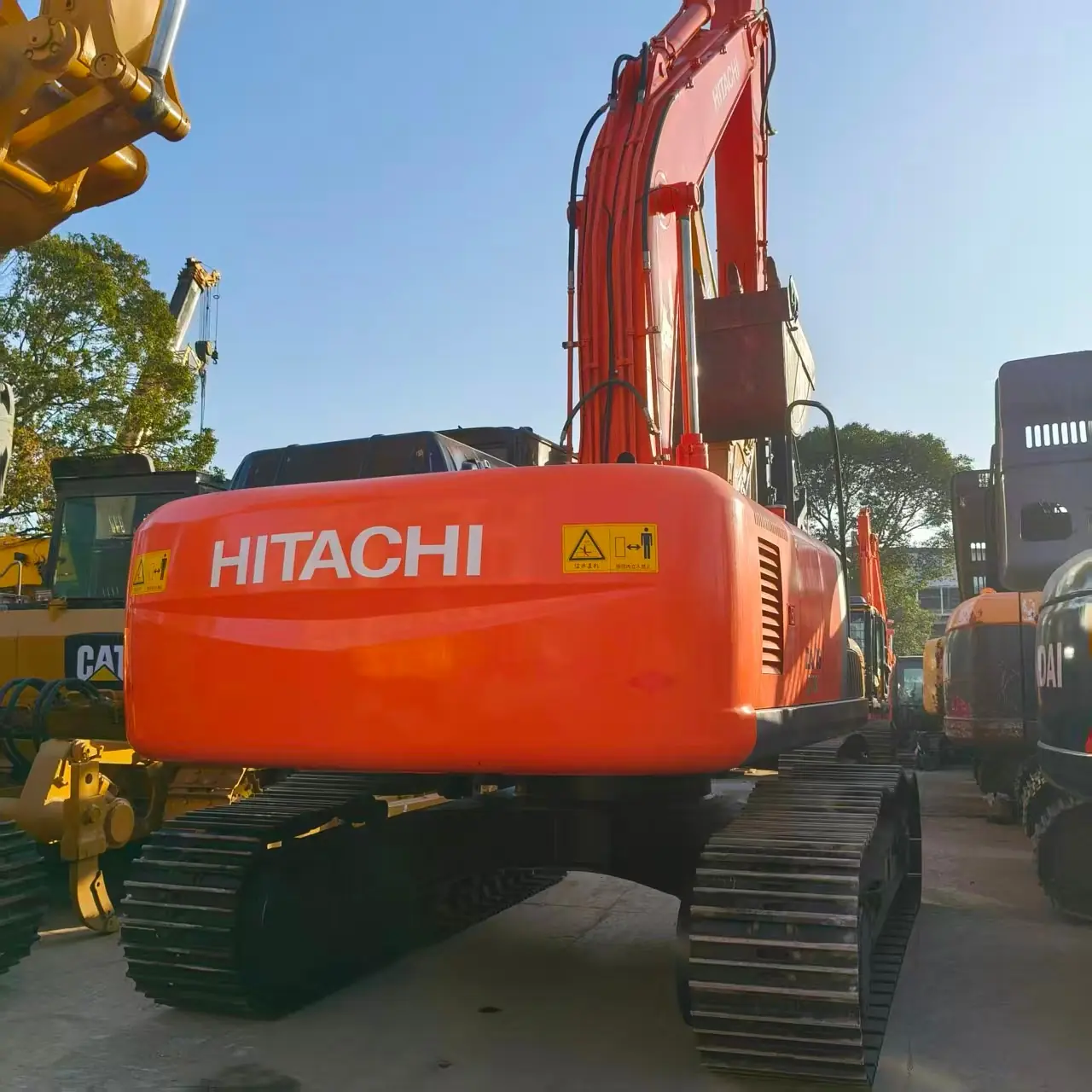
Excavadora usada Hitachi ZX270 en venta
Respuesta rápida para compradores
Esta excavadora usada Hitachi ZX270 es una máquina de orugas para movimiento de tierras y obras generales. La ficha muestra un precio de oferta de USD $23,000, un peso de referencia de 27.5t y un cucharón de 1.25m3. Confirme el número de serie, las horas, el estado y el envío de la unidad antes del pago.
- Precio publicado
- USD $23,000
- Peso operativo de referencia
- 27.5t
- Capacidad de cucharón de referencia
- 1.25m3
Descripción del modelo
Esta excavadora usada Hitachi ZX270 es una máquina de orugas para movimiento de tierras y obras generales. La ficha muestra un precio de oferta de USD $23,000, un peso de referencia de 27.5t y un cucharón de 1.25m3. Confirme el número de serie, las horas, el estado y el envío de la unidad antes del pago.
Las secciones técnicas y las preguntas frecuentes se ofrecen en inglés para conservar la terminología original.
The Zaxis Series and What 'ZX270' Actually Means
Hitachi launched the Zaxis series to replace its older EX-series excavators, carrying the 'ZX' prefix as shorthand for Zaxis. The '270' refers to the machine's approximate operating weight class in hundreds of kilograms — a naming convention that makes it easy to compare machines across the lineup at a glance. You'll find several generations on the used market, commonly labeled ZX270, ZX270-3, and ZX270-5, each representing an update to the engine, hydraulics, and cab electronics. All three share the same basic size and job-site role, but a -5 model will generally run a cleaner, more fuel-efficient engine and updated onboard diagnostics compared to an original ZX270. When you're comparing listings, checking which generation you're looking at matters more than comparing hour meters alone, since a higher-hour -5 can still be the newer, more efficient machine.
Isuzu Power Under the Hood
Hitachi paired the Zaxis 270 with an Isuzu diesel engine (commonly the AA-6HK1 or a related variant depending on generation and market), delivering net output in the range of roughly 150–170 kW (about 200–230 hp). That's a meaningful step up from a 20-ton class machine, and it's what allows the ZX270 to swing a much larger bucket through a full cycle without bogging down — a key factor if the job is measured in tons-per-hour rather than just 'getting it dug'. Isuzu engines have a long track record in industrial and commercial vehicle applications outside of construction equipment as well, which means parts availability and diesel mechanic familiarity are generally strong even outside major cities. During inspection, we run the engine through a full load cycle, checking for smoke color under acceleration, oil pressure stability, and coolant temperature behavior.
Working Specifications for This Size Class
A 27-ton excavator is built for a different scale of job than the mid-size machines most buyers are used to comparing. In general terms across ZX270 generations: Operating weight typically runs 26,500–28,700 kg depending on undercarriage and counterweight configuration; Standard bucket capacity generally ranges 0.9–1.4 m³; Maximum digging depth is usually in the 6.6–7.5 m range; Maximum digging reach typically falls between 10.3–11.0 m; Travel speed is generally 3.0 km/h low range and up to roughly 5.5 km/h high range. These are platform-level figures, not the confirmed measurements for this specific unit. The actual bucket fitted, arm length, and counterweight on this machine are documented in its individual spec sheet.
Independent Swing Control and Hydraulic Response
One area where Hitachi has built a strong reputation is swing and hydraulic control precision — the ZX270 uses an independent hydraulic circuit design (TRIAS/HIOS) that lets the swing and digging motions draw power without fighting each other. In practice, that shows up as smoother multi-function operation: an operator can swing while curling the bucket without the machine hesitating or surging, which matters a lot when you're running hundreds of cycles a day and small inefficiencies add up to real fuel and time cost. On a used machine, we test this by running combined movements under load — full swing while digging, full swing while dumping — and listening and feeling for hesitation, which is often the first sign of a pump or swing motor starting to wear.
Undercarriage and Frame Built for Heavier Loads
Because a 27-ton machine puts significantly more load through its undercarriage, the track frame, rollers, and final drives on the ZX270 are built to a heavier spec than smaller models. We measure remaining undercarriage life as a percentage on tracks, rollers, idlers, and sprockets, and we check the swing gearbox and travel motors for oil condition and leakage. The main frame, boom foot, and arm pin bosses are tested for cracking or repair welds, with particular attention paid to the boom cylinder mounts, which are a common stress point on machines that have spent time in rock-heavy digging conditions.
Cab, Monitor, and Daily Operation
The Zaxis cab is built around a wide front window and a slimmer front pillar design intended to improve the operator's direct view of the bucket and track edges. Poor sightlines translate directly into slower, more cautious cycle times. Later generations added an onboard monitor with basic diagnostic and fuel-consumption data, which is worth checking during inspection since a malfunctioning monitor can mask early warning codes. We verify the air conditioning, seat suspension, all gauges, and monitor function as part of every listing's inspection.
Where This Machine Gets Used
Buyers typically look at a ZX270-class excavator for high-production projects where volume and tonnage targets matter most. Common applications include: Quarry and aggregate loading; Large-scale site clearing and bulk earthmoving ahead of major construction; Mining support and haul road maintenance; Port, rail, and heavy infrastructure projects; Bulk material handling paired with larger attachments. It's less common to see a machine this size on small residential jobs where a lighter, more maneuverable excavator makes more sense.
What to Check Before Buying a Used 27-Ton Excavator
Beyond general engine and hydraulic checks, a few things matter more specifically at this size and duty class. Key focus areas include: Final drive and travel motor condition; Boom and arm weld history; Counterweight and configuration match; Swing gearbox oil sample; Total operating hours versus visible wear. Hours that don't match physical wear patterns are worth asking direct questions about. We include our findings on each of these points in the condition report.
Getting This Machine to Your Site
A machine in the ZX270's size class generally can't be shipped fully assembled inside a standard container. The boom and arm are typically removed and secured separately, with the main body loaded either as breakbulk cargo, on a flat-rack container, or fully disassembled into a standard container. We'll recommend the right method once we know your destination. The process covers unit confirmation, pricing, deposit/balance terms, pre-shipment inspection, export paperwork, and loading.
Hitachi ZX270 buyer FAQ
What does the '270' in ZX270 mean?
It refers to the machine's approximate operating weight class in hundreds of kilograms, a naming pattern Hitachi uses across the Zaxis lineup to make size comparisons easier.
What's the difference between a ZX270, ZX270-3, and ZX270-5?
These represent successive generations. Newer versions feature updated engines, improved fuel efficiency, and more advanced onboard monitoring, while the core size and role remain consistent.
Is a ZX270 too big for general construction work?
It can be. This size class is built for high-volume work like quarry loading; for smaller utility trenching or tight urban sites, a lighter excavator is usually a better fit.
Can a ZX270 be shipped in a standard container?
Usually not fully assembled. It's typically shipped with the boom and arm removed, either as breakbulk, flat-rack, or disassembled further for containerization.
What attachments are available for this excavator?
Beyond standard buckets, machines in this class are commonly fitted with grapples, clamshell buckets, hydraulic breakers, and rock buckets.
How do I know the hour meter is accurate on a used unit?
We cross-check the hour meter against service stickers, component wear patterns, and manufacturer service history, noting any inconsistencies in the report.
Related Hitachi excavators
- Hitachi ZX240 — 24.2t reference weight
- Hitachi ZX210 — 21.2t reference weight
- Hitachi ZX360 — 34.5t reference weight
Solicitar datos de la unidad
Indique el puerto de destino, la cantidad y sus prioridades de inspección. Responderemos con datos de la máquina concreta.
Solicitar datos de la unidad · Solicitar pruebas de inspección por WhatsApp · sales@lihangusedmachinery.com