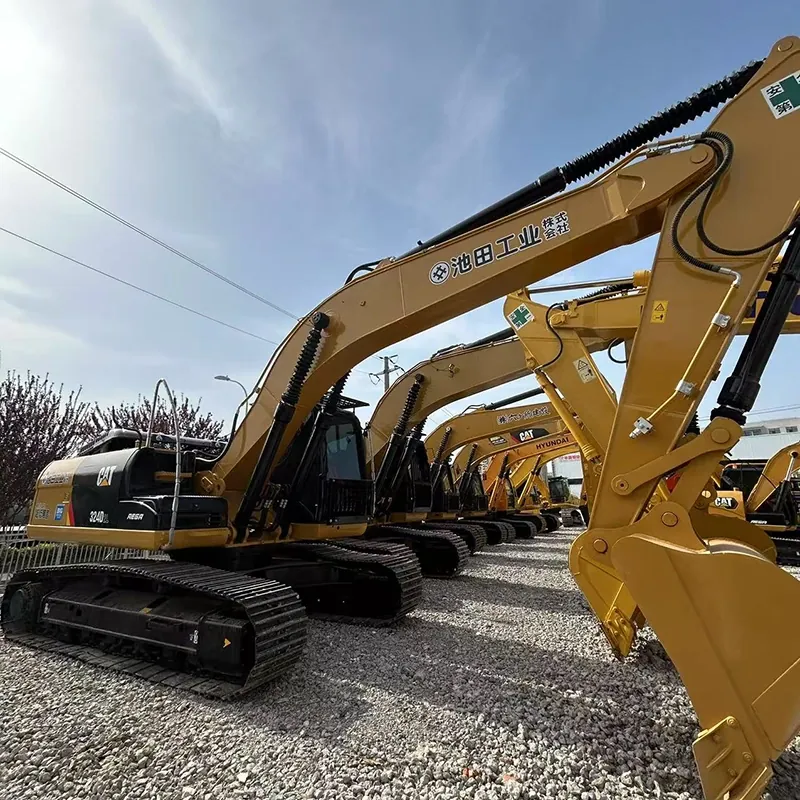
Excavadora usada CAT 324D2L en venta
Respuesta rápida para compradores
Esta excavadora usada CAT 324D2L es una máquina de orugas para movimiento de tierras y obras generales. La ficha muestra un precio de oferta de USD $25,000, un peso de referencia de 25.2t y un cucharón de 1.35m3. Confirme el número de serie, las horas, el estado y el envío de la unidad antes del pago.
- Precio publicado
- USD $25,000
- Peso operativo de referencia
- 25.2t
- Capacidad de cucharón de referencia
- 1.35m3
Descripción del modelo
Esta excavadora usada CAT 324D2L es una máquina de orugas para movimiento de tierras y obras generales. La ficha muestra un precio de oferta de USD $25,000, un peso de referencia de 25.2t y un cucharón de 1.35m3. Confirme el número de serie, las horas, el estado y el envío de la unidad antes del pago.
Las secciones técnicas y las preguntas frecuentes se ofrecen en inglés para conservar la terminología original.
Two Adjacent Model Numbers, One Overlapping Weight Class
Caterpillar has, at various points, run two mid-size excavator lines with model numbers close enough to suggest near-identical machines, when the reality is closer to two related but distinct products that coexisted through parts of their production history — sometimes reflecting a slightly different market or dealer channel, sometimes reflecting incremental updates where a weight class shifted a little between one generation and the next without a full model renumbering. This isn't unique to Caterpillar; most major manufacturers have had at least one point in their lineup history where two adjacent model designations overlapped in weight class more than their numbers alone would suggest. The practical upshot for a buyer is that model number proximity doesn't guarantee identical specifications, and it's worth confirming the actual details of the specific unit in front of you rather than assuming this model and its close neighbor are interchangeable on paper. For a buyer who wasn't tracking Caterpillar's lineup closely when these machines were new, this can be genuinely confusing to sort out secondhand. A previous owner might describe their machine using whichever model number they were most familiar with, a dealer invoice might reference one designation while a data plate shows another following a component swap, or a listing might simply carry forward whatever description came with the machine when it changed hands. None of this is necessarily an attempt to mislead anyone — it's just what happens naturally when two model lines sat close enough together that the distinction rarely mattered much to the people using the machines day to day. This is worth keeping in perspective rather than treating as a red flag by default. In the vast majority of cases, a listing that references the "wrong" adjacent model number reflects an honest chain of secondhand information rather than any attempt to misrepresent the machine, and the underlying platform is close enough that the practical impact on day-to-day operation is minimal. What matters is simply getting an accurate answer before you buy, rather than assuming either the best or the worst case without checking.
What Actually Tends to Differ Between Them
Where two adjacent model lines like this coexist, the differences are usually modest rather than dramatic — a slightly different standard bucket range, minor variation in hydraulic tuning, or a different default arm length depending on how each line was originally marketed. The core engine family, undercarriage engineering, and overall size class tend to be shared or very close, which is exactly why the two get compared so often in the first place. For a working buyer, this generally means either model can cover the same range of jobs competently, and the choice between them often comes down to which specific unit is available, its individual condition, and its price, rather than one having a meaningfully different capability than the other. Where a genuine difference does show up, it's more likely to be in how a specific unit was originally ordered — a slightly larger bucket for one buyer's typical material, a different arm length for another's typical reach requirements — than in any underlying platform limitation separating the two model lines. This is worth keeping in mind when comparing two listings side by side: a difference in fitted equipment between two units doesn't necessarily reflect a difference in what either model line is fundamentally capable of running.
A Practical Upside: Shared Parts Across Related Platforms
One genuine benefit of this kind of close model-line relationship is parts commonality. Because the underlying engineering overlaps so closely between adjacent Caterpillar model lines like this one, a meaningful share of wear components, hydraulic fittings, and even some structural parts are interchangeable or share the same part numbers across both. That's good news for long-term ownership cost, since it widens the pool of compatible components a parts supplier or dealer network can pull from rather than locking you into a narrower, model-specific catalog. It's not a guarantee that every part is shared — engine-specific and configuration-specific components still need to match exactly — but the overlap tends to be more forgiving than buyers expect when they hear two models are "close but not the same." This matters most in practice for buyers operating in regions without a fully stocked local Caterpillar dealer, where sourcing a specific part can otherwise mean a long wait or an expensive import. Knowing that a wider range of parts — sourced from either this model line or its close neighbor — can potentially fill the same repair need gives a workshop more options when something needs replacing quickly, rather than being stuck waiting on one narrow, model-specific supply chain. It's worth confirming compatibility on any specific part before ordering, but the broader point stands: buying into this kind of closely related model pair generally means a wider practical parts pool than the model number alone would suggest.
Confirming You're Actually Looking at This Specific Model
Given how close this platform sits to its neighboring model line, we confirm this unit's identity directly through its serial number and build plate rather than relying on how it was labeled by a previous seller. This matters for a few practical reasons: it affects which parts catalog applies when ordering replacement components, it affects resale expectations if a future buyer is specifically searching for this model, and it simply ensures you know precisely what you're buying rather than working from an assumption. This is the same standard of verification we apply to any specification claim worth confirming directly, rather than a special concern unique to this listing. We also cross-check this against any available maintenance records or telematics history, since a documented service trail generally references the correct model consistently over time, which adds another point of confirmation beyond the build plate alone. Where records exist but reference a different designation than the current data plate shows, that's worth investigating specifically rather than dismissing as a clerical inconsistency — most of the time it has an innocent explanation, such as a major component replacement at some point in the machine's history, but it's the kind of detail that deserves a direct answer rather than being glossed over in a listing description.
The Long Undercarriage, Same Principle as Elsewhere in Our Lineup
The long undercarriage on this unit provides the same fore-and-aft stability benefit discussed on other Caterpillar configurations we carry — a longer track frame improving stability during lifting and digging at extended reach, in exchange for a modest weight increase and a somewhat narrower pool of undercarriage-specific parts compared to the standard-length version. We verify this configuration the same way we verify it elsewhere: cross-referencing serial number and build records against Caterpillar's documented specifications, and physically inspecting mounting points and welds for consistency with factory assembly rather than a later field conversion.
Engine and Working Specifications
This platform runs a Caterpillar diesel in the same general displacement class as its closely related neighbor, generally delivering net output in the range of roughly 130–150 kW depending on generation and configuration. Operating weight in this long-undercarriage configuration typically falls between about 24,600–25,800 kg, standard bucket capacity is usually in the 1.0–1.7 m³ range, maximum digging depth generally runs around 6.8–7.1 m, and maximum digging reach typically falls between 10.0–10.3 m. Travel speed usually reaches roughly 5.5 km/h in high range. As always, these figures describe the general platform rather than confirming every detail of this specific unit — the exact bucket size and any additional equipment fitted are documented in this machine's individual spec sheet, alongside its model and configuration verification notes.
Where This Platform Gets Chosen
This weight class handles the same general range of work as its closely related neighbor — mid-to-large foundation work, higher-volume truck loading, utility and pipeline installation, and general contracting jobs that have outgrown a 20-ton class machine's comfortable working range. Buyers choosing this specific model over its neighbor are often doing so based on unit availability, price, or a preference built from prior experience with this exact model line, rather than a functional requirement only this platform can meet.
What to Check Before Buying a Used Machine at This Size
Beyond the general engine and hydraulic checks that apply to any used excavator, a few points matter specifically here: Each of these is documented in the condition report and verification notes provided with this listing.
Shipping This Machine Overseas
At this weight and size, this machine typically requires the boom and arm to be removed to fit into a standard container, following the same general process as other machines in this weight class throughout our lineup. The rest of the export process follows our usual steps: confirming the unit and price, agreeing payment terms, a final pre-shipment inspection with current photos or video, preparing export documentation, and coordinating loading and vessel booking based on your destination port's requirements. If this platform and configuration fit what you're looking for, ask for the verification notes, condition report, and current photos or video for this exact unit, along with a shipping quote to your destination port. We're glad to answer questions about how it compares to its closely related neighbor in our lineup, or how we confirmed its model identity and configuration, before you decide.
CAT 324D2L buyer FAQ
What's actually different between this model and the closely related one you also list?
Typically modest differences — bucket range, minor hydraulic tuning, or default arm configuration — rather than a fundamentally different machine. Core engineering and weight class overlap closely, which is why the two are so often compared directly.
Are parts interchangeable between the two model lines?
Many wear components and fittings are, given how closely the underlying platforms overlap, though engine-specific and configuration-specific parts still need to match exactly. This shared parts pool is generally a practical advantage for long-term ownership.
How do you confirm which specific model I'm actually buying?
Through the serial number and build plate rather than the listing description alone, since the two model lines sit close enough in specification that confirming the exact one matters for parts ordering and resale expectations.
Does the long undercarriage work the same way as on your other Caterpillar listings?
Yes — the same fore-and-aft stability principle, verified through the same serial number cross-reference and physical weld inspection process we use across our lineup.
Should I choose this model or its closely related neighbor?
For most buyers, the choice comes down to specific unit availability, condition, and price rather than a functional gap between the two, since both cover the same general range of work competently.
Solicitar datos de la unidad
Indique el puerto de destino, la cantidad y sus prioridades de inspección. Responderemos con datos de la máquina concreta.
Solicitar datos de la unidad · Solicitar pruebas de inspección por WhatsApp · sales@lihangusedmachinery.com