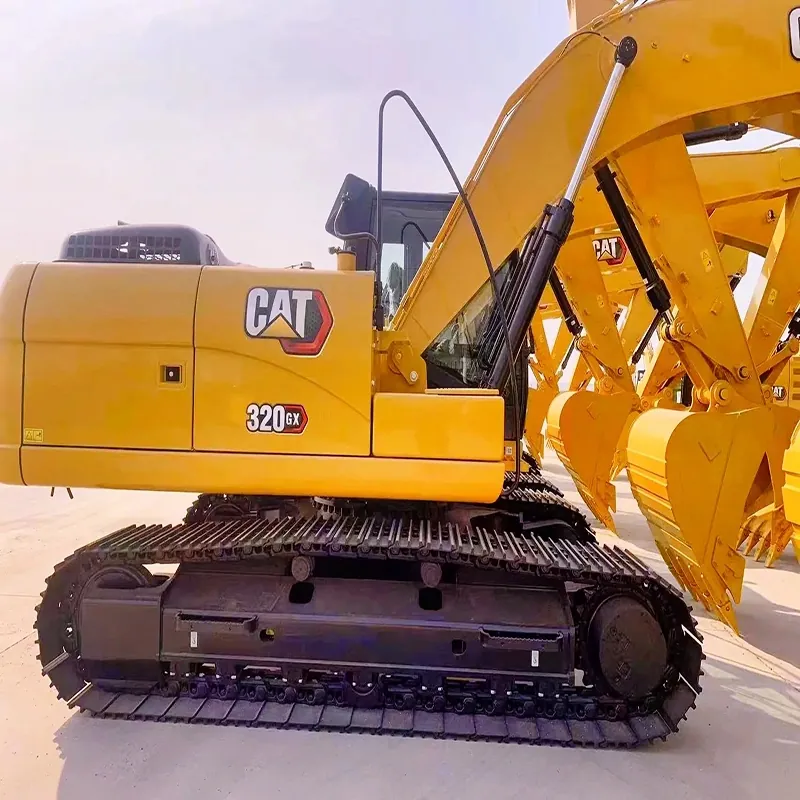
Excavadora usada CAT 320GX en venta
Respuesta rápida para compradores
Esta excavadora usada CAT 320GX es una máquina de orugas para movimiento de tierras y obras generales. La ficha muestra un precio de oferta de USD $20,000, un peso de referencia de 21t y un cucharón de 0.95m3. Confirme el número de serie, las horas, el estado y el envío de la unidad antes del pago.
- Precio publicado
- USD $20,000
- Peso operativo de referencia
- 21t
- Capacidad de cucharón de referencia
- 0.95m3
Descripción del modelo
Esta excavadora usada CAT 320GX es una máquina de orugas para movimiento de tierras y obras generales. La ficha muestra un precio de oferta de USD $20,000, un peso de referencia de 21t y un cucharón de 0.95m3. Confirme el número de serie, las horas, el estado y el envío de la unidad antes del pago.
Las secciones técnicas y las preguntas frecuentes se ofrecen en inglés para conservar la terminología original.
The Value Tier Itself Kept Evolving
Caterpillar didn't simply leave its earlier economy-focused trim in place indefinitely — this trim was developed specifically to beat it on the metrics that matter most to cost-conscious buyers: fuel consumption improved by a meaningful double-digit percentage in comparable applications, maintenance costs reduced by a comparable margin through extended service intervals and simplified service points, and a lower initial purchase price on top of both. That's a genuinely unusual direction for a manufacturer to take with an already-positioned economy trim — rather than adding features and creeping the price upward over time, Caterpillar specifically engineered this trim to be a better value than its own predecessor in the same tier, not just a newer model number wearing the same positioning. This is worth pausing on, because it runs counter to how a lot of buyers expect product lineups to evolve. The more familiar pattern is a manufacturer holding price roughly steady while gradually adding features to justify staying competitive, or holding features steady while prices creep upward with each new release. Deliberately re-engineering an already-affordable trim to become both cheaper to buy and cheaper to run, rather than pushing it upmarket, reflects a specific bet that cost-conscious buyers at this weight class respond more to lower total ownership cost than to additional features they may not fully use — and the fuel and maintenance savings data behind this trim suggests that bet was grounded in real engineering results, not just marketing language.
Old Bones, New Nervous System
What makes this trim's engineering genuinely interesting is the deliberate mixing of generations within a single machine, rather than representing one consistent point in time the way most of the model variations in our lineup do. The core mechanical structure draws on Caterpillar's well-proven, field-tested D-series component design — the same fundamentally reliable mechanical foundation that's logged enormous hours across a huge global fleet — while the hydraulic control system and operator interface are built around genuinely modern electrohydraulic technology. In effect, this trim keeps the "bones" that Caterpillar already knows work reliably for years, while replacing the "nervous system" that actually determines how efficiently the machine converts fuel into digging work. It's a hybrid approach rather than a full ground-up redesign, and it's specifically why this trim manages to be both simpler to maintain and more fuel-efficient at the same time, rather than having to trade one for the other. This matters for a used buyer specifically because it changes what you should actually expect to find during inspection. A machine built entirely on an older mechanical platform tends to age in fairly predictable, well-understood ways, since decades of field data exist on exactly how those components wear. A machine built entirely on a brand-new platform carries more uncertainty simply because there's less long-term data yet. This trim sits in between — the mechanical wear points behave the way a well-documented older platform behaves, while the hydraulic and control components are new enough that we pay particular attention to them specifically during inspection, rather than assuming decades of field data automatically extend to systems that haven't been in service nearly as long.
An Electrohydraulic Valve That Delivers Power Precisely When It's Needed
A key piece of that modern control layer is an electronically controlled hydraulic valve that directs power to exactly where the operator's control input calls for it, rather than running the hydraulic system at a broadly fixed output and letting excess flow go to waste during lighter movements. Paired with a smart operating mode that synchronizes engine output with this electrohydraulic control, the result is meaningfully better fuel efficiency during the kind of mixed light-and-heavy cycle work that makes up most general contracting and utility jobs, without asking the operator to manually manage power settings throughout the day.
An Undercarriage Built to Go Longer Between Services
One of the more practical, unglamorous upgrades on this trim is a track undercarriage with grease sealed directly between the pins and bushings at the factory, rather than relying entirely on field greasing to keep these high-wear contact points lubricated throughout the machine's working life. This reduces both the frequency of manual greasing required and the risk of a missed or delayed grease interval accelerating undercarriage wear, which is exactly the kind of unglamorous maintenance detail that quietly saves real money and downtime over years of ownership, even though it will never show up as a headline spec. It's a good example of where this trim's real engineering investment actually went — not into flashy features that look impressive on a showroom floor, but into the specific wear points that quietly determine how much a machine costs to keep running smoothly year after year. A buyer comparing this trim against a competing machine purely on horsepower or bucket capacity is missing exactly the kind of detail this trim was built around.
Confirming This Is Genuinely This Trim
Because Caterpillar's value-tier lineup has now gone through more than one iteration, confirming which specific trim a used unit actually is matters more than it used to. We verify this directly through the serial number and build plate rather than relying on how a machine happens to be labeled by a previous seller, since a mislabeled unit — whether an honest mix-up or otherwise — could mean a buyer expects fuel and maintenance savings that a different, earlier trim simply wasn't engineered to deliver.
Engine and Working Specifications
This platform runs a Caterpillar diesel delivering net output in the range of roughly 100–110 kW, tuned specifically to work with the electrohydraulic control system for efficient performance across mixed-duty cycles rather than for maximum peak output alone. Operating weight typically falls between about 20,300–20,700 kg, standard bucket capacity is usually in the 0.8–1.2 m³ range, maximum digging reach typically falls around 9.6–9.8 m, and the machine's maximum lift capacity is limited more by hydraulic capability than tipping load across most of its working range, which is worth understanding if you're planning attachment-based lifting work. As always, these figures describe the general platform rather than confirming every detail of this specific unit — the exact bucket size and any additional equipment fitted are documented in this machine's individual spec sheet, alongside its trim verification notes.
Where This Trim Genuinely Makes Sense
This trim suits buyers prioritizing the fastest possible return on their equipment investment through low fuel burn and low maintenance overhead — utility contractors, general construction crews running steady but not extreme duty cycles, and cost-conscious operations where every percentage point of fuel savings and every extended service interval directly improves the bottom line. It's built around simplicity and reliability rather than maximum technology integration or peak lift capacity, which makes it a strong fit for buyers whose priority is dependable, low-cost operation rather than the most feature-rich machine available at this weight class.
What to Check Before Buying a Used Machine at This Trim Level
Beyond the general engine and hydraulic checks that apply to any used excavator, a few points matter specifically here: **Trim verification through serial number and build plate**, confirming this unit is genuinely this specific value-tier iteration rather than an earlier trim carrying a similar description **Electrohydraulic valve and smart mode function**, tested directly to confirm the system is actually modulating power delivery rather than running in a fixed, less efficient state **Sealed undercarriage condition**, checking for any signs the factory-sealed grease points have been compromised or require servicing sooner than the extended interval this design is meant to provide **General engine and hydraulic performance under load**, checked the same way as on any used excavator at this weight class **Standard structural and cooling system checks**, appropriate for this platform's typical general contracting and utility duty cycle Each of these is documented in the condition report and verification notes provided with this listing.
Shipping This Machine Overseas
At this weight and size, this machine typically loads into a standard container with the boom and arm removed, following the same general process as other 20-ton class machines in our lineup. The rest of the export process follows our usual steps: confirming the unit and price, agreeing payment terms, a final pre-shipment inspection with current photos or video, preparing export documentation, and coordinating loading and vessel booking based on your destination port's requirements.
CAT 320GX buyer FAQ
How is this different from the other value-tier trim you also list?
This trim was engineered specifically to beat that earlier trim on fuel consumption, maintenance cost, and purchase price, representing a further iteration of Caterpillar's economy positioning rather than a parallel option at the same level.
Does "value-tier" mean this machine is mechanically simpler or less reliable?
Simpler in some respects, yes, but not less reliable — the core mechanical structure draws on well-proven, field-tested component design, while the hydraulic control system uses genuinely modern technology to improve efficiency without sacrificing that mechanical reliability.
What does the sealed undercarriage actually save me in practice?
It reduces how often the pins and bushings need manual greasing and lowers the risk of undercarriage wear accelerating from a missed service interval, which translates into real savings on both maintenance labor and long-term component life.
How does the electrohydraulic valve actually improve fuel efficiency?
It directs hydraulic power precisely to where the operator's controls call for it rather than running the system at a broadly fixed output regardless of the task, reducing wasted flow during lighter movements throughout a typical mixed-duty day.
Is this a good fit for heavy, continuous production work?
It's built more around efficient, dependable general contracting and utility work than maximum sustained production output — buyers with consistently heavy-duty needs are generally better served by a higher-capability tier in the same weight class.
How do you confirm I'm actually getting this specific trim?
Through the serial number and build plate rather than a listing description alone, since Caterpillar's value-tier lineup has gone through more than one iteration and confirming which one you're buying matters for accurate fuel and maintenance expectations.
Related CAT excavators
Solicitar datos de la unidad
Indique el puerto de destino, la cantidad y sus prioridades de inspección. Responderemos con datos de la máquina concreta.
Solicitar datos de la unidad · Solicitar pruebas de inspección por WhatsApp · sales@lihangusedmachinery.com