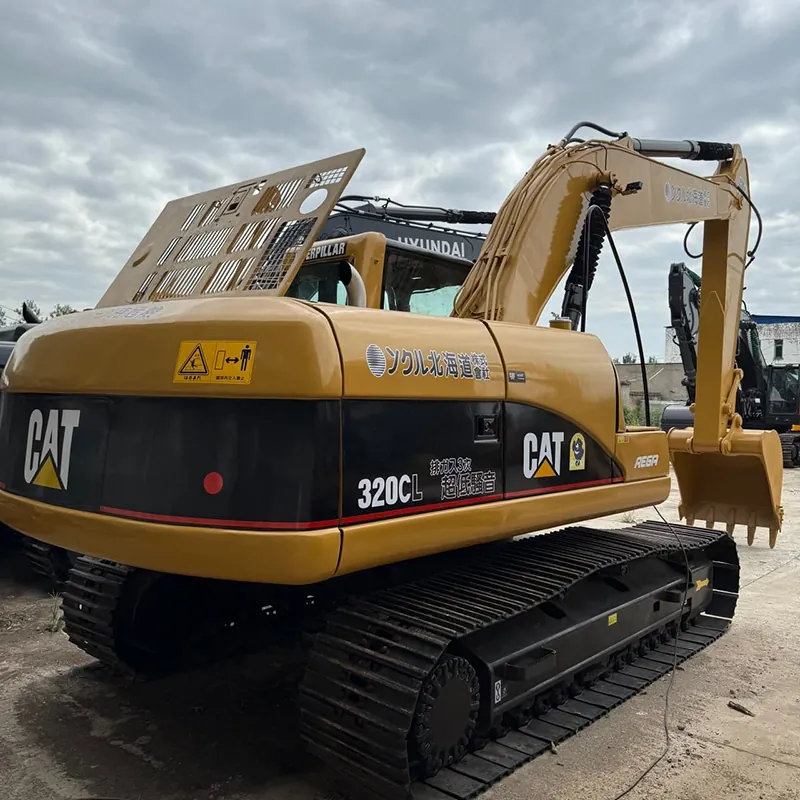
Excavadora usada CAT 320CL en venta
Respuesta rápida para compradores
Esta excavadora usada CAT 320CL es una máquina de orugas para movimiento de tierras y obras generales. La ficha muestra un precio de oferta de USD $20,000, un peso de referencia de 21.5t y un cucharón de 1.0m3. Confirme el número de serie, las horas, el estado y el envío de la unidad antes del pago.
- Precio publicado
- USD $20,000
- Peso operativo de referencia
- 21.5t
- Capacidad de cucharón de referencia
- 1.0m3
Descripción del modelo
Esta excavadora usada CAT 320CL es una máquina de orugas para movimiento de tierras y obras generales. La ficha muestra un precio de oferta de USD $20,000, un peso de referencia de 21.5t y un cucharón de 1.0m3. Confirme el número de serie, las horas, el estado y el envío de la unidad antes del pago.
Las secciones técnicas y las preguntas frecuentes se ofrecen en inglés para conservar la terminología original.
Why Provenance Matters More on a Machine This Old
A current-production excavator changes hands maybe once or twice before reaching a buyer like you, and its factory configuration is rarely in question. A machine from this generation has often been through several owners, possibly multiple countries, and sometimes a rebuild or two along the way — and over that kind of lifespan, undercarriage components occasionally get swapped for entirely practical reasons that have nothing to do with deception. A damaged track frame might get replaced with whatever compatible used frame was available at the time, sourced from a parts machine that happened to have the other configuration. A rebuild shop working to a tight budget might reuse components across several machines passing through their yard. None of this is necessarily a red flag on its own, but it does mean that on a machine this age, confirming a long undercarriage is factory-original — not a later-life mix of parts — is a genuinely different verification question than simply measuring the current track frame length. This distinction is worth taking seriously because the two scenarios have different practical implications for a buyer even when the machine performs identically either way. A factory-original long undercarriage was engineered and tested by Caterpillar as a complete, matched assembly — the frame, roller spacing, and mounting hardware were all designed to work together from the start. A field-assembled combination, even using genuine Caterpillar parts sourced from different donor machines, may technically function but wasn't necessarily validated as a complete system in the same way, which is exactly the kind of detail that's easy to overlook when a machine simply "looks right" and drives fine during a brief test.
How Buyers Confirm Factory-Original Configuration, Not Just Current Dimensions
Measuring a track frame tells you its current length, but it doesn't tell you whether that frame was factory-fitted to this specific machine from new or installed later during a repair or rebuild. To confirm the former, buyers should cross-reference the machine's serial number and build information against Caterpillar's documented configuration for that specific production run, checking whether a long-undercarriage build is consistent with how an offered unit was originally specified. Buyers should also inspect the mounting points and structural welds where the undercarriage attaches to the main frame, looking for evidence of non-factory fabrication or modification work that would suggest a field conversion rather than an original build. A genuine factory long-undercarriage unit shows completely consistent, original manufacturing-quality welds and fitment throughout; a later field conversion, even a well-executed one, usually leaves some evidence for someone who knows specifically what to look for. Request current, unit-specific evidence and record the result before payment.
Who Actually Ordered This Configuration New, and Why It Matters Today
Understanding who specified this configuration when the machine was new helps explain what kind of working life it likely had. Buyers who paid extra for the long undercarriage option on this platform were typically pipeline contractors and utility companies running heavier fittings and pipe sections at extended reach, or contractors doing significant grading work on uneven terrain where the added fore-aft stability translated directly into safer, more efficient operation. That's a meaningfully different original duty profile than a standard-configuration unit bought for general-purpose digging, and it's part of why buyers should examine a long-undercarriage machine's overall wear pattern with that context in mind — a well-maintained example from this background often shows wear consistent with steady, professional use rather than either excessive strain or long periods of neglect. This context also shapes what buyers look for when something doesn't quite add up during inspection. A long-undercarriage unit showing heavy impact damage or erratic wear patterns inconsistent with steady pipeline or utility work is worth a closer look at its actual history, since that mismatch between the machine's likely original purpose and its current physical condition can be a useful early signal worth investigating rather than dismissing.
Parts Availability for an Older Long-Configuration Undercarriage
One practical detail worth flagging honestly: undercarriage components specific to the long configuration were always a smaller-volume option than the standard version, even when this platform was in full production, and that gap has only grown as the platform has aged out of current manufacture. Standard-length undercarriage parts for this generation remain widely available through both Caterpillar and the aftermarket, since so many standard units were built and are still working. Long-configuration-specific components — the extended frame itself, in particular — are less common secondhand and may need to be sourced from a specialist rather than a general parts supplier if a major undercarriage repair is ever needed. This isn't a reason to avoid the configuration, but it's a genuine factor worth weighing against the stability benefit, especially for a buyer planning to keep the machine running for many more years. Request current, unit-specific evidence and record the result before payment.
Where This Generation and Configuration Sits Technologically
This platform carries the same basic engine and control architecture found across the C-series generation — an early step toward electronic engine diagnostics without the fully integrated systems of later machines, paired with a mechanical layout that a very large pool of currently working operators worldwide already know how to run. The long undercarriage doesn't change any of that; the engine, hydraulics, and control layout are identical to the standard-configuration version of the same generation, with the difference confined entirely to the track frame and its associated stability characteristics. Request current, unit-specific evidence and record the result before payment.
What the Numbers Actually Look Like
Specifications for this generation and configuration run roughly as follows: operating weight in the long undercarriage configuration typically falls between about 20,300–21,000 kg, compared to roughly 19,800–20,600 kg for the standard-length version of the same generation. Standard bucket capacity is usually in the 0.52–1.5 m³ range, maximum digging depth generally runs around 6.5–6.6 m, and maximum digging reach typically falls between 9.7–10.0 m. Travel speed usually reaches roughly 5.5 km/h in high range, unchanged from the standard configuration. As always, these figures describe the general platform rather than confirming every detail of an offered unit — confirm the installed bucket and additional equipment in the serial-specific quotation and current media, alongside any available configuration evidence.
What to Check Before Buying a Used Machine With This History
Beyond the general engine, hydraulic, and structural checks that apply to any used excavator this age, a few points matter specifically here: Serial number and build record cross-reference, confirming the long undercarriage is consistent with how an offered unit was originally manufactured rather than assumed from its current dimensions alone Weld and mounting point inspection, checking for evidence of non-factory fabrication that would indicate a later field conversion rather than an original build Roller and idler count and spacing consistency, since a genuine factory long frame should show components matching Caterpillar's original specification rather than a mismatched assembly Undercarriage wear pattern consistent with the claimed original use case, given what buyers know about who typically ordered this configuration new Standard engine and hydraulic checks, carried over identically from what applies to any used unit of this generation regardless of undercarriage configuration Ask for each point to be documented in a condition report or independent inspection notes before payment.
Shipping This Machine Overseas
At this weight and size, this machine's container suitability depends on measured transport dimensions, weight, dismantling scope and carrier approval. A practical export plan should cover: confirming the unit and price, agreeing payment terms, a final pre-shipment inspection with current photos or video, preparing export documentation, and coordinating loading and vessel booking based on your destination port's requirements. Request current, unit-specific evidence and record the result before payment.
Next Step
If this generation and configuration fit the stability and reliability needs of your work, ask for the verification notes, condition report, and current photos or video for the offered unit, along with a shipping quote to your destination port. Ask the supplier to answer questions about what evidence supports its configuration, how it compares to the standard-length version of this platform, or what its original duty history likely involved, before you decide. Request current, unit-specific evidence and record the result before payment.
CAT 320CL buyer FAQ
How is confirming this is "factory-original" different from just measuring the undercarriage?
Measuring tells you the current length; it doesn't tell you whether that frame was fitted at the factory or installed later during a repair. Buyers should cross-reference serial number and build records and inspect mounting welds specifically to confirm original manufacture, which is a different and more thorough check than a measurement alone.
Why would a used machine this old have a swapped undercarriage in the first place?
Usually for practical reasons rather than anything deceptive — a damaged frame replaced with an available used component during a repair, or parts reused across machines passing through a rebuild shop. It's a realistic possibility on equipment this age simply due to how many years and owners it's likely had.
Who typically ordered the long undercarriage configuration when these were new?
Often pipeline and utility contractors handling heavier fittings at extended reach, and contractors doing grading work on uneven terrain, both of whom valued the added fore-and-aft stability enough to pay for the factory option.
Is it harder to find replacement parts for this configuration than a standard machine?
For most components, no — the engine, hydraulics, and most wear parts are identical to the standard configuration. The extended track frame itself is a lower-volume part that may require a specialist supplier if it ever needs replacement, which is worth knowing even though it's not a frequent repair item.
Does the long undercarriage change how this generation's engine or controls work?
No, they're identical to the standard-configuration version of the same generation. The difference is confined entirely to the track frame and the stability it provides.
How confident can I be in the verification you've done?
Request documented findings — serial and build record cross-reference, weld and mounting inspection, and component consistency checks — as part of a listing's condition report, so you're seeing the actual verification rather than just the supplier's conclusion about it.
Does it actually matter if the undercarriage was factory-assembled versus put together later with genuine parts?
It can, even if the machine drives and performs identically either way. A factory long undercarriage was engineered and validated by Caterpillar as one complete, matched assembly. A later field combination, even using genuine components, wasn't necessarily tested together as a system in the same way, which is part of why buyers distinguish between the two rather than treating "genuine parts" and "factory-original assembly" as the same thing.
Related CAT excavators
Solicitar datos de la unidad
Indique el puerto de destino, la cantidad y sus prioridades de inspección. Responderemos con datos de la máquina concreta.
Solicitar datos de la unidad · Solicitar pruebas de inspección por WhatsApp · sales@lihangusedmachinery.com