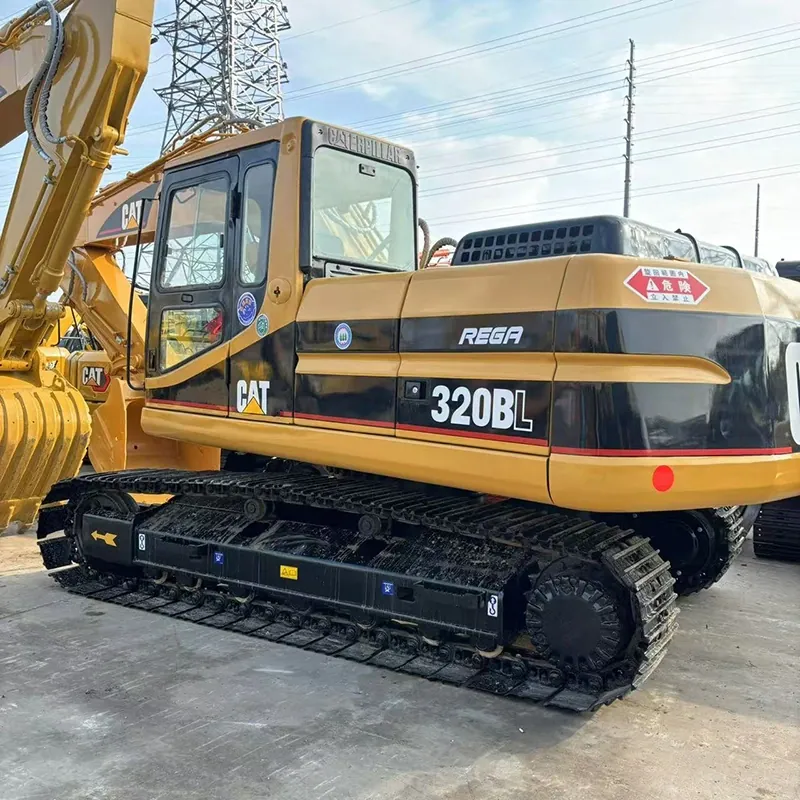
Excavadora usada CAT 320BL en venta
Respuesta rápida para compradores
Esta excavadora usada CAT 320BL es una máquina de orugas para movimiento de tierras y obras generales. La ficha muestra un precio de oferta de USD $20,000, un peso de referencia de 21.5t y un cucharón de 1.0m3. Confirme el número de serie, las horas, el estado y el envío de la unidad antes del pago.
- Precio publicado
- USD $20,000
- Peso operativo de referencia
- 21.5t
- Capacidad de cucharón de referencia
- 1.0m3
Descripción del modelo
Esta excavadora usada CAT 320BL es una máquina de orugas para movimiento de tierras y obras generales. La ficha muestra un precio de oferta de USD $20,000, un peso de referencia de 21.5t y un cucharón de 1.0m3. Confirme el número de serie, las horas, el estado y el envío de la unidad antes del pago.
Las secciones técnicas y las preguntas frecuentes se ofrecen en inglés para conservar la terminología original.
An Older Design, and Why That's Not Automatically a Downside
This platform predates the electronically sophisticated control systems, extensive sensor networks, and computer-managed hydraulic tuning found on newer excavators, running instead on simpler mechanical and hydraulic linkages with far fewer electronic modules that can fail or require specialized diagnostic equipment to troubleshoot. For a lot of buyers, particularly those operating in regions without easy access to a dealer's computer diagnostic tools or manufacturer-trained technicians, that simplicity is a genuine practical advantage rather than a compromise — a mechanical problem on a machine like this can usually be diagnosed and fixed by any competent diesel mechanic with basic tools, without needing a laptop, a software subscription, or a trip to a dealership hundreds of kilometers away. Millions of hours of real-world experience with this exact design across a huge global fleet also means parts interchangeability and mechanic familiarity are about as good as it gets in the used equipment market. Request current, unit-specific evidence and record the result in the written comparison.
What "Low Hours" on an Older Machine Actually Tells You
Here's the detail worth understanding clearly: an hour meter tells you how long the engine has run, but it doesn't tell you how many years that machine has physically existed, and those two things age a machine differently. Genuine use — digging, swinging, traveling — wears specific components in specific ways. Simply existing for two or three decades, regardless of hours, causes a different kind of deterioration: rubber hoses and seals harden and crack from age and UV exposure whether the machine ran or not, hydraulic fluid can vanish slightly or develop condensation-related contamination during long idle periods, and paint and structural coatings fade and chalk from sun exposure independent of actual work performed. An older machine with a low displayed meter reading should show age-consistent wear on these components even if the mechanical wear points look fresh — and if a machine's rubber, seals, and paint condition don't match a story of decades of mostly sitting idle, that's worth investigating rather than accepting the hour meter reading at face value. It's also worth thinking about this from the other direction: a machine that genuinely sat idle for long stretches carries its own set of risks that a heavily worked machine with similar hours wouldn't have. Extended periods of inactivity can allow condensation to accumulate inside fuel tanks and hydraulic reservoirs, seals can take a set and lose their sealing properties even without ever being worked, and rubber components can degrade faster in storage than they would under light regular use that keeps seals lubricated and moving. A low-hour machine isn't automatically the safer choice over a moderate-hour machine with a well-documented, steady work history — each comes with a different risk profile worth evaluating on its own terms.
How Buyers Actually Verify a Low Hour Count on a Machine This Old
Rather than taking a low displayed hour count as sufficient evidence on its own, buyers should cross-check it against physical indicators that are much harder to fake or accidentally misrepresent: pin and bushing play at the boom and arm joints, which develops from cycles of use rather than age alone; undercarriage wear measured against what would be expected for the claimed hours; and internal engine condition through an oil analysis and compression check, since an engine with a low displayed meter reading should show minimal internal wear regardless of how many years it's been in service. Where available, buyers should also check for consistent service stickers and any paper maintenance records, since a machine that's been properly stored and maintained through long idle periods usually has some documentation trail even if it wasn't working steadily. Request current, unit-specific evidence and record the result in the written comparison.
The Engine Behind This Generation
This platform runs a Caterpillar 3066 diesel, a naturally aspirated or turbocharged inline-six depending on configuration, delivering output in a similar range to what later D-series machines in this weight class offer, but through a notably simpler fuel system and engine management architecture than the ACERT-branded engines that came later. This engine has an especially strong reputation for being straightforward to service and rebuild, with parts and rebuild kits widely available from both Caterpillar and the aftermarket even decades after the platform's original production run ended. During inspection, buyers can commission a load test and, where appropriate, oil analysis or a compression check, which on an older engine like this tells us considerably more about true condition than a load test alone would, particularly given how much a compression check can reveal about cylinder and ring wear that wouldn't necessarily show up as a noticeable performance problem during a brief test run. Request current, unit-specific evidence and record the result in the written comparison.
A Long Undercarriage on an Already Stable Platform
An offered unit also carries Caterpillar's long undercarriage configuration for this platform — a factory-documented longer track frame that improves fore-and-aft stability, similar in principle to the long undercarriage option available on some of Caterpillar's other excavator platforms. Buyers should confirm this configuration on the machine itself instead of assuming it from how the unit was described previously, just as a buyer should verify any specification claim on a used listing worth confirming directly. Request current, unit-specific evidence and record the result in the written comparison.
What the Numbers Actually Look Like
Specifications for this generation run roughly as follows: operating weight in this configuration typically falls between about 20,000–20,800 kg, standard bucket capacity is usually in the 0.52–1.5 m³ range depending on the bucket fitted, maximum digging depth generally runs around 6.5–6.6 m, and maximum digging reach typically falls between 9.7–10.0 m. Travel speed usually reaches roughly 5.5 km/h in high range. As with any used listing, these figures describe the general platform rather than confirming every detail of an offered unit — the exact bucket size and any additional equipment fitted are documented in the unit-specific specification sheet.
Where This Combination Makes Sense
An older, mechanically simple machine with a low displayed meter reading makes particular sense for buyers who value long-term serviceability over the latest technology, who operate in regions where dealer support for newer electronically complex machines is limited or expensive, or who simply want a proven design at a lower acquisition cost than a comparable newer machine with similar remaining working life. It's less suited to buyers specifically wanting modern fuel-efficiency electronics, onboard telematics, or the latest emissions compliance, since those features simply didn't exist when this platform was designed. Request current, unit-specific evidence and record the result in the written comparison.
What to Check Before Buying an Older Machine With Claimed Low Hours
Beyond the general engine and hydraulic checks that apply to any used excavator, a few points matter specifically on an older machine with a low recorded hour count: Rubber hose, seal, and belt condition relative to the machine's actual age, checking for hardening or cracking consistent with age rather than assuming low hours means low wear everywhere Pin and bushing play at major joints, since this develops from use cycles and should be minimal if the meter reading is consistent with actual use Oil analysis and compression check, giving a more reliable read on true internal engine condition than a load test alone Paint, decal, and structural coating condition, checking that fade and wear patterns are consistent with the machine's claimed age and storage history Service record and sticker history, where available, to help corroborate the claimed usage pattern over the machine's life Ask for each point to be documented in a condition report or independent inspection notes before payment.
Shipping This Machine Overseas
At this weight and size, container suitability depends on measured transport dimensions, weight, dismantling requirements and carrier approval. A practical export plan should cover: confirming the unit and price, agreeing payment terms, a final pre-shipment inspection with current photos or video, preparing export documentation, and coordinating loading and vessel booking based on your destination port's requirements. Request current, unit-specific evidence and record the result in the written comparison.
Next Step
If this combination of proven design and low recorded use fits what you're looking for, ask for the verification notes, oil analysis results, condition report, and current photos or video for the offered unit, along with a shipping quote to your destination port. Ask the supplier to answer questions about what evidence supports its meter reading and configuration, or how an older platform like this actually compares to a newer machine for your specific job requirements, before you decide. Request current, unit-specific evidence and record the result in the written comparison.
CAT 320BL buyer FAQ
Is an older-generation machine like this still a good buy today?
For buyers prioritizing mechanical simplicity, worldwide parts availability, and lower acquisition cost over the latest technology, yes — the core digging capability at this weight class hasn't fundamentally changed, even though control systems and emissions technology have moved on considerably.
How can I trust that the low hour count is genuine on a machine this old?
Verify it against physical evidence rather than the displayed number alone — pin and bushing wear, undercarriage condition, and an oil analysis and compression check on the engine, all of which are much harder to misrepresent than an hour meter reading by itself.
What's different about the engine compared to newer machines in your lineup?
This platform runs a Caterpillar 3066 diesel with a simpler mechanical fuel system, rather than the ACERT-branded, electronically managed engines found on newer excavators, which generally makes it easier and less expensive to diagnose and repair without specialized dealer equipment.
Is parts availability a real concern for a machine this old?
Generally not. This platform was produced in very large numbers over a long production run, and both genuine and aftermarket parts remain widely available, often at lower cost than parts for more recently discontinued electronic systems.
What does the long undercarriage configuration add here?
It's a factory-documented longer track frame improving fore-and-aft stability, which should be confirmed by measurement rather than assumed from a description.
Should I worry about age-related deterioration even if the hours are low?
Yes, and it's worth checking specifically — rubber, seals, and hydraulic fluid can degrade from age and storage conditions independent of actual working hours, which is why buyers should inspect for age-consistent wear rather than relying on the hour meter alone.
Isn't a low-hour machine always the safer choice over one with more hours?
Not necessarily. A machine that sat idle for long stretches carries its own risks — condensation in fluids, seals taking a set, rubber degrading faster in storage than under light regular use — so a low-hour machine and a moderate-hour, well-documented machine each come with a different risk profile rather than one being automatically safer.
Related CAT excavators
Solicitar datos de la unidad
Indique el puerto de destino, la cantidad y sus prioridades de inspección. Responderemos con datos de la máquina concreta.
Solicitar datos de la unidad · Solicitar pruebas de inspección por WhatsApp · sales@lihangusedmachinery.com