Excavadora usada CAT 302 en venta
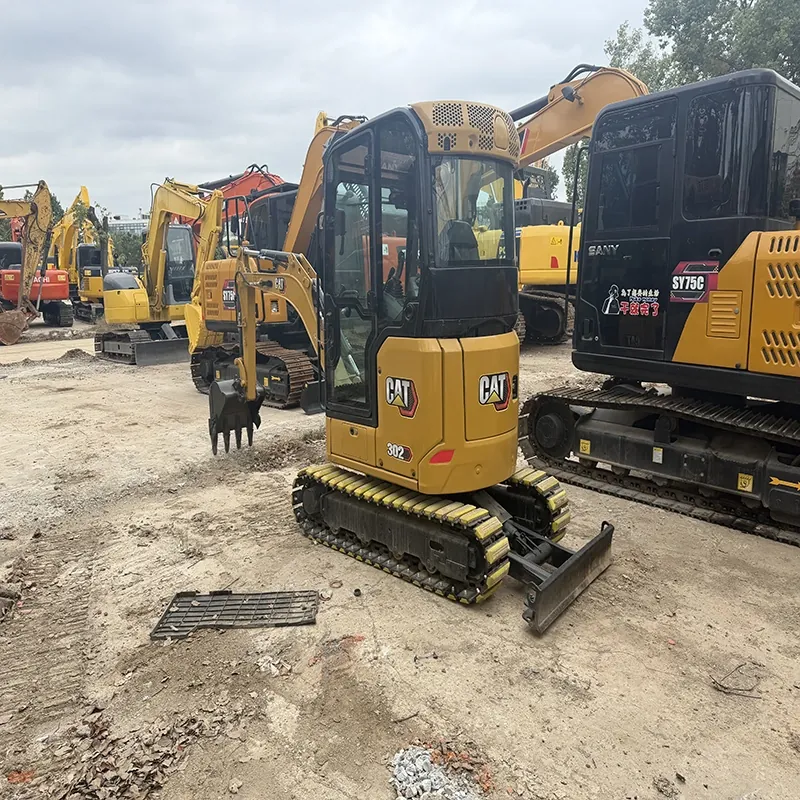
Respuesta rápida para compradores
Esta excavadora usada CAT 302 es una máquina de orugas para movimiento de tierras y obras generales. La ficha muestra un precio de oferta de USD $10,000, un peso de referencia de 2t y un cucharón de 0.05m3. Confirme el número de serie, las horas, el estado y el envío de la unidad antes del pago.
- Precio publicado
- USD $10,000
- Peso operativo de referencia
- 2t
- Capacidad de cucharón de referencia
- 0.05m3
Descripción del modelo
Esta excavadora usada CAT 302 es una máquina de orugas para movimiento de tierras y obras generales. La ficha muestra un precio de oferta de USD $10,000, un peso de referencia de 2t y un cucharón de 0.05m3. Confirme el número de serie, las horas, el estado y el envío de la unidad antes del pago.
Las secciones técnicas y las preguntas frecuentes se ofrecen en inglés para conservar la terminología original.
What a 2-ton mini excavator is built to solve
The CAT 302 is best understood as an access-focused digging and handling platform rather than a smaller version of a production excavator. Its commercial advantage appears when a larger machine cannot enter, travel or work without unnecessary disruption. Contractors may shortlist this class for garden construction, irrigation, cable and water services, drainage channels, fence and retaining-wall footings, narrow residential plots, farm maintenance and indoor work after the site has been assessed for ventilation and floor loading. Low nominal weight can reduce mobilization complexity, but it does not make every road vehicle, trailer, floor or lawn suitable. Before comparing listings, measure the narrowest gate, passage width, overhead clearance, turning area and working envelope. Record the normal trench depth and width, material type, spoil-placement location and the heaviest routine lift. Consider whether the blade can be positioned for stability and whether the upper structure has enough clearance throughout the planned swing. These details reveal whether the buyer needs this class, a smaller micro machine, a zero-tail-swing configuration or more reach and capacity. The actual track setting, canopy or cab, arm, bucket and counterweight on the offered unit control final suitability.
Measure access and ground pressure before selecting a unit
A compact excavator only delivers its access advantage when machine width, track arrangement, surface protection and ground support match the route and work area. Create an access drawing instead of relying on a gate measurement alone. Include posts, handles, walls, roof edges, steps, slopes, buried services and the space needed to turn after entry. Ask the seller for measured width in each available track position and confirm whether the undercarriage is fixed or adjustable on the actual machine; do not infer this from a similar listing. Measure height to the highest fixed point and note whether a canopy, beacon or other component can be altered safely and legally. On finished paving, lawns or suspended slabs, total weight is only the beginning. Track width, contact area, travel direction, turning method and temporary protection influence surface loading and damage. A structural professional should approve work on floors or other load-sensitive areas. For soft ground, evaluate flotation, slope, water and the risk of losing stable support during digging. Plan an escape route and spoil location before excavation begins. These checks answer a common buyer question—will it fit?—with dimensions and site conditions rather than a generic compact label.
Match digging range and bucket choice to the task
The 0.05m3 bucket entry helps classify the machine, but trench geometry, soil, reach and attachment dimensions determine whether it can complete the work efficiently. Start with the trench or foundation profile: required depth, width, side clearance, spoil distance and any need to dig beside an obstacle. A general bucket may be useful across many jobs, while narrow trenching, grading, clay, roots or rocky material can call for a different tool. Ask for current images of the fitted bucket and record its width, visible capacity markings, tooth condition, side wear and pin dimensions. Capacity does not equal payload. Dense or sticky material changes fill factor and stability, and operators must remain within the correct limits for the configuration and working radius. Consider cycle efficiency at the real site: frequent repositioning, restricted swing, hand finishing and service avoidance can occupy more time than the digging stroke itself. If lifting pipes, covers or landscaping materials is expected, consult the serial-appropriate load information and local lifting requirements rather than assuming nominal machine weight establishes safe capacity. The goal is not to select the largest possible attachment, but the tool that lets the compact carrier work predictably without creating avoidable wear or instability.
Separate catalog labels from the exact machine history
Serial identity should connect the specification source, current media, meter display, inspection report, quotation and logistics record. Request a clear identification-plate photograph and a wider image showing its mounting location. The quotation should repeat that identity and the complete designation used on the plate. A continuous video can begin at the plate, move around the whole machine, show the monitor and attachments, and then continue into the operating test. This makes it easier to detect accidental mixing of photographs from different assets. The site’s 900 entries are useful search filters, not automatic proof of machine history or lifetime operating hours. Ask which documents, plate information or records support the manufacture year and what the meter reading represents. Compare wear across joystick grips, pedals, blade pins, bucket linkage, tracks and body panels with the reported history, while recognizing that appearance alone cannot calculate hours. Service records are valuable only when genuinely available and connected to the same identity. If data remains unsupported, mark it as unknown in the valuation rather than converting it into a firm claim. This evidence discipline protects both search quality and the commercial decision.
Cold-start, engine and cooling checks for low-load machines
Mini excavators can spend substantial time idling or working intermittently, so the test should examine starting, warm response and cooling behavior across more than a short demonstration. Ask for a continuous recording that begins before start-up and shows the monitor, exhaust area and engine compartment. Note ambient conditions, cranking time, warning indicators, idle stability, sound and visible exhaust behavior without attempting a remote diagnosis. Inspect for active oil, fuel or coolant leakage, damaged hoses, loose mounts, poor wiring and debris around the cooling package. Recent cleaning is not automatically a concern, but areas that appear freshly washed should be observed again after warm operation. Exercise the hydraulics long enough to reach a representative temperature and watch the gauge during repeated digging-style movements, travel and blade use. A machine that runs smoothly at idle may respond differently under load. Ask about service intervals and available records, but do not treat undocumented statements as completed maintenance. Where symptoms or purchase value warrant deeper testing, use a qualified technician for diagnostic checks, fluid sampling or compression-related assessment under correct procedures. Turn any finding into a repair estimate using parts and labor costs at the destination.
Hydraulics and auxiliary circuits for buckets, breakers and augers
A useful hydraulic test covers warm combined functions and confirms that any auxiliary circuit is configured for the tool the buyer plans to use. Cycle boom, arm, bucket and blade through their usable ranges, then combine functions while the oil is warm. Observe delay, hesitation, drift, unusual noise and changes between cold and warm behavior. Inspect cylinder rods for scoring or corrosion and check glands, hoses, valve areas, pump compartment and swivel region for fresh leakage. Measure movement at attachment pins rather than describing it only as acceptable. If the machine is expected to run a breaker, auger, compactor or grapple, identify the installed pipework, controls, coupler and return arrangement. Visible auxiliary lines do not prove that flow, pressure, direction or filtration suits a particular attachment. Match tool requirements to serial-specific machine information and arrange qualified adjustment or testing when needed. Demonstrate the circuit safely with an appropriate attachment if possible, recording test conditions. Avoid untrained stall tests or improvised pressure checks. A detailed auxiliary assessment is particularly valuable on compact equipment because attachment versatility may be a major reason for buying it, and incomplete plumbing can create an unexpected conversion expense after delivery.
Inspect slew movement, boom offset, blade and working linkage
Compact machines rely heavily on their blade and articulated digging equipment, making joint wear and controlled movement central to both accuracy and resale value. Check the bucket, arm, boom foot, any offset or swing mechanism, blade arms and cylinder connections. Ask the inspector to demonstrate movement from useful camera angles and measure visible play where a repeatable method is available. Look for missing retainers, dry joints, distorted brackets, damaged grease points, uneven pin wear and contact marks that suggest misalignment. Inspect boom, arm, mounts, upper frame and crawler frame for cracks, added plates, unusual welds, heat marks or paint differences. Observations should be photographed in context and evaluated professionally; a visible repair is not automatically unsafe, and fresh paint is not evidence of sound structure. Raise and lower the blade on level ground, observe holding behavior and check its cutting edge and corners. During safe swing operation, listen for unusual sound and check controlled stopping in both directions. Any slew-ring movement requires a suitable measurement procedure rather than a guess from video. Translate linkage and structural findings into parts, machining, welding, labor and downtime at the buyer’s location before comparing prices.
Rubber tracks, rollers and travel-system inspection
Track condition affects access, surface protection and near-term cost, while a travel test can expose side-to-side differences that still photographs cannot show. Photograph both complete track frames, then capture tread, edges, internal cords where visible, sprockets, idlers, rollers, tension and adjuster areas. Look for deep cuts, missing tread, exposed reinforcement, uneven wear, damaged guides, leaking rollers and material packed tightly around the frame. Confirm whether rubber or steel tracks are fitted and whether alternative components are included in the sale. Replacement-track appearance alone does not establish the condition of rollers, sprockets or final drives. On suitable level ground, travel forward and backward, steer in both directions and observe whether one side is slower, noisier or less controlled. Check for leakage around final-drive areas and record abnormal sounds from a safe position. If the undercarriage changes width, demonstrate extension and retraction after warm-up and inspect the mechanism for damage, contamination and leakage. Ask the destination supplier for component prices and availability. Because mini-excavator tracks may be replaced more often than major structure, an honest wear allowance can be more useful than rejecting an otherwise suitable unit for cosmetic track condition.
Operator station, controls and site-safety considerations
Visibility, access, control response and protective equipment influence whether a compact machine can work safely in close proximity to people and property. Inspect the seat, restraint, joysticks, travel controls, pedals, monitor, warning lights, horn, work lights, mirrors, windows and wipers where fitted. Check steps, handholds and floor condition because operators may enter and exit frequently on utility or landscaping jobs. If the unit has a cab, test ventilation, heating and air conditioning under stated conditions. If it has a canopy, inspect its structure and mounting points for damage or modification. Confirm that controls return normally and that the safety lockout behaves correctly, using a trained operator and the relevant instructions. Mini excavators often work near buildings, buried services, workers and customers, so plan exclusion zones, spotter communication and service-location procedures. The buyer must determine the destination’s requirements for operator protection, alarms, guarding, lighting and road or trailer use. Do not assume equipment present in a photograph satisfies local regulation. Record missing or non-working items in the inspection and commercial documents so repairs can be completed before the first job instead of being discovered during site induction.
Calculate ownership value for a small contractor or rental fleet
A compact machine earns its place through utilization, transport flexibility and attachment coverage, so evaluate cost per useful job rather than purchase price alone. Estimate how many days per month the machine can replace hired equipment or manual excavation and which attachments create additional work. Include realistic time for transport, setup, refueling, maintenance and tool changes. Build a readiness budget from the inspection: fluids, filters, hoses, pins, bushes, bucket wear parts, rubber tracks, rollers, electrical repairs and operator-station items. Price each item using destination parts, freight and labor. Then construct landed cost with machine price, included tools, inspection, origin haulage, preparation, loading, export services, ocean transport, insurance when requested, destination handling, taxes or duties, broker charges and final delivery. Keep confirmed quotations separate from contingencies. A cheaper listing may be poor value if it lacks the required auxiliary setup or needs immediate running-gear work; a cosmetically worn unit may be attractive when mechanical evidence is strong and appearance is not important. Also consider local technician familiarity, parts lead time and expected resale audience. This approach aligns the buying answer with how small equipment actually produces a return.
Transport, container planning and attachment packing
Compact dimensions may open more logistics options, but container or trailer suitability must still be confirmed from measured cargo values and route rules. Ask for overall length, width, height and weight in the exact transport configuration, including the fitted bucket, blade position, canopy or cab and any track-width setting. Provide those measurements to the freight partner rather than relying only on the 2t class reference. Confirm the machine’s ability to travel and steer safely during loading, the ramp or lifting method, lashing points and carrier requirements. If attachments travel separately, list every bucket, pin, hose, coupler and spare part and show how they will be secured and protected. Photograph the machine and accessories before loading and reconcile them against a packing record connected to the same serial identity. For inland movement, verify trailer payload, towing limits, braking, axle distribution, permits and operator licensing under local rules. International buyers should have the destination broker confirm current import eligibility, documents and charges before payment because requirements vary and change. A written logistics scope should identify who performs preparation, loading, port handling, ocean transport and destination delivery, preventing the phrase shipping included from hiding important exclusions.
A practical inquiry and acceptance workflow
The strongest inquiry states the job, access limits, attachment needs and evidence standard before requesting a unit-specific commercial offer. Send the destination country and port, narrowest access width, height restriction, ground or floor concern, trench dimensions, material type, preferred bucket or auxiliary tool and required delivery timing. Ask whether a specific serial-numbered machine is available and request its location, identity images, meter evidence, attachment list, known defects and current operating media. Define the inspection sequence: cold start, warm combined hydraulics, blade, swing, travel, adjustable-track function if present, leaks, linkage, structure and track condition. If independent inspection is needed, agree on access, tests, reporting format and costs. Request a written quotation that separates the machine, attachments, preparation, inland logistics, export charges and route-specific freight under a clearly named delivery term. Before deposit, verify beneficiary details through an independently confirmed business channel and put material promises in the commercial document. Acceptance should depend on four gates: the machine fits the measured site, evidence supports its condition, landed and readiness cost is understandable, and service or parts support is practical at the destination.
CAT 302 buyer FAQ
How much does this mini excavator weigh?
The website uses 2t as a class reference. Actual operating and transport mass can change with tracks, canopy or cab, arm, bucket and other equipment, so confirm serial-specific data and measured cargo values.
What bucket capacity is listed?
The catalog reference is 0.05m3. Verify the fitted bucket through current photographs, width, capacity markings and pin dimensions because a used unit may be offered with a different attachment.
What work suits a used CAT 302 mini excavator?
Common shortlist tasks include landscaping, utility and drainage trenches, small foundations, farm maintenance and restricted-access excavation. Final suitability depends on access, digging range, ground support, material and actual configuration.
Will it pass through a narrow gate?
Use measured machine width and a complete access survey. Confirm the actual track arrangement and allow clearance for posts, walls, roof edges, turns and safe working space rather than relying on a generic compact description.
Which wear points deserve special attention?
Inspect bucket and blade linkage, boom offset or swing joints where fitted, slew movement, cylinder rods, auxiliary lines, rubber tracks, rollers, sprockets, final-drive areas and structural mounts. Record measurements where possible.
Can it operate a breaker or auger?
Only after the exact auxiliary circuit, controls, coupler, flow, pressure and return arrangement are matched to the attachment. Visible hydraulic pipes do not by themselves confirm compatibility.
Can a 2-ton excavator be shipped in a container?
It may be possible, but suitability depends on measured dimensions, weight, loading method, attachment packing and carrier rules. Ask the freight partner to approve the exact transport configuration before payment.
What should an overseas buyer request before a deposit?
Request serial identity, current walk-around media, a cold-to-warm operating test, known defects, attachment list, inspection access and a written quotation that separates inclusions, preparation and route-specific logistics.
Related CAT excavators
- CAT 303E CR — 3.31t reference weight
- CAT 303.5 E — 3.72t reference weight
- CAT 304C CR — 4t reference weight
Solicitar datos de la unidad
Indique el puerto de destino, la cantidad y sus prioridades de inspección. Responderemos con datos de la máquina concreta.
Solicitar datos de la unidad · Solicitar pruebas de inspección por WhatsApp · sales@lihangusedmachinery.com