Inicio / Blog
Used Excavator Inspection Checklist: How to Inspect Before Buying
A practical used excavator inspection checklist covering identity, engine, hydraulics, undercarriage, structure, attachments, documents, remote video and pre-payment evidence.
July 26, 2026 · Buying Guide
El contenido técnico completo está disponible en inglés para conservar los términos originales.
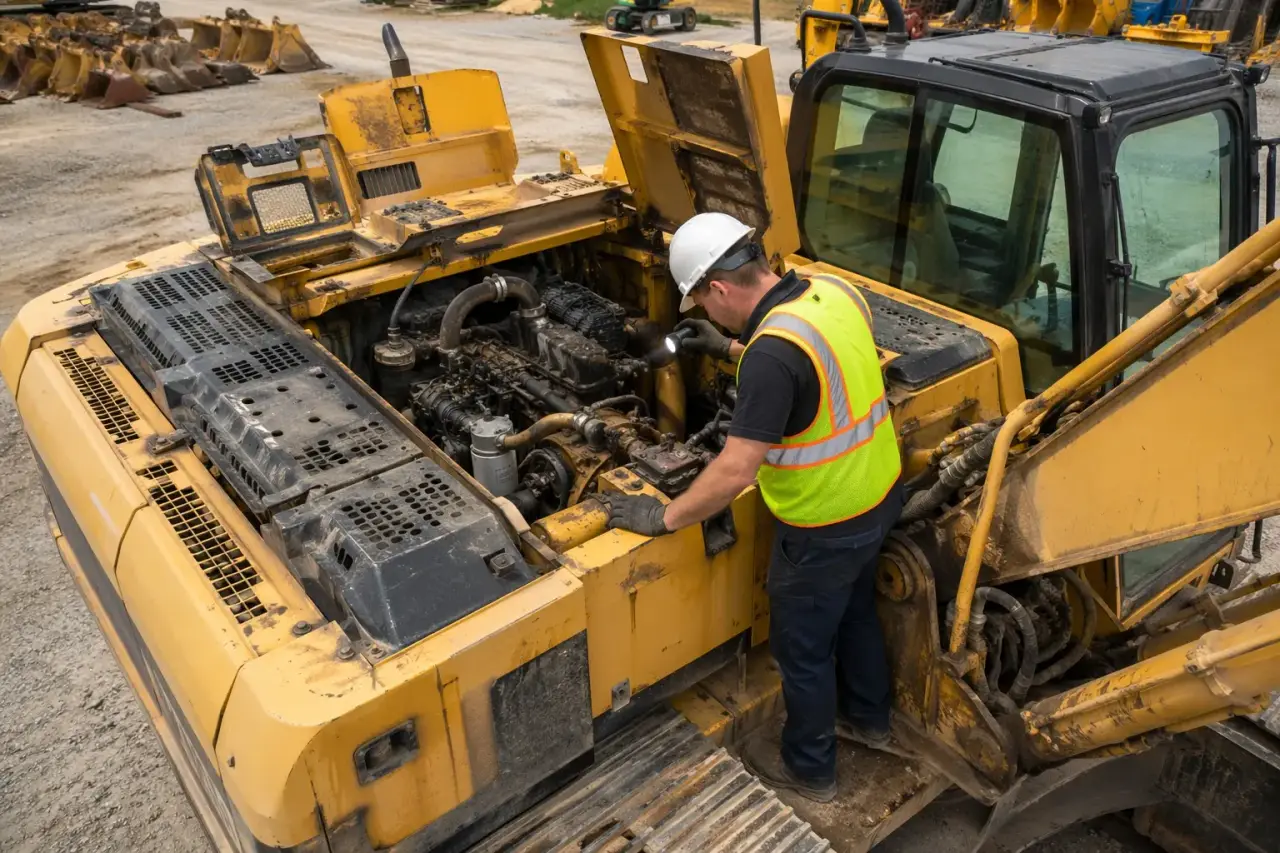
Searching for a used excavator inspection checklist is a good first step, but a checklist should lead to evidence rather than a quick pass/fail label. Use this guide to organize questions for the seller, photos and videos to request, and checks for a qualified inspector.
1. Confirm the machine identity before the technical inspection
Start with a clear photo or video of the serial plate, model designation, hour meter and current machine. Match those details across the quotation, photos, video, inspection report and commercial documents. If the seller cannot connect the evidence to the exact unit, treat the machine history and hours as unconfirmed.
- Serial plate and model designation
- Hour-meter display and available service or telematics evidence
- Current date or location reference in the video
- Attachment list and configuration
2. Engine and cold-start inspection
Ask to see a genuinely cold start when possible. Listen for abnormal knocks, unstable idle, excessive cranking or unusual whistle sounds. Observe exhaust color after startup and under load, inspect the cooling system and look for leaks. Check blow-by carefully, but do not diagnose engine condition from one visual sign alone.
- Cold start, idle stability and throttle response
- Exhaust color after warm-up and during operation
- Coolant, oil, fuel and hydraulic leaks
- Radiator, cooling package, belts and visible damage
3. Hydraulic system inspection
Inspect hydraulic hoses, fittings, pumps, cylinders and chrome rods for leaks, scoring or repairs. Test boom, arm, bucket, swing and travel functions at working temperature. Compare cycle behavior under load and listen for cavitation or abnormal pump noise. A qualified inspector should use the machine manual and appropriate test equipment for pressure conclusions.
- Boom, arm and bucket cycle response
- Swing speed, drift and abnormal noise
- Travel motors, straight-line travel and final drives
- Hydraulic oil condition and visible contamination
4. Undercarriage inspection
Undercarriage wear can materially change a used excavator’s total cost. Inspect track links, shoes, rollers, idlers, sprockets, track frames and adjusters. Request measurements or clear close-up photos rather than relying on words such as “good tracks” or “90% undercarriage.”
- Track link height, shoe condition and pin/bushing wear
- Roller, idler and sprocket wear
- Track-frame cracks, repairs and oil leakage
- Track tension and signs of de-tracking
5. Structure, work equipment and attachments
Check the boom, arm, bucket, quick coupler, pins and bushings for cracks, welding, excessive play or cylinder-rod damage. Look at the counterweight, house, handrails, steps, cab and glass. The correct inspection scope depends on the model and the job application.
6. Controls, cab and safety equipment
Operate joysticks, pedals, monitors, lights, alarms, heating or air conditioning and safety switches. Confirm that the machine starts and operates without unexplained warning lights. Record missing guards, damaged glass, unsafe steps or non-standard wiring in the inspection report.
7. Remote used excavator inspection
For a remote buyer, request a continuous walkaround that begins with the serial plate and hour meter, followed by a cold start, engine bay, hydraulic components, undercarriage close-ups, cab controls and operating cycles. Ask the seller to show the current date or a live call when practical. Remote evidence reduces uncertainty, but it is not the same as an independent inspection.
8. Documents and pre-payment evidence
Before payment, confirm the legal seller, contracting entity, payment beneficiary, machine identity, quotation validity, inspection scope, loading terms, shipping documents and destination requirements. Use a local customs broker for country-specific import classification and document advice.
9. Used excavator inspection checklist before payment
- Exact model, serial plate and hour-meter evidence received
- Current photos and operating video match the quoted machine
- Cold-start, engine and exhaust observations recorded
- Hydraulic, swing, travel and attachment functions checked
- Undercarriage photos or measurements reviewed
- Structure, pins, bushings, cylinders and repairs documented
- Cab, controls, alarms and safety items recorded
- Independent inspection arranged if required
- Price, loading, freight, insurance, documents and destination costs separated
- Contracting entity and payment beneficiary verified
For current equipment references, browse used excavators for sale or compare compact options in used mini excavators for sale. For a supplier identity and evidence workflow, read the used excavator supplier verification guide.
Used Excavator Inspection FAQ
What is the most important check on a used excavator?
Start by connecting the exact machine identity to all evidence, then inspect the engine, hydraulics and undercarriage. The priority can change with the model, application and known wear history.
How do I inspect a used excavator remotely?
Request a continuous walkaround that shows the serial plate, hour meter, cold start, engine bay, hydraulics, undercarriage, cab controls and operating cycles. Treat remote video as preliminary evidence and arrange independent inspection when needed.
How can I check used excavator hours?
Compare the hour meter with service records, telematics data where available, wear on pedals and controls, and the machine’s maintenance history. If the records do not align, mark the hours as unconfirmed.
Should I pay for an independent inspection?
An independent inspection can be valuable for a remote or high-value purchase. Agree the scope, acceptance criteria, access and cost responsibility before it is carried out.
What documents should I request before buying?
Request a quotation identifying the exact machine, serial-plate evidence, inspection scope, commercial terms, loading and shipping documents. Confirm destination-country requirements with a qualified customs broker.