Inicio / Blog
How to Inspect a Used Bulldozer Before Buying: Track, Blade, and Undercarriage Checklist
A practical checklist for reviewing track wear, undercarriage components and blade hydraulics on a used bulldozer. Use a qualified inspector for machine-specific conclusions.
July 27, 2026 · Inspection
El contenido técnico completo está disponible en inglés para conservar los términos originales.
The acquisition of heavy earthmoving equipment, particularly when buying a second hand bulldozer, represents one of the most significant capital expenditures for any construction or mining enterprise. In the current 2026 global economic climate, the demand for high-efficiency, reliable machinery has never been higher, making a rigorous used bulldozer inspection not just a best practice, but a critical business survival strategy. A bulldozer is the fundamental 'prime mover' on a job site; it sets the pace for every subsequent operation, from scraper loading to final grading. Consequently, the mechanical health of this asset directly dictates the profitability of your entire project lifecycle.
When you are navigating the market for pre-owned machinery, especially when sourcing from a specialized heavy equipment exporter in China, you must move beyond superficial aesthetics. A fresh coat of yellow paint can often mask deep-seated structural and hydraulic issues. This guide is designed to be your technical companion, providing a line-by-item bulldozer undercarriage checklist and an exhaustive deep-dive into the mechanical systems that define a machine's true value. By the end of this article, you will have the technical framework necessary to evaluate a bulldozer's condition with the same precision as a factory-trained engineer, ensuring your investment in our professional earthmoving solutions is backed by data, not guesswork.
1. The Undercarriage: The Financial Pulse of the Machine
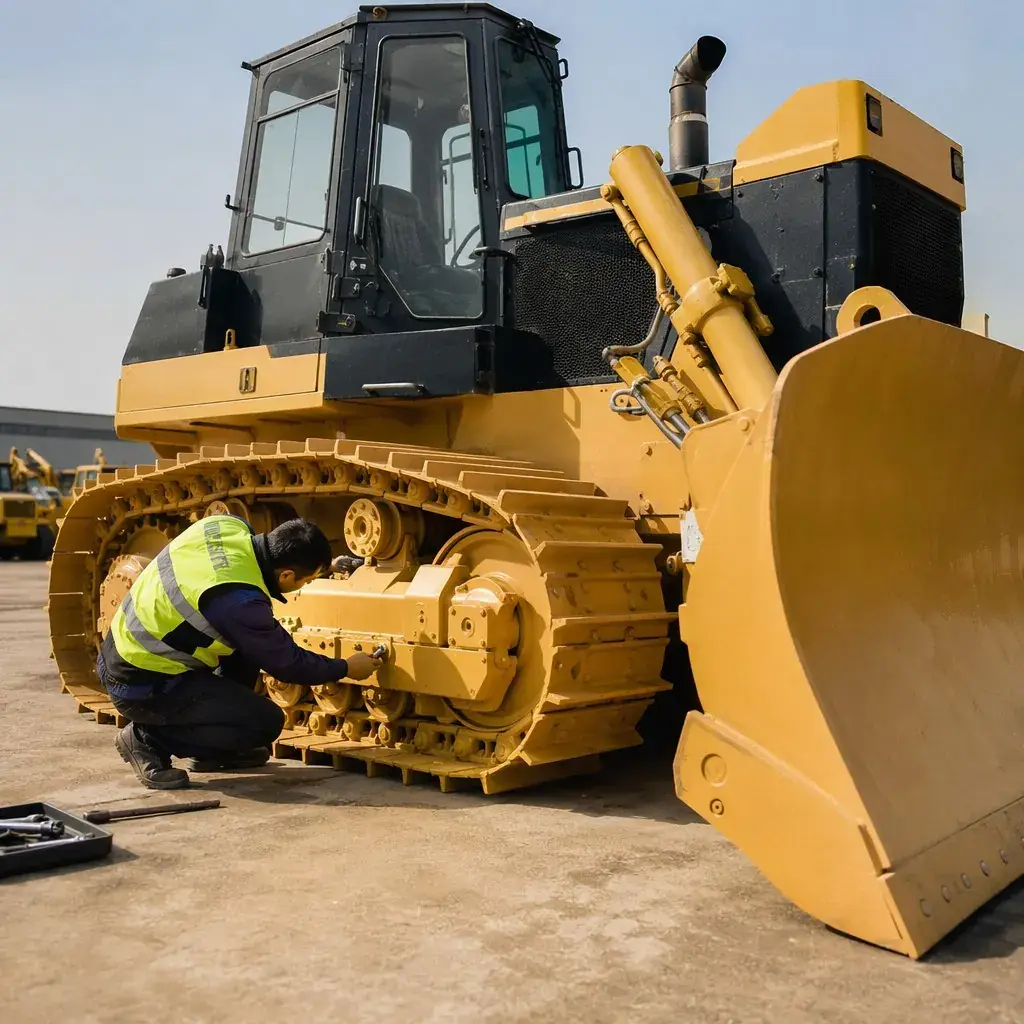
The undercarriage of a crawler bulldozer is its most expensive and wear-sensitive component, accounting for nearly 50% of the machine's lifetime maintenance costs. A thorough used bulldozer inspection must begin here. If the undercarriage is at 20% residual life, you are immediately looking at a massive reinvestment shortly after purchase.
Sprocket and Segment Wear
Examine the sprockets at the rear of the track frame. On a 95% new or well-maintained unit, the teeth should be rounded and consistent. If the sprocket teeth look sharp, or 'pointed' like a shark's tooth, it indicates that the bushings are worn and have elongated the track pitch. This misalignment creates high friction and accelerated wear. Feel the back side of the teeth; a sharp ridge suggests high-speed reverse operation in abrasive material, which is a red flag for fleet management quality. In high-performance mining dozers, the sprocket segments are replaceable; ensure that the mounting bolts are torqued to factory specifications and show no signs of stretching or shearing.
Track Links, Pins, and Bushings
The track chain is the soul of the machine's mobility. During your bulldozer undercarriage checklist, look at the internal side of the bushings. On sealed and lubricated track (SALT) systems, any signs of dry joints—indicated by excessive heat or a 'kinked' appearance in the track chain—suggest that the internal seals have failed. Use a caliper or a professional wear gauge to measure the height of the track links. A reduction in link height brings the pin bosses closer to the rollers, leading to structural interference and vibration. If you notice 'scalloping' on the link surface, it indicates that the machine has been operating on hard rock surfaces without sufficient track tension adjustment.
Rollers and Idlers: The Silent Support System
Check for oil leaks around the roller seals. A leaking roller will eventually seize, causing the track chain to slide across the stationary metal, creating a flat spot on the link. Ensure the front idlers are properly aligned and that the idler brackets are not excessively worn or cracked. Misaligned idlers will cause the machine to track to one side, putting uneven stress on the final drives. Furthermore, the idler wear surfaces should be smooth; any 'pitting' suggests cavitation or material contamination in the lubrication oil. In 2026, many Pro-series dozers utilize heavy-duty life-time lubricated rollers; verify that the end caps are secure and show no signs of impact damage from large rocks.
Track Tension and Grouser Depth
Proper track tension is vital for minimizing wear on the entire undercarriage system. A track that is too tight will put excessive load on the bushings and idlers, while a track that is too loose will jump teeth on the sprocket or derail during turns. Measure the grouser depth—the vertical height of the metal bars on the track shoes. Grousers provide the 'bite' needed for traction; once they are worn down to 30% of their original height, the machine's pushing force is significantly compromised, leading to increased fuel consumption and longer cycle times.
2. The Blade and Cutting Edge: Precision in Earthmoving
The bulldozer blade hydraulics and structural linkage determine the precision of your grading work. A bulldozer that cannot maintain a level blade is useless for final-grade contracts and heavy-duty stripping.
Cutting Edges and End Bits
Inspect the replaceable cutting edges at the bottom of the blade. They should have significant wear material remaining. If the wear has reached the base metal of the blade itself, you are looking at expensive structural welding repairs. Check the end bits—the pointed edges at the corners—for signs of heavy impact or rounding, which reduces the dozer's ability to 'bite' into compacted subgrade. A 95% new machine will have factory-sharp end bits that allow for high-penetration digging in frozen or rocky soil.
Tilt and Lift Cylinders: Hydraulic Integrity
The bulldozer blade hydraulics must be evaluated for internal and external leaks. Examine the chrome rods of the lift and tilt cylinders; any nicks or scratches will quickly tear the seals, leading to pressure loss. During your used bulldozer inspection, cycle the blade to its maximum lift height and hold it. Any 'drift'—the unintended descent of the blade while the controls are neutral—indicates internal seal bypass in the control valve or the cylinder itself. A healthy hydraulic system should exhibit zero visible drift over a 10-minute period.
C-Frame and Trunnion Pins
The trunnions are the massive pivot points where the blade frame connects to the track frame. Any visible movement or 'slop' in these joints during operation indicates that the pins and bushings need replacement. Excessive play in the blade linkage makes it impossible for the operator to hold a tight grade, significantly reducing productivity. During your bulldozer undercarriage checklist walk-around, have the operator apply downward pressure on the blade while you observe the trunnion balls for movement. Any gap larger than 1.5mm suggests that the bearing liners are nearing the end of their service life.
3. Powertrain and Transmission: The Heart of the Workhorse
A 95% new bulldozer should have an engine and transmission that respond instantly to load changes. The integration of bulldozer blade hydraulics with the engine's power curve is what separates elite machinery from mediocre units.
Engine Health Diagnostics
Start the engine from a cold state. A puff of white smoke that clears quickly is normal, but sustained black smoke indicates fuel system issues or a clogged air intake. Blue smoke is a serious concern, suggesting that oil is bypassing the piston rings or valve seals. Open the engine hood and check for 'blow-by'—excessive pressure coming from the crankcase breather. High blow-by is a primary indicator of internal engine wear that will eventually require a full overhaul. In modern 2026 diesel units, check the DEF (Diesel Exhaust Fluid) system for crystal buildup, which can lead to expensive sensor failures.
Transmission and Final Drive Performance
The transmission must engage smoothly in both forward and reverse across all gear ranges. Hydrostatic drive systems should be tested for 'stall speed' to ensure the pumps are delivering full pressure. Listen for high-pitched whining or grinding noises from the final drives (the gearboxes inside the sprockets). Final drive failure is often sudden and catastrophic, so check the magnetic drain plugs for metal shavings if the seller permits a fluid inspection. Technical transparency is why we provide detailed health audits for all our used heavy equipment. Ensure the braking system—whether wet-disc or hydrostatic—stops the machine instantly on a grade without 'creeping.'
4. Operator Environment and Digital Intelligence
In 2026, a bulldozer is as much a piece of digital hardware as it is a heavy-duty tool. The cabin should be a pressurized, low-noise environment that supports 10-hour shifts without fatigue. A used bulldozer inspection must include a full check of the electronic controls.
Digital Monitoring and Error Codes
Check the digital monitoring system for stored error codes. Any active 'Check Engine' or 'Hydraulic Pressure' alerts must be addressed before the machine leaves the yard. Modern dozers are often equipped with 3D grading systems (like Accugrade or Topcon); ensure the sensors and wiring harnesses are intact and that the software initializes without errors. A fully integrated 3D system can increase grading efficiency by 40%, making it a high-value asset in any pre-owned unit.
Ergonomics and Safety Systems
Ensure the ROPS (Roll-Over Protective Structure) is intact and free from aftermarket welds or structural cracks. The suspension seat should be fully adjustable and the joysticks should have 'zero-slop' response. Check the visibility from the operator's seat; large glass panels should be free from chips that could obstruct the view of the blade corners. Finally, verify that all safety alarms, including the backup alarm and fire suppression system (if equipped), are operational.
Conclusion: Data-Driven Decisions for Heavy Machinery Success
By following this bulldozer undercarriage checklist and performing a systematic used bulldozer inspection, you move from a position of uncertainty to one of technical authority. When you are buying a second hand bulldozer, you are investing in the future of your construction or mining projects. Selecting a machine with 95% new condition—backed by a 150-point technical audit—ensures that your capital is protected and your job site productivity is maximized. If you are ready to upgrade your fleet with verified, high-performance earthmoving solutions, explore our latest mining-grade inventory and take the first step toward a more profitable project future. Our commitment to global export excellence and technical transparency ensures your success on every site, every time.
Additional Technical Checklist Items: 1. Hydraulic Oil Analysis: Check for copper or iron particulates. 2. Radiator Core Integrity: Ensure no bent fins or external clogging. 3. Electrical Harness: Look for brittle insulation or bypassed fuses. 4. Fuel Tank Sump: Check for water or microbial contamination. 5. Pivot Shaft: Inspect for oil leaks and structural alignment.
5. Advanced Hydraulic System Diagnostics
While basic inspections focus on external leaks, a professional used bulldozer inspection must go deeper into the volumetric efficiency of the main hydraulic pumps. In the heavy machinery world, hydraulic performance is the primary driver of cycle times and pushing force. A 95% new bulldozer will maintain consistent pressure even under extreme thermal stress.
Hydraulic Pump Flow Analysis
In modern bulldozers, particularly Pro-series units from brands like Sany or Caterpillar, the hydraulic system utilizes variable displacement axial piston pumps. These pumps are designed to provide maximum flow only when required, thereby reducing fuel consumption. During your used bulldozer inspection, perform a 'stall' test: move the blade to its limit and hold the joystick. Listen to the engine—a healthy machine will slightly bog down as the pumps reach maximum relief pressure. If the engine doesn't respond, or if you hear a high-pitched cavitation noise, the pump is likely worn beyond its service life. This wear allows oil to bypass the internal pistons, significantly reducing the machine's pushing capacity when you are buying a second hand bulldozer.
Manifold and Control Valve Integrity
The control valve manifold is the 'brain' of the hydraulic distribution. Inspect the manifold blocks for signs of heat discoloration, which suggests that the system has been run at excessive pressures for extended periods. Check the pilot lines—the smaller hydraulic hoses that carry signals from the joysticks. Brittle or leaking pilot lines will cause jerky, uncoordinated blade movements, making precision grading impossible. In 2026, many heavy excavators and dozers incorporate electronic-over-hydraulic (EH) controls; verify that the wiring harnesses are secure and free from the abrasive wear caused by vibration.
6. Transmission Valve Calibration and Drive Power
The transmission of a bulldozer, whether it's a powershift or a hydrostatic drive, is subjected to immense torque loads. Evaluating this system is a critical component of any bulldozer undercarriage checklist and powertrain audit.
Powershift Transmission Engagement
For dozers with powershift transmissions, every shift should be crisp and instantaneous. 'Soft' or delayed shifting is a primary indicator of worn clutch packs or low control pressure. During your used bulldozer inspection, test the machine on an incline. Stop the dozer, engage the brakes, and then attempt to pull away in second gear. The machine should respond without slipping. If you experience a delay or a 'shudder,' the transmission is nearing a catastrophic failure point. When buying a second hand bulldozer, prioritizing transmission health can save you from a repair bill that often exceeds $20,000.
Hydrostatic Drive Balancing
Many modern compact and medium-sized bulldozers utilize dual-path hydrostatic drives. This system allows for independent control of each track, enabling power turns and superior maneuverability. Ensure that the machine tracks in a perfectly straight line on level ground. If it pulls to one side, it indicates that the drive pumps are not balanced or that one drive motor is losing efficiency. This imbalance puts uneven stress on the bulldozer undercarriage, accelerating wear on the sprockets and final drives of the weaker side.
7. Frame Alignment and Pivot Shaft Health
The structural backbone of a bulldozer consists of the main frame, the track frames, and the pivot shaft. Any misalignment here will lead to chronic undercarriage failures and poor grading performance.
Main Frame Stress Analysis
Clean the main frame near the trunnions and the pivot shaft mounts. Look for hairline cracks in the paint, which often hide structural stress fractures in the steel. A 95% new machine will have factory-perfect welds. If you see 'bird-poop' welds or oversized reinforcement plates, it indicates a history of severe impact or overloading. This is especially common in machines used for rock stripping or heavy demolition. As part of a thorough used bulldozer inspection, verify that the track frames are parallel to the main frame; even a 2-degree misalignment can reduce undercarriage life by 30%.
Pivot Shaft Seal Integrity
The pivot shaft allows the track frames to oscillate while keeping them anchored to the main frame. Check the seals on the pivot shaft for oil leaks. A leaking pivot shaft seal allows material to enter the bushing, leading to rapid wear and structural slop. In heavy-duty mining dozers, this shaft is a critical load-bearing component; any significant play here will cause the machine to vibrate excessively at high travel speeds.
8. Cooling System Efficiency in Tropical Climates
Bulldozers generate massive amounts of heat, both from the high-torque engine and the high-pressure hydraulic system. For machinery exporters in China, ensuring that equipment can operate in the tropical climates of Southeast Asia or Africa is a top technical priority.
Radiator and Oil Cooler Inspection
Inspect the radiator core for bent fins or external clogging from dust and debris. Use a flashlight to check the gap between the radiator and the hydraulic oil cooler. If this area is packed with 'material,' the machine will overheat under load, even if the coolant level is correct. During your used bulldozer inspection, check the fan belt tension and the operation of the reversible fan (if equipped). Reversible fans are a high-value Pro-series feature that allows the operator to blow debris out of the cooling package without leaving the cabin.
Coolant Analysis and Thermal Stability
Look at the condition of the engine coolant. It should be bright and free from oil slicks or rust particulates. An oil slick in the coolant suggests a failing oil cooler or a cracked cylinder head, both of which are deal-breaking issues when buying a second hand bulldozer. After running the machine for 30 minutes, use an infrared thermometer to verify that the temperature across the radiator core is uniform; 'cold spots' indicate internal scaling or blockage that will lead to overheating during multi-shift operations.
9. Global Export Documentation and Customs Compliance
Technical excellence is only half of the equation when buying a second hand bulldozer internationally. The administrative and logistical process is equally vital for ensuring that your machine arrives on-site without legal delays.
Serial Number and Engine Plate Verification
Every professional used bulldozer inspection must include a verified audit of the serial numbers on the frame, engine, and transmission. These numbers must match the original manufacturer's build sheet. Our technical team ensures that all serial numbers are authentic and have not been tampered with, which is critical for obtaining the correct import permits in countries with strict age and emission regulations. We provide high-resolution photographs of all identification plates as part of our technical transparency package.
Export Certification and Bill of Lading Preparation
Navigating the customs requirements of over 50 countries requires deep logistical mastery. We handle the preparation of all mandatory documentation, including the Commercial Invoice, Packing List, and the specialized Certificates of Origin (CO) required for preferential duty rates in Southeast Asia and Africa. Furthermore, we ensure that the machine is professionally cleaned to meet the stringent quarantine standards of Australia and North America. By choosing our certified used inventory, you are not just getting a machine; you are getting a global logistics partner dedicated to your project's success.
10. Comparison: Crawler vs. Wheeled Dozers for Your Site
As part of your procurement strategy, it's essential to confirm that a crawler bulldozer is indeed the best tool for your specific application. While this guide focuses on the bulldozer undercarriage checklist for crawler units, understanding the trade-offs is key to long-term ROI.
Flotation and Traction Advantage
The primary benefit of a crawler dozer is its low ground pressure and massive traction. For soft ground conditions, swampy terrains, or steep mountain grades, the wide steel or rubber tracks provide stability that wheeled units cannot match. However, if your project involves long-distance travel on paved surfaces or very abrasive granite where track wear would be excessive, a wheeled unit might be more cost-effective. Our technical advisors can help you evaluate your site conditions to ensure that a 95% new Sany or CAT crawler dozer is the most profitable choice for your fleet.
Versatility in Attachments
Modern crawler bulldozers in the 2026 market are more than just pushers. They are multi-tools. When buying a second hand bulldozer, consider the attachment options: from rear-mounted rippers for rock-breaking to winches for forestry work and 6-way PAT (Power-Angle-Tilt) blades for precision finish grading. A machine with factory-installed auxiliary hydraulics and a reinforced rear frame is a higher-value asset because it can be adapted to changing project requirements without expensive aftermarket modifications.
Summary Checklist for Professional Procurement
- Engine: Zero blow-by, stable thermal curve, DEF system health.
- Hydraulics: Main pump pressure stall test, zero blade drift.
- Transmission: Crisp gear engagement, balanced hydrostatic tracking.
- Undercarriage: Link height >80% of new, sprocket teeth rounded.
- Structure: Zero cracks on C-frame, parallel track frames.
- Logistics: Verified serial numbers, clean export documentation.
Following this used bulldozer inspection framework moves you from a position of risk to a position of strength. Heavy machinery success is built on a foundation of technical transparency and data-driven maintenance. If you are ready to scale your operation with factory-grade pre-owned assets, explore our latest heavy equipment inventory. We don't just sell machinery; we deliver documented reliability and global support to ensure your business stays profitable on every job site, every day. Partner with us for your next procurement and experience the difference that professional engineering audits bring to your construction and mining future.
Frequently Asked Questions: Used Bulldozer Inspection
What is the most expensive part of a used bulldozer to repair?
The undercarriage is typically the most expensive component, accounting for up to 50% of lifetime maintenance costs. A complete undercarriage overhaul for a 20-ton dozer can cost between $10,000 and $18,000.
How can I tell if a bulldozer has been used in rock or sand?
Look at the grousers (track bars). Rounded or heavily chipped grousers suggest rock work, while grousers that are sharply 'thinned' out often indicate sand or abrasive soil operation.
What does blue smoke from the exhaust indicate?
Blue smoke suggests that the engine is burning oil, which could be due to worn piston rings, valve guides, or a failing turbocharger seal. This is usually a sign of an imminent engine rebuild.