Home / Industry Insights
Used Mini Excavator Buying Guide: 3.5 vs 5.5 Ton Models for Remote Buyers
A Reddit-informed guide to choosing and remotely inspecting a used 3.5-to-5.5-ton mini excavator, with practical checks for job fit, slew play, hydraulics, undercarriage and machine identity.
August 25, 2026 · Mini Excavator Guide
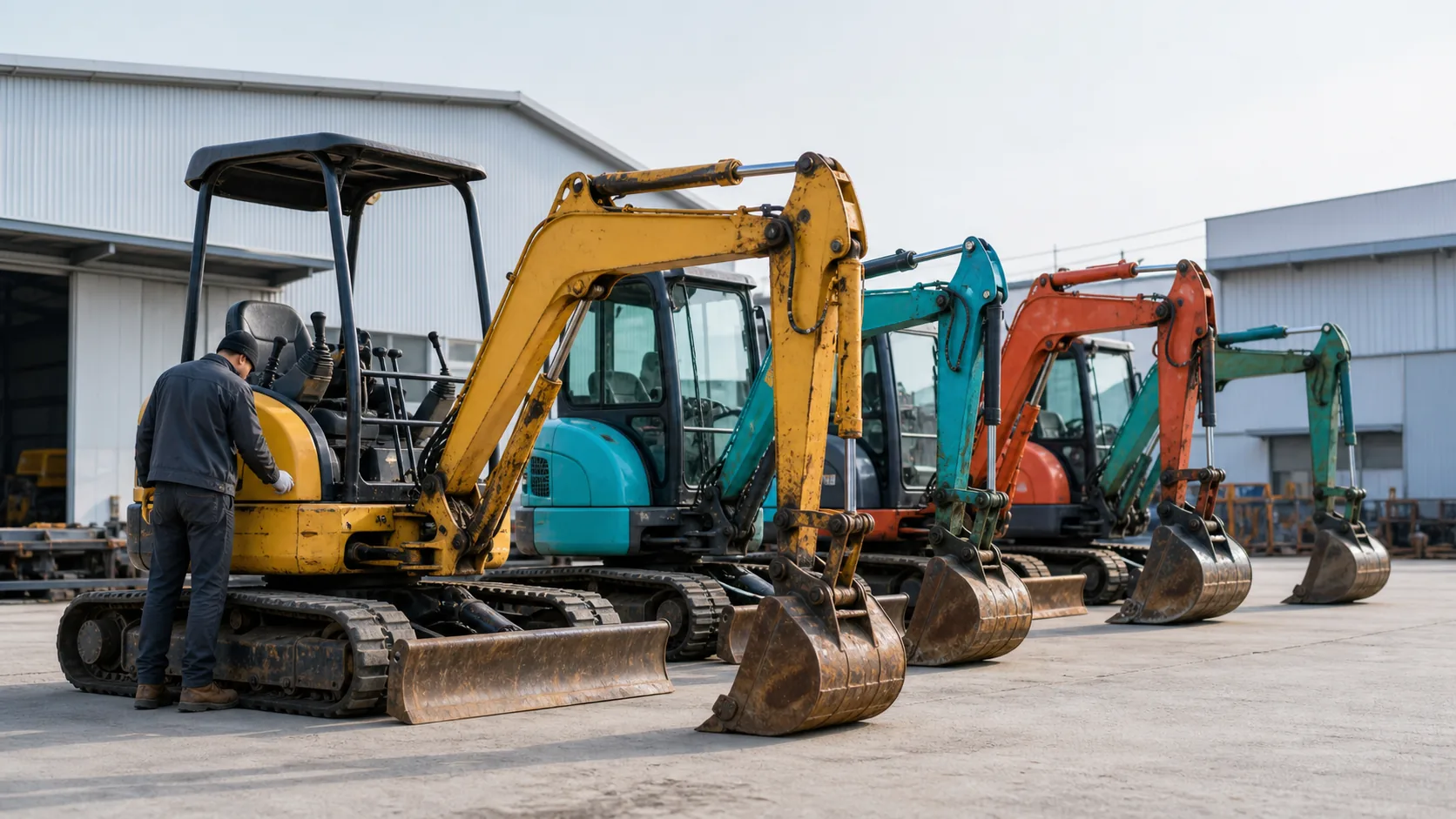
Remote buyers often begin their search with a simple question: should I choose a 3.5-ton or a 5.5-ton mini excavator? Recent Reddit discussions about importing a used 3.5-to-5-ton excavator, choosing a first mini excavator, and checking a used machine for plumbing work show that the real decision is broader. Buyers repeatedly ask about transport, parts support, hours, attachments, slew-ring wear, pins, hydraulic condition and the reliability of remote evidence.
This guide converts those recurring questions into a practical buying framework for four models listed in our catalog: CAT 303.5 E, CAT 305.5 E2, Kobelco SK55SR and Komatsu PC55MR. Reddit comments help identify useful questions, but they are not proof of a machine's condition or a substitute for the manufacturer manual and a qualified independent inspection. Specifications also vary by series, market and configuration, so verify every claim against the exact serial number.
Choose the operating class around the work, access and transport plan before comparing individual machines.
3.5 ton vs 5.5 ton mini excavator: start with the job
A compact machine is valuable when gate width, trench access, surface protection or trailer limits are the controlling factors. A heavier mini excavator generally offers a more stable working platform and may handle deeper excavation or heavier attachments more comfortably, but it can require a different trailer, tow vehicle, permit or loading arrangement. Published operating weight is not the same as transport weight: buckets, quick couplers, thumbs, fuel and additional attachments change the load.
Before requesting quotations, document the narrowest access point, expected trench depth, spoil density, lifting requirement, common attachment and local transport limit. A machine that fits these constraints is more useful than a larger unit that cannot reach the work—or a smaller unit that must continually operate near its limits.
CAT 303.5 E: compact access should be the reason to shortlist it
A buyer searching for a used CAT 303.5 E mini excavator for sale is typically prioritizing a compact footprint for landscaping, utilities or confined residential work. Confirm the actual machine width, tail-swing arrangement and attachment package instead of relying on the model family alone. Measure the access route and compare it with the machine in its transport configuration.
During inspection, test the blade, travel motors, swing and all digging functions after warm-up. Look at rubber-track cuts or steel-track wear, final-drive leakage and pin movement. Low displayed hours do not prove light use: the condition of pedals, controls, bucket linkage and service points should tell a consistent story.
CAT 305.5 E2: more capability brings different transport questions
The used CAT 305.5 E2 mini excavator for sale may suit buyers who need more stability or attachment capacity than a smaller compact machine can provide. The trade-off is that machine weight, bucket selection and trailer capacity become more important. Request the exact configuration and obtain a written shipping or transport plan before treating it as interchangeable with a 3.5-ton machine.
Test combined boom, arm, bucket and swing movements when the hydraulic oil is warm. Slow response is a symptom, not a diagnosis; filters, controls, relief settings, pump condition, engine output and other causes require systematic testing by a qualified technician. Never improvise high-pressure hydraulic tests.
Kobelco SK55SR and Komatsu PC55MR: compare the individual unit
A used Kobelco SK55SR excavator for sale and a used Komatsu PC55MR excavator for sale can both appear on a 5-to-6-ton shortlist. Do not select between them using reputation alone. Confirm which dealer or independent workshop at the destination can source filters, seals, undercarriage parts, electronic support and model-specific components.
For each actual unit, compare cold-start behavior, hydraulic response, structural repairs, maintenance evidence and undercarriage measurements. The better purchase is the machine whose condition and identity can be documented and whose support network matches the destination—not automatically the machine with the cleaner paint or lower hour-meter reading.
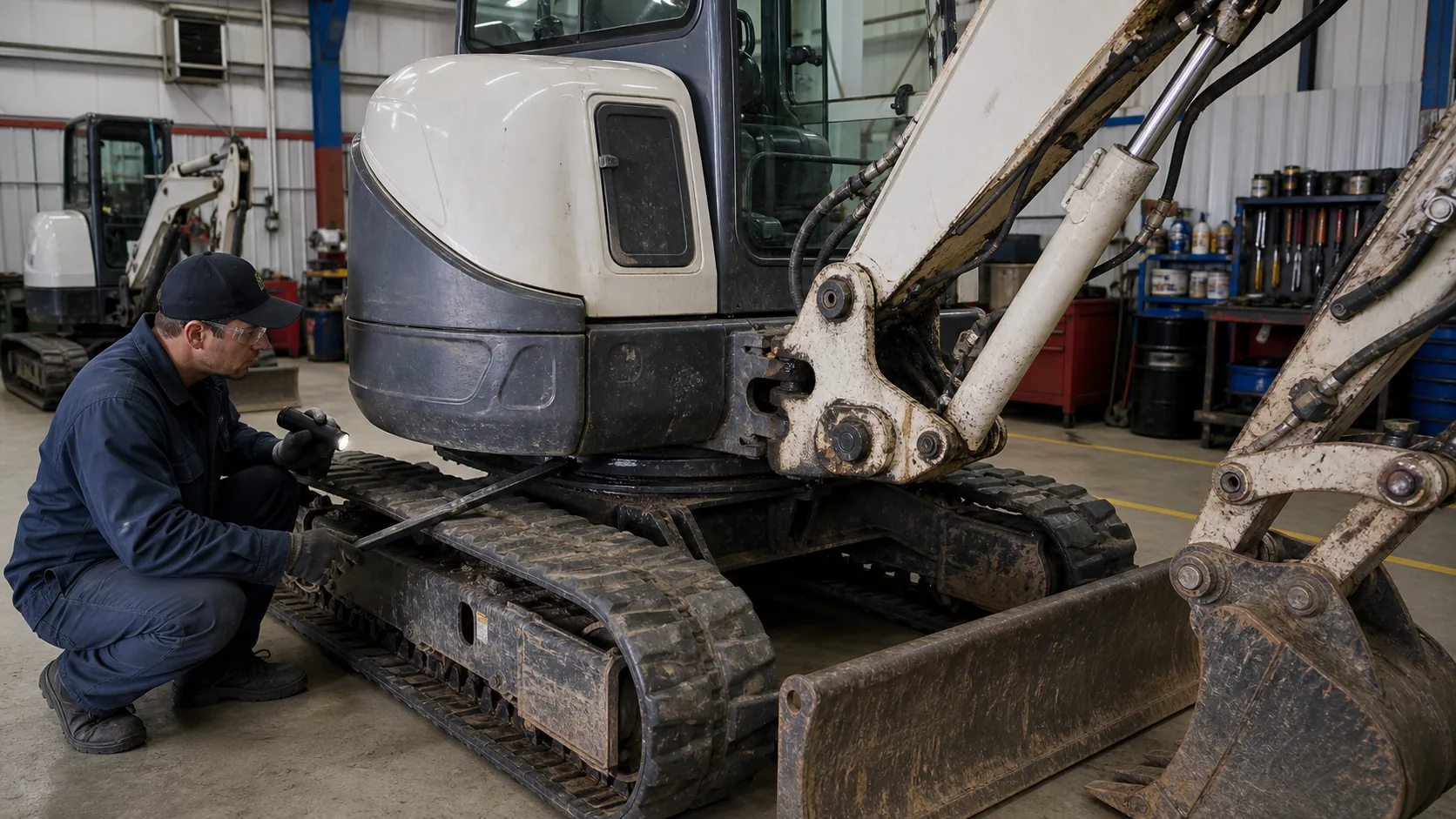
Slew movement, pin play and undercarriage wear should be measured and interpreted against the correct service information.
The inspection points Reddit buyers keep returning to
1. Cold start and engine condition
Ask the seller not to preheat the machine before recording. The video should show the ambient machine, hour meter, start-up and exhaust behavior in one continuous sequence. Observe warning lights, unusual noise, fluid contamination and visible leakage. Smoke alone is not a complete diagnosis; temperature, fuel, engine type and duration matter.
2. Slew ring, boom foot, pins and bushings
Excessive play can affect accuracy and lead to substantial repair work. Ask for close views while a trained operator safely loads and unloads the linkage. The inspector should distinguish normal clearance from wear using the correct manual and measurement method. Also inspect cylinder rods for scoring, leakage and damage that can quickly compromise new seals.
3. Undercarriage and final drives
Inspect both sides, not only the side facing the camera. Request views of track condition, sprockets, idlers, rollers, track frame and final-drive areas. Uneven wear can point to operating conditions or alignment concerns. Replacement cost varies widely by model and location, so obtain a destination-market parts quotation before agreeing on value.
4. Hydraulics when warm
A short idle video proves little. Ask for a realistic work cycle followed by travel in both directions, full swing, blade operation, cylinder-hold observation and repeatable combined functions. Record any delay, drift, unusual noise or performance change. Fluid sampling and pressure or flow tests can add evidence where the transaction value justifies them.
5. Attachments and auxiliary circuits
Reddit buyers frequently mention thumbs, but the useful attachment depends on the job. Confirm bucket widths, coupler type, auxiliary-flow requirements, hydraulic line condition and whether every included attachment is shown in the quotation and packing list. Compatibility should be checked against the exact machine configuration.
Remote verification: connect the report to the exact machine
A polished inspection PDF is not enough if it cannot be tied to the machine being shipped. Request an uncut video that moves from the serial/PIN plate to the complete excavator, then shows the hour meter, cold start and operating cycle. Match the identity across the quotation, inspection report, loading photographs and shipping documents. If independent inspection is required, agree in writing on the scope and who appoints and pays the inspector.
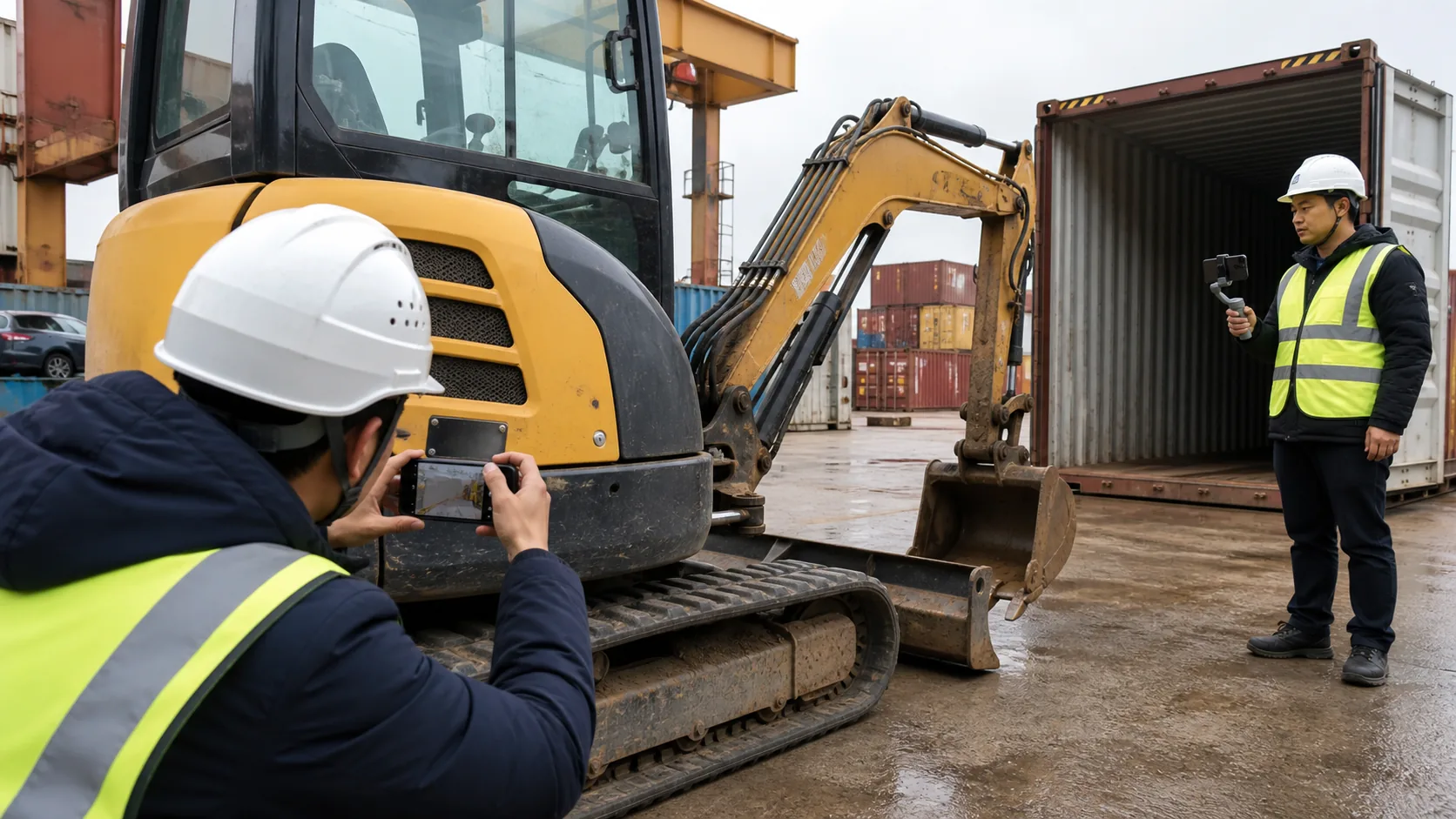
Machine identity, condition evidence and shipping paperwork should all refer to the same unit.
Remote buyer request checklist
- Serial/PIN plate photograph and exact model configuration.
- Continuous cold-start video with monitor and exhaust visible.
- Warm operating video covering travel, swing, blade and combined digging functions.
- Close-ups and measurements for slew, pins, bushings and both undercarriage sides.
- Engine bay, fluid, hose, cylinder-rod and final-drive views.
- Maintenance records or controller data where genuinely available.
- Written attachment list, transport dimensions and estimated shipping configuration.
- Independent inspection scope, commercial terms and document-matching procedure.
Conclusion: buy the evidence, not only the size badge
The choice between a used 3.5-ton and 5.5-ton mini excavator should begin with access, workload, attachment and transport requirements. The final selection should then depend on evidence from the individual unit. Reddit is useful for discovering questions that experienced owners ask, but condition conclusions belong to a qualified inspector working from machine-specific data.
Browse our used excavator catalog to compare available mini excavators. Before making a commercial decision, request current photos, videos, serial information, inspection options and a machine-specific quotation; inventory, year, hours and configuration must be reconfirmed for the exact unit.