Home / Industry Insights
How to Verify a Used Excavator Before Buying Remotely
Buying a used excavator from a distance? Use a machine-specific photo, video, identity and inspection checklist to catch stale listings and hidden condition risks before payment.
October 30, 2026 · Buying Guide
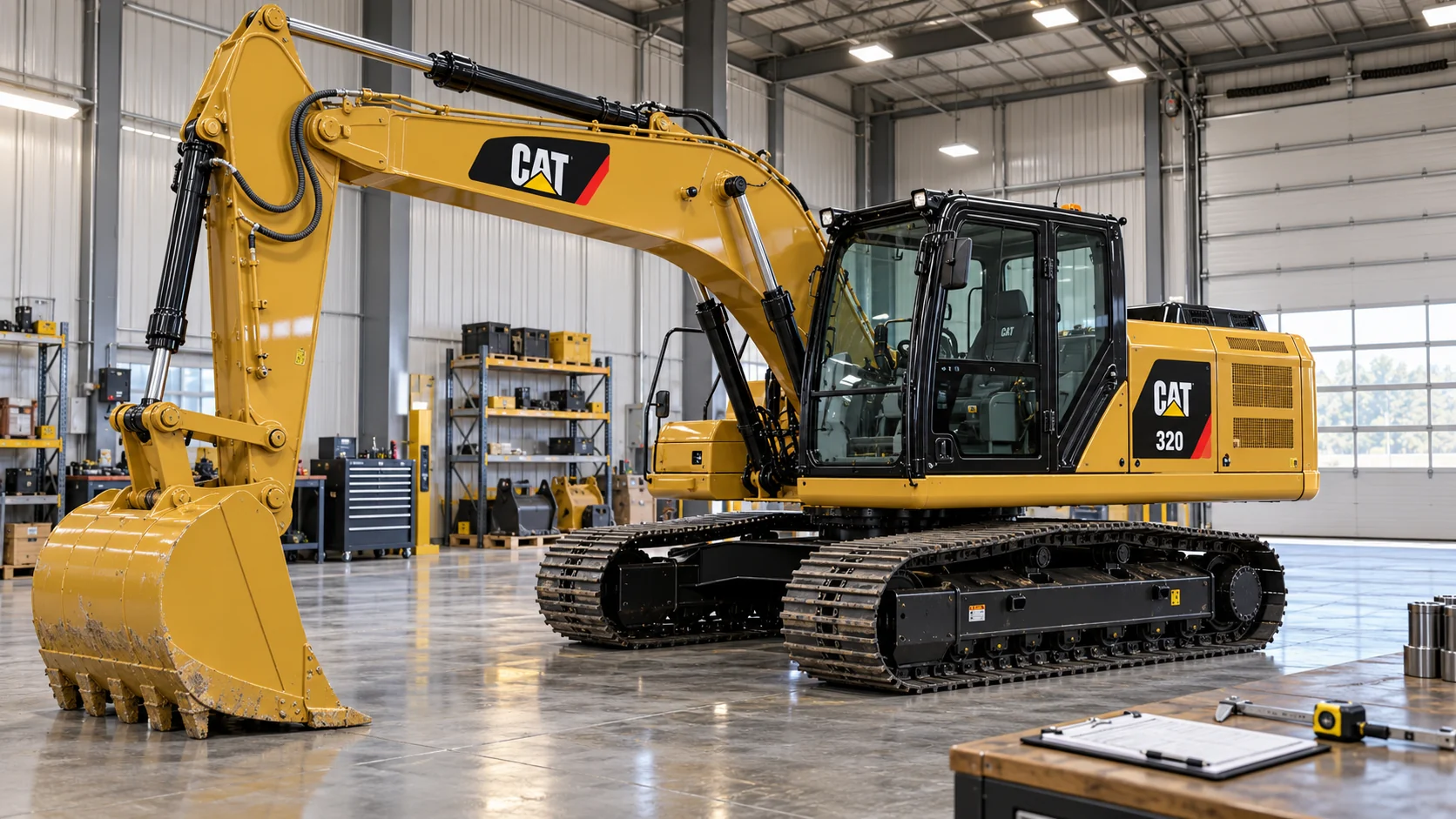
Quick answer: Before paying for a used excavator you cannot inspect in person, verify the exact unit, obtain recent machine-specific evidence, arrange an independent inspection and compare the findings with a written quotation. Old listing photos, a low price or a short start-up video cannot prove the machine’s current condition.
Remote equipment buyers face a practical problem: a listing can look convincing while leaving basic questions unanswered. Is the pictured machine the one being sold? Were the images taken recently? Can you see the undercarriage, cab, serial plate and working equipment? A sound process ties every image, report and commercial document to one identifiable unit.
This used excavator remote inspection checklist is designed for buyers sourcing from another city or country. It works for a used CAT 320 excavator and other tracked models. Adapt the inspection scope to the model, attachments, intended work and receiving-country requirements. A remote review lowers uncertainty; it does not make a machine risk-free or replace a competent physical inspection.
Start with machine identity, not the listing description
Ask the seller for the make, model, serial or product-identification number, present location and the exact attachments included. Request a clear photo of the identification plate and a wide photo showing where it is attached. If markings or records appear inconsistent, ask for an explanation and independent confirmation before proceeding.
Use one identifier consistently across the offer, inspection report, video evidence, invoice and shipping preparation documents. If the supplier cannot link the evidence to the quoted unit, you may be reviewing a representative machine rather than the actual one.
Ask whether the equipment is owned by the seller or offered on behalf of another party, and what documents can support the seller’s authority to sell it. Confirm the company’s legal name, address, business contact details and payment beneficiary through channels you independently locate. Treat mismatched names or pressure to pay a different entity as an unresolved risk that needs written clarification.
Request recent evidence that shows the whole machine
Ask for a new photo set made for your enquiry. Include a handwritten or displayed reference with the date and a short buyer-specific code in several frames, while keeping the machine’s serial plate visible in a separate close-up. This makes it harder to confuse the requested evidence with old public listing material. It is a verification aid, not proof by itself.
- Four sides of the machine, boom, arm, bucket and counterweight.
- Cab interior, monitor, hour meter and visible controls.
- Both track assemblies, including shoes, chains, rollers, idlers and sprockets.
- Engine compartment, hydraulic hoses, cylinders and visible leak areas.
- Serial or product-identification plate and any relevant component labels.
- Close views of repairs, welds, dents, corrosion, cracks or replaced parts.
Request a continuous walkaround video that begins with your reference, moves to the identity plate, then shows the machine from all sides. Ask the operator to start it from cold when practical, show the display, operate agreed functions and explain anything that cannot be demonstrated. A video can reveal obvious issues, but compression, camera angle and operating conditions hide details. Keep a list of unanswered checks for the inspector.
Use an independent inspection with a written scope
Agree on the inspector, scope, access and report format before the visit. A technician selected by the buyer or mutually accepted by both parties is better positioned to report findings independently. Confirm the inspector’s relevant experience with the machine type and how the report will identify the unit inspected.
The scope can ask the inspector to document:
- Identity plate, displayed hours and any accessible diagnostic or service-record cross-checks.
- Cold start observations, warning indicators, unusual noise or smoke, with limits noted.
- Hydraulic operation under an agreed safe test and visible leaks.
- Track system measurements against suitable model-specific references, recorded for each side.
- Structural condition, repairs, attachment operation and visible damage.
- Test conditions, inaccessible areas, missing records and the inspector’s limitations.
Do not ask a general-purpose inspector to certify remaining service life from photographs or one brief demonstration. Measurements depend on machine model and inspection method. Request readings, reference limits and clear pictures so a service professional can interpret them. If operation is unsafe or unavailable, the report should say so rather than imply the check passed.
Read the evidence as a set of cross-checks
Compare the hour-meter photo with service records and diagnostic information where available. Compare both sides of the undercarriage rather than relying on a single close-up. Look for consistency between the serial plate, machine appearance, report date and quotation. A discrepancy is a question to resolve, not automatic proof of fraud.
Ask for repair records, parts invoices and maintenance documents when the seller says work was completed. Check whether the records identify the same machine and describe the work clearly. A repaired machine may still suit your job; the important points are the repair quality, current condition and price implications.
Assess visible wiring and panels carefully. Reports from equipment owners often mention improvised wiring, missing fasteners, non-factory connectors or loose panels as reasons to investigate further. These clues do not diagnose a fault on their own, but they justify asking who made the repair and whether a qualified technician can examine it.
Investigate a price that seems unusually low
Compare offers for the same model, configuration, attachments, condition evidence and delivery scope. A lower asking price may reflect urgent sale, repair needs, missing documents or an incomplete freight quotation. Ask the seller to explain the difference and itemize what is included. Do not send a deposit simply because a price is available for a short time.
Confirm the quotation is tied to the identified unit and states its validity, currency, payment milestones, inspection arrangements, cancellation terms and exclusions. Verify any bank-account change through a known business contact using a separate communication channel. Keep signed documents and payment instructions in a controlled record.
Confirm transport and documents after the machine checks out
Once the machine identity and condition are acceptable, confirm the named shipment port, delivery term, cargo dimensions, weight, method and destination charges in writing. A freight estimate needs the actual shipping configuration and receiving port. Request current route-specific figures instead of relying on a generic online rate.
Ask which export and shipment documents the seller will provide and have your destination customs broker confirm the requirements for your country and transaction. Import rules, duties, taxes and used-equipment restrictions vary. Avoid assuming that a machine can enter a country solely because the seller has shipped similar equipment elsewhere.
Remote purchase checklist before sending payment
- The exact unit and seller authority are documented.
- Recent evidence shows the machine, identifier and areas important to your job.
- An independent inspection report identifies its scope and limitations.
- Unresolved faults, repairs and excluded items are listed in writing.
- The price, payment beneficiary, quote validity and cancellation conditions match the seller’s verified business details.
- Shipping scope and destination import requirements have been checked separately.
- You have a plan for inspection, repair support, parts and commissioning after arrival.
Questions buyers often ask
Can I buy a used excavator online without visiting the yard?
Some buyers do, but remote purchase increases the importance of unit-specific identity checks, an independent inspection, a clear contract and verified payment instructions. Evidence reduces uncertainty without eliminating it.
Are photos enough to confirm an excavator is in good condition?
No. Photos help locate visible concerns and direct an inspection. They cannot reveal every mechanical, hydraulic or structural issue.
How can I tell whether listing photos are current?
Request new buyer-specific photos or a continuous video with a simple reference and the machine identification shown. Then compare details with the inspection report and quotation.
Should I avoid a machine with repair marks or replaced parts?
Not automatically. Ask what was repaired, why, when and by whom. Have the work and surrounding components assessed, then include the findings in your cost and suitability decision.
What should I include when asking for a quote?
State the machine application, preferred size and configuration, attachment needs, required inspection evidence and destination port. Ask the seller to quote the identified unit and list included services and exclusions.
Next step: Browse the used machinery catalogue, shortlist a specific unit and request current photos, an inspection scope and a written export quotation before making a payment decision.