Home / Industry Insights
Global Machinery Logistics: What to Expect in 2026
An overview of heavy-equipment shipping considerations. Current routes, rates, insurance, documentation and transit times must be confirmed with relevant providers.
July 23, 2026 · Logistics
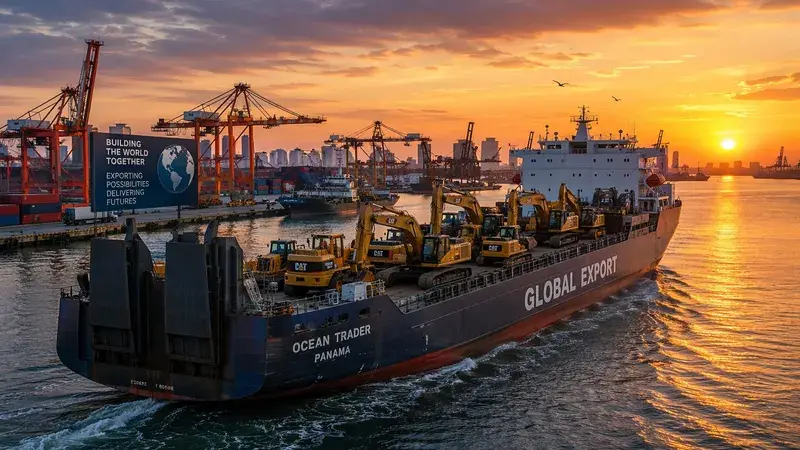
The global trade of used construction machinery has entered a new era of complexity. In 2026, the "Landed Cost" of a 20-ton excavator is no longer just about the machine price; it is a calculation of freight rates, insurance premiums, and customs efficiency. For contractors in Southeast Asia, Africa, and the Middle East, the ability to source heavy equipment shipping solutions directly from Shanghai's maritime hub is a competitive advantage. This report analyzes the three critical logistical trends that will define machinery export for the remainder of the year.
1. The Rise of Containerization for Medium-Class Iron
While large mining machines still rely on RORO vessels, we are seeing a massive shift toward containerized heavy equipment shipping for the 12 to 25-ton class. Using 40HQ (High-Cube) containers offers superior protection from the corrosive effects of salt air during long ocean transits. However, this method requires technical mastery in disassembly. Removing the cabin, boom, or counterweight allows a 20-ton machine to fit securely inside a standard container, significantly lowering the freight cost compared to deck-space shipping. At Lihang, our yard teams utilize professional-grade lashing chains and custom timber blocking to ensure zero movement during transit, protecting the delicate hydraulic fittings and glass panels of your investment.
2. Digital Documentation and Customs Speed
The bottleneck in international machinery trade is rarely the ocean voyage—it is the port clearance. In 2026, the transition to digital "Bill of Lading" (eBL) and automated "Certificate of Origin" verification has accelerated the heavy equipment shipping process for compliant exporters. Understanding the specific import requirements of your destination port—such as the CCIC inspection for Africa or EPA compliance for the Americas—is critical. A single missing document can lead to port storage fees exceeding $500 per day. We manage this risk by providing a complete "Pre-Shipment Audit" package, including verified serial numbers and engine plates, ensuring your local customs broker has everything needed for an immediate release upon arrival.
3. Freight Volatility and Strategic Booking
Ocean freight rates for heavy equipment shipping remain volatile in 2026, influenced by global energy prices and seasonal equipment demand. To maximize ROI, we recommend a "Lead-Time Buffer" of at least 30 days. Contractors who wait until a project starts to book a machine often face "Spot Market" freight rates that can be 40% higher than pre-negotiated carrier contracts. By leveraging our long-term relationships with major shipping lines out of Shanghai, we provide our clients with fixed-rate quotes that are valid for 21 days, allowing for predictable project budgeting. Whether you are shipping a single unit or a multi-model fleet, securing your space early is the most effective way to control your total landed cost.
Logistics FAQ: Shipping Iron Worldwide
What is the difference between RORO and Container shipping?
RORO involves driving the machine onto the ship's deck, which is better for oversized mining units. Container shipping is more secure and cost-effective for machines under 25 tons that can be partially disassembled.
Does shipping insurance cover the full value of the excavator?
Yes, our CIF (Cost, Insurance, and Freight) terms include comprehensive marine insurance that covers the full invoice value of the machine from our yard to your destination port.